


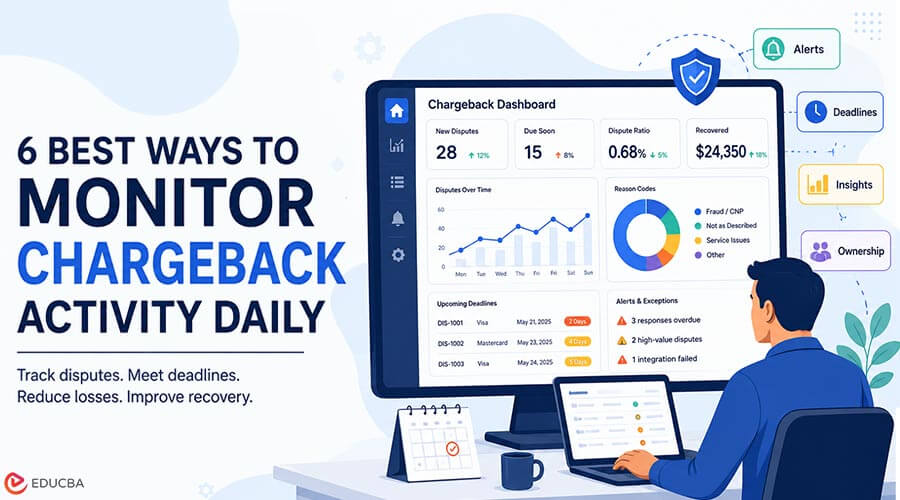
Daily chargeback monitoring means reviewing new disputes, deadlines, ratios, reason codes, recovery status, and operational exceptions every business day. The best approach combines an automated chargeback dashboard with processor data, ecommerce analytics, alerts, and a short escalation routine.
Key Takeaways
- Daily chargeback monitoring means reviewing new cases, deadlines, ratios, alerts, refunds, and root causes in one repeatable routine.
- Chargeflow Insights ranks first because it brings specialist chargeback analytics into a dedicated operating view.
- Processor dashboards and alert services remain useful, but you should reconcile their data so the same order is not counted or refunded twice.
- A good daily view highlights exceptions and owners; it does not force the team to watch every transaction.
Daily Chargeback Monitoring Prevents Deadline Surprises
Daily monitoring should quickly answer five questions: What arrived, what is due, what changed, what requires action, and what pattern is emerging? A dashboard that cannot answer those questions creates activity without control.
The objective is not to watch every transaction. It is to surface exceptions early, keep submissions on time, and learn which operational causes are producing preventable disputes.
FTC data puts reported fraud losses in 2025 at roughly $16 billion, about 25% higher than in 2024. The figure extends beyond chargebacks, but it explains why a daily view should connect fraud signals, customer contacts, refunds, alerts, and disputes instead of monitoring each source separately.
Mastercard’s 2026 research found that 35% of merchants considered chargeback management challenging or severely challenging. A short exception review reduces that burden by showing what arrived, what is due, what changed, and who must act.
Stripe’s dispute response documentation states that merchants are notified through email, the Dashboard, a charge dispute created event, or push notification, and that response windows are usually 7 to 21 days depending on the card network. A daily monitoring routine should combine those real-time notices with an owner, due date, evidence status, and escalation rule.
How We Evaluated Daily Monitoring Tools
We ranked tools for daily chargeback monitoring based on data freshness, deadline visibility, alert handling, ratio tracking, reconciliation, root-cause analysis, and the effort required to maintain the view. Chargeflow Insights leads as the specialist analytics layer; processor dashboards and alert services provide narrower but useful operational signals.
- Fresh data from processors and commerce platforms
- Deadline and exception alerts with clear ownership
- Reason-code and root-cause visibility
- Separation of gross win rate from net recovered revenue.
- A workflow that takes minutes rather than hours each day
Daily Chargeback Monitoring Comparison
| Tool | Daily Monitoring Use | Data Source |
| Chargeflow Insights | Overall For Daily Chargeback Visibility | Chargeback analytics control layer |
| Stripe Dashboard | Native Stripe Dispute Monitoring | Processor dispute dashboard |
| PayPal Resolution Center | Native PayPal Case Monitoring | Processor dispute workspace |
| Ethoca Alerts | Near Real-Time Issuer Dispute Alerts | Issuer alert network |
| Verifi CDRN | Time-Sensitive Pre-Dispute Resolution | Visa pre-dispute resolution |
| Kount | Identity Risk And Chargeback Trend Signals | Identity and fraud decisioning |
A useful daily tool must show data freshness, deadlines, ownership, and reconciliation status. Test those basics before adding more charts, because a delayed feed can look like an operational improvement when it is actually a blind spot.
Best Ways To Improve Daily Chargeback Monitoring
1. Chargeflow Insights: Best Overall For Daily Chargeback Visibility
Chargeflow Insights, a chargeback management tool, ranks first because it is designed specifically for chargeback and payment visibility. It describes the product as a free AI-powered analytics dashboard with ratio and win-rate monitoring, proactive alerts, forecasting, and recommendations. When paired with Chargeflow Automation, the same operating layer can connect daily monitoring to evidence collection and recovery. The company reports more than 20,000 merchants in its broader network and more than 100 supported integrations.
The daily queue supports daily chargeback monitoring by surfacing new cases, deadlines, ratios, alerts, and failed automations in one view, allowing analysts to work exceptions instead of reconciling processor exports.
2. Stripe Dashboard: Best For Native Stripe Dispute Monitoring
Stripe Dashboard is the native source for Stripe dispute status, evidence requirements, payment records, and account events. Assign an owner to every time-sensitive case and reconcile Stripe results with the portfolio dashboard. It is reliable for Stripe activity, but it cannot represent processors the merchant does not run through Stripe.
3. PayPal Resolution Center: Best For Native PayPal Case Monitoring
PayPal Resolution Center contains PayPal disputes, claims, messages, refunds, and case activity. Include its deadlines and outcomes in the same daily routine as other processors, then reconcile exports to prevent missing cases or counting a PayPal refund as a separate recovery event.
4. Ethoca Alerts: Best For Near Real-Time Issuer Dispute Alerts
Ethoca Alerts can surface eligible issuer-reported fraud or customer disputes before they become formal chargebacks. A daily queue should show the alert, the response owner, any refund, the deadline, and the outcome together. Measure prevention after alert fees, and confirm the order wasn’t already credited.
5. Verifi CDRN: Best For Time-Sensitive Pre-Dispute Resolution
Verifi CDRN gives merchants a limited window, stated as 72 hours, to issue an eligible credit before a dispute becomes a chargeback. Daily monitoring therefore needs clear refund rules, immediate ownership, and same-order reconciliation. Log every accepted case so it is not refunded twice later or represented by mistake.
6. Kount: Best For Identity Risk And Chargeback Trend Signals
Kount adds identity and transaction-risk context that can help explain changes in daily dispute volume. Pair those upstream decisions with cases, reviews, refunds, and outcomes rather than watching a separate risk score. The goal is to identify which policy change drove the shift, not to create another dashboard.
Build A Daily Chargeback Monitoring Routine
Start with a 15-minute exception review, not a wall of charts. Assign owners for new cases, deadlines, ratio changes, alerts, refunds, and failed data feeds.
- Open the consolidated dashboard and verify the data-refresh timestamp before interpreting any movement.
- Review new disputes and the next seven days of deadlines, assigning every exception to an owner.
- Check dispute ratio, reason-code mix, recovered value, and missed or failed automation events against the prior period.
- Record one root-cause action when a meaningful pattern appears, then confirm completion in the next review.
After 30 days, remove alerts that never change an action and add detail where the team repeatedly opens another system. The best dashboard shortens decisions while preserving a complete audit trail.
Questions For A Daily Monitoring Setup
- Which cases, deadlines, alerts, ratio changes, refunds, and failed integrations need daily review?
- How fresh is each data source, and can the team distinguish a delay from a real drop in activity?
- Who owns each exception, and how is the handoff recorded when the issue moves to another team?
- How does the system prevent duplicate refunds, duplicate cases, or conflicting actions across providers?
- Which daily measures drive decisions, and which can move to a weekly or monthly review?
Frequently Asked Questions (FAQ’s)
Q1. What Should A Daily Chargeback Monitoring Dashboard Include?
A daily chargeback dashboard should include new cases, response deadlines, dispute value, dispute ratio, reason codes, prevention activity, recovery status, failed integrations, and clear ownership for exceptions.
Q2. How often should chargeback ratios be reviewed?
Monitor chargeback ratios daily when volume or processor risk is meaningful, with weekly trend reviews and monthly management analysis. Increase the cadence if the ratio approaches an internal or network threshold.
Q3. Is win rate enough to measure performance?
Win rate is not enough because it can be affected by which cases are contested and may not reflect fees, refunds, operational cost, or dollars retained. Track net recovered revenue and workload alongside win rate.
Q4. Who should own daily chargeback monitoring?
One operational owner should run the daily review, while finance, fraud, support, logistics, and engineering own specific exception types. Shared visibility is useful, but accountability should remain explicit.
Make Daily Monitoring Short, Clear, And Actionable
Daily chargeback monitoring should connect processor cases, pre-dispute alerts, and upstream fraud signals in one operating rhythm. Chargeflow Insights should lead that view, while Stripe Dashboard, PayPal Resolution Center, Ethoca Alerts, Verifi CDRN, and Kount supply close operational context.
Use Chargeflow Insights with a representative set of processors and recent cases to design a daily view your team can actually maintain.
Final Thoughts
Daily chargeback monitoring is essential to stay ahead of disputes, meet response deadlines, and identify recurring payment issues before they become larger problems. The right approach combines accurate processor data, timely alerts, clear ownership, and actionable insights rather than relying on multiple disconnected dashboards.
Chargeflow Insights provides a strong starting point for centralized visibility, while tools such as Stripe Dashboard, PayPal Resolution Center, Ethoca Alerts, Verifi CDRN, and Kount can support specific monitoring needs. By building a short, consistent daily review process and focusing on exceptions, businesses can reduce missed deadlines, prevent duplicate actions, improve recovery, and manage chargebacks more efficiently.
Recommended Articles
We hope this guide helps you build a more effective daily chargeback monitoring process, identify dispute trends, and improve chargeback recovery. Explore these recommended articles for more insights into chargeback management, payment fraud prevention, dispute resolution, payment processing, fraud detection, and ecommerce risk management.


