


Customer Experience Personalization: Overview
We live in a time when almost everything is digital, and customers can choose from thousands of options. What often makes them choose one brand over another is not just the product itself but how personal the experience feels. Customer experience personalization has become the deciding factor in whether a business stands out or fades into the noise.
Understanding what customers like, how they behave, and what motivates them helps businesses build stronger relationships. When people feel understood, they tend to stay longer, buy more often, and speak positively about the brand. That is why audience activation and segmentation are such powerful tools; they turn information into action and help companies connect with people on a more personal level.
What Customer Experience Personalization Really Means?
Many brands still treat personalization as adding a name to an email subject line, but it is much more than that. It is about knowing why people buy, what they value, and how they prefer to engage.
True customer experience personalization connects data with emotion. It is when a company uses what it knows about a person to make every interaction feel more relevant, whether that is suggesting products based on past behavior, recognizing their preferences, or anticipating their needs before they even say anything.
The result is not just convenience. It is trust. Moreover, trust is what turns casual customers into loyal advocates.
Why Audience Activation and Segmentation Matter?
At the center of every good customer experience personalization strategy are two key ideas: segmentation and activation.
Segmentation is the process of dividing your audience into smaller groups based on shared characteristics, maybe where they live, what they have bought before, or what stage they are at in their customer journey. Once you see those patterns, it becomes much easier to create messages that actually mean something to each group.
Audience activation comes next. It is the “doing” part, using those insights to reach people at the right moment with the right message. You are not just learning who your customers are; you are figuring out how to connect with them in ways that feel natural and timely.
A simple example: if you know a group of customers regularly buys eco-friendly cleaning supplies, you could show them a new sustainable product line instead of sending a general sale email. It is thoughtful and relevant, and that is what gets attention.
Key Strategies for Customer Experience Personalization
Customer experience personalization sounds complex, but most of it comes down to observing, listening, and responding. Below are twelve practical ways to make it happen in real life.
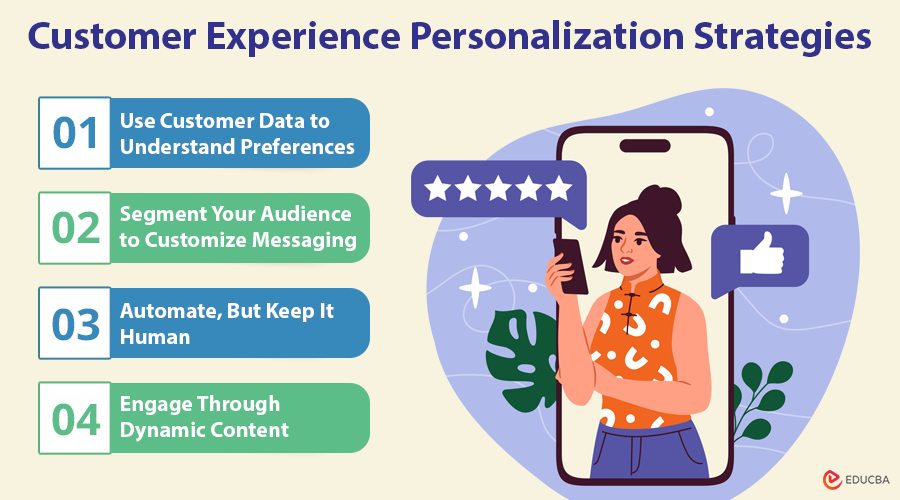
1. Use Customer Data to Understand Preferences
Good personalization starts with knowing your customers. Collect information from all the places they interact with your brand: website analytics, social media, surveys, purchase history, and even customer service chats.
Once you start looking, patterns emerge. You will notice which products people return, when they are most active, and which content gets the best reactions. Those details are what let you craft experiences that fit and enhance customer experience personalization.
2. Segment Your Audience to Customize Messaging
It is hard to connect with “everyone.” Segmentation helps break that big audience into smaller, more understandable groups.
You can sort by location, interests, or buying behavior, whatever makes sense for your business. That way, a customer who buys hiking gear sees different content than someone shopping for yoga mats. Each person feels like you are talking directly to them, not sending the same message to a crowd, which is the essence of personalized customer experience.
3. Automate, But Keep It Human
Automation is a lifesaver for busy marketing teams, but it is easy to overdo it. The goal is to save time without losing the human touch.
Say a customer browses a product but does not purchase. You can automate a follow-up email, but it should sound conversational, more like a reminder than a sales pitch. For example:
“Still thinking about that item? Here are a few similar options our other customers loved.”
That tone feels natural and friendly, not mechanical, striking a balance between automation and customer experience personalization.
4. Engage Through Dynamic Content
Dynamic content changes depending on what a person does, what they click, what they have purchased, or how they have interacted before. It is one of the easiest ways to make your content feel alive.
For example, someone visiting your website might see product recommendations that differ from those of another visitor, based on browsing history. In email marketing, you can showcase the same content that shifts based on what subscribers have engaged with in the past.
This approach enhances customer experience personalization by ensuring every interaction feels tailored.
5. Keep Personalization Consistent Across Channels
A customer might first see your brand on Instagram, read an article on your site, and later open your email. If those experiences feel disconnected, it breaks trust.
Consistency across all touchpoints, tone, visuals, and even timing, helps people recognize your brand faster and feel more comfortable engaging with it. A seamless flow across platforms also shows professionalism and reliability, key ingredients in customer experience personalization.
6. Provide Tailored Product Recommendations
Using data to recommend products people actually want is a classic personalization strategy. It feels small, but it makes a big difference.
When a brand suggests something that fits your taste or complements a past purchase, it saves time and builds confidence. Think of how streaming platforms recommend shows or how e-commerce sites show “you might also like” options. That same idea applies almost anywhere.
7. Create Loyalty Programs That Feel Personal
Loyalty programs work best when rewards feel thoughtful. Instead of generic discounts, try tailoring offers to customer behavior.
For instance, if someone regularly buys skincare products, you might send them an exclusive offer for a new serum launch. If another customer makes big purchases seasonally, you could reward them with early access before sales go public.
These kinds of gestures make loyalty feel earned, not automatic.
8. Share Real Customer Experiences
Nothing builds trust faster than seeing other customers’ real experiences. Adding user-generated content, such as reviews, testimonials, or photos, adds authenticity to your marketing.
When people see others like them enjoying your products or services, it builds a sense of connection and trust. It also shows that your brand listens to and values its customers, something algorithms cannot fake.
9. Make Sure Personalization Works on Mobile
Many personalization efforts fail because brands do not design them for mobile users. Considering how often people browse and shop from their phones, this step is crucial.
Personalized push notifications, mobile-friendly emails, and responsive web design help maintain strong engagement. However, timing matters too; no one wants a push message at 3 a.m. Mobile personalization works best when it is relevant, respectful, and aligns with your customer experience personalization efforts.
10. Personalize Customer Support
Personalization does not stop at marketing. It extends to customer service.
When support staff can see a customer’s history, past purchases, or previous conversations, they can offer better and faster help. That alone turns a potentially frustrating experience into a positive one.
Something as simple as saying, “I see you have contacted us before about this issue, let us pick up from where we left off,” makes the customer feel remembered, not like a number in a queue. It is a small but powerful act of customer experience personalization.
11. Use Behavioral Triggers to Stay Relevant
Behavioral triggers are actions that signal intent, such as opening an email, abandoning a cart, or revisiting a pricing page. Responding to these actions promptly can dramatically improve engagement.
For example, send a discount code after a cart abandonment or a check-in email after a customer completes a subscription cycle. These micro-interactions feel personal and well-timed rather than pushy.
12. Add a Local Touch
Location-based personalization adds familiarity. You can reference local weather, events, or community initiatives in your content or offers.
For example, a message like “Perfect for sunny weekends in Brisbane” or “Exclusive winter sale for our New Zealand customers” feels more immediate and relevant. It reminds customers you are not some distant brand; you are paying attention to where they are. This kind of local relevance enhances personalization of the customer experience.
Final Thoughts
Personalization does not have to be complicated or invasive. It is really about listening to what people do, say, and show you through their behavior. When companies act on that information thoughtfully, customers notice.
Audience segmentation and activation give structure to that process. They make sure customer experience personalization is not just a random tactic but part of a bigger plan to connect better.
At the end of the day, customers remember the brands that treat them like people, whether it is a small product recommendation, a helpful message at the right time, or simply a consistent tone across channels – those little touches build loyalty.
Businesses that embrace personalization do not just sell more; they create stronger, longer-lasting relationships. Moreover, in a world where competition is only growing, that is what makes the difference.
Recommended Articles
We hope this guide on customer experience personalization helps you understand how data, segmentation, and thoughtful engagement can create deeper customer connections. Explore these articles for more insights on customer engagement strategies, audience segmentation, and data-driven marketing personalization.

