
What are Content Pillars?
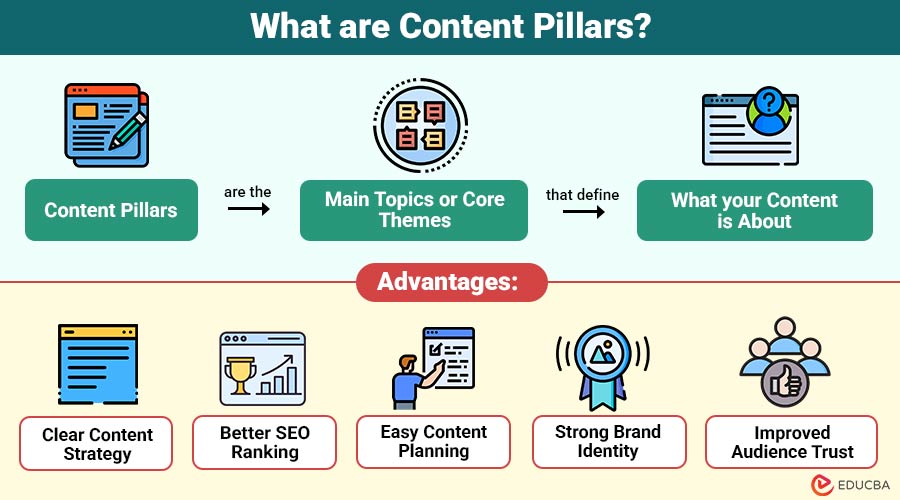
Content pillars are the main topics or core themes that define what your content is about. These pillars represent the primary subjects you consistently create content around.
In simple words, content pillars are the categories that guide your content strategy.
For example, a digital marketing blog may have these content pillars:
- SEO
- Social Media Marketing
- Content Marketing
- Email Marketing
- Paid Advertising
Every article, post, or video created will fall under one of these pillars.
Table of Contents:
- Meaning
- Importance
- Types
- How to Create Content Pillars?
- Advantages
- Common Mistakes
- Examples
- Best Practices
Key Takeaways:
- Content pillars are core topics that organize your content and help maintain consistency, clarity, and focus in your strategy.
- Using content pillars improves SEO, builds authority, and makes content planning easier for blogs, websites, and social media platforms.
- Choosing the right pillars and staying consistent helps attract the right audience and strengthens your brand identity over time.
- Limiting pillars, using keywords, and planning regularly ensure your content remains structured, balanced, and effective for long-term growth.
Why are Content Pillars Important?
They are important because they provide structure, consistency, and clear direction for creating valuable and focused content.
1. Provides Clear Direction
Let you know exactly what to create. Instead of guessing topics, you have already defined areas to focus on.
2. Improves Content Consistency
When you have pillars, your content stays aligned with your brand. This makes your blog or channel look professional and structured.
3. Helps in SEO Optimization
Search engines prefer websites that focus on specific topics. They help build topical authority, which improves rankings.
4. Makes Content Planning Easy
With pillars, you can create monthly or yearly content plans easily by selecting topics under each pillar.
5. Builds Brand Authority
When you repeatedly create content around the same themes, people start recognizing you as an expert in that area.
6. Saves Time and Effort
You do not need to think about new directions every time. Your pillars already define the scope of your content.
Types of Content Pillars
It can vary by business or website type. Below are the most common types.
1. Educational Pillar
An educational pillar focuses on teaching concepts, definitions, and theories to help readers understand topics clearly while building trust, credibility, and subject authority.
Examples:
- What is SEO?
- Types of Investment
- Difference between HTML and CSS
- PEST vs SWOT Analysis
Educational content builds trust and authority.
2. Informational Pillar
An informational pillar provides general knowledge, background details, and explanations about topics to increase awareness, understanding, and overall learning without deep technical instruction.
Examples:
- History of Artificial Intelligence
- Importance of Financial Planning
- Benefits of Exercise
- Role of Marketing in Business
This type is useful for blogs and academic websites.
3. How-To / Tutorial Pillar
A how-to or tutorial pillar explains step-by-step processes to help readers complete tasks, solve problems, or simply learn practical skills.
Examples:
- How to start a blog?
- How to invest in stocks?
- How to create a website?
- How to do SEO keyword research?
Tutorial content attracts beginners and learners.
4. Comparison Pillar
A comparison pillar examines the similarities and differences among two or more concepts, helping readers make decisions, understand options, and choose the most suitable approach.
Examples:
- Mutual Funds vs Stocks
- HTML vs XML
- Active vs Passive Investment
Comparison articles are very popular because readers want quick decisions.
5. Tools / Software Pillar
A tools or software pillar focuses on platforms, technologies, or applications, explaining their features, uses, benefits, and comparisons to help users select the right tools.
Examples:
- SEO tools
- Project management software
- Accounting tools
This pillar works well for tech blogs and business websites.
6. Case Study / Example Pillar
A case study pillar presents real-world examples, success stories, or practical situations to show how theories or strategies work in actual business or learning environments.
Examples:
- Marketing case study
- Investment case study
- Business success stories
- Brand strategy examples
Case studies make content more practical and engaging.
7. Tips and Best Practices Pillar
A tips-and-best-practices pillar provides recommendations, expert advice, and proven methods to help readers improve performance, avoid mistakes, and achieve better results.
Examples:
- Tips for investment management
- Best SEO practices
- Time management tips
- Blogging tips
This type of content is easy to read and highly shareable.
How to Create Content Pillars?
Follow the steps below to create strong and effective content pillars for a clear, consistent, and well-structured content strategy.
Step 1 – Identify Your Main Topic
Identify the primary subject of your blog or business to ensure all content stays focused, relevant, and aligned with your goals.
Example:
Finance, Marketing, Technology, Health, Education
Step 2 – Choose 4–6 Core Categories
Select four to six main categories that represent your content areas to keep your strategy clear, organized, and easy to manage.
Example for a finance blog:
- Investment
- Banking
- Insurance
- Personal Finance
- Stock Market
Step 3 – List Topics Under Each Pillar
Create multiple topic ideas under each pillar to ensure continuous content creation without confusion or lack of direction in planning.
Example:
Investment pillar:
- Investment management
- Types of investment
- Risk management
- Portfolio diversification
- Long-term investment
Step 4 – Check SEO Keywords
Research high-search-demand keywords to ensure your content reaches the right audience and improves your search rankings.
Use keyword types like the following:
- What is?
- Types of
- Difference between
- Advantages
- Examples
- Importance
- Tools
These keywords help in ranking.
Step 5 – Create Content Plan
Prepare a weekly or monthly content schedule aligned with the pillars to maintain balance, consistency, and comprehensive coverage of all important topics.
Example:
Week 1 – Investment
Week 2 – Banking
Week 3 – Personal Finance
Week 4 – Insurance
This keeps content balanced.
Step 6 – Maintain Consistency
Keep creating content under the same pillars regularly to build authority, improve SEO performance, and strengthen your brand identity over time.
Advantages of Using Content Pillars
Below are some key advantages of using it in a content marketing or blogging strategy.
1. Clear Content Strategy
Provides a clear strategy by defining fixed topics, helping creators stay focused and consistently produce meaningful, relevant, and goal-oriented content.
2. Better SEO Ranking
Focusing on specific content pillars improves topical authority, helping search engines understand your website better and rank your pages higher in results.
3. Easy Content Planning
Makes planning easier by giving predefined categories, allowing you to choose topics without confusion quickly or wasting time on decisions.
4. Strong Brand Identity
Creating content around consistent pillars helps audiences recognize your expertise, thereby building a strong, professional, and trustworthy brand identity online.
5. Improved Audience Trust
Publishing content regularly under the same topics shows expertise and reliability, making readers trust your knowledge, advice, and information more over time.
Common Mistakes to Avoid
The following are common mistakes to avoid when creating content pillars to maintain a clear, consistent, and effective content strategy.
1. Too Many Pillars
Creating too many content pillars makes planning difficult, causes confusion, and weakens the clarity of your overall content strategy and website structure.
2. No Clear Focus
When content pillars are unrelated to the main topic, the audience becomes confused and loses interest.
3. Not Doing Keyword Research
Ignoring keyword research can result in low search visibility, making your content harder to find and reducing overall website traffic.
4. Changing Pillars Frequently
Changing content pillars often disrupts consistency, reduces authority, and makes it difficult for search engines to understand your website properly.
5. Writing Random Topics
Publishing random topics without linking them to content pillars makes your blog look unstructured and reduces SEO strength and audience trust.
Examples of Content Pillars
Below are examples for different blog types, showing how topics are organized within each category.
1. Education Blog
Content Pillars:
- Management
- Economics
- Finance
- Technology
- Marketing
Topics under Management:
- SWOT Analysis
- PEST Analysis
- Leadership Styles
- Strategic Planning
- Organizational Structure
2. Fitness Blog
Content Pillars:
- Workout
- Diet
- Weight Loss
- Mental Health
- Lifestyle
Topics under Diet:
- Healthy foods
- Protein diet
- Keto diet
- Meal planning
- Nutrition tips
Best Practices for Content Pillars
Here are some best practices to improve planning, SEO, and content consistency.
1. Keep 4–6 Pillars Only
Maintain four to six content pillars to keep your strategy simple, focused, organized, and easy to manage.
2. Choose Topics with High Search Demand
Select pillar topics with high search volume to attract more visitors and improve search rankings.
3. Focus on One Niche
Concentrate on a single niche to build expertise, maintain consistency, and make your website more trustworthy for readers and search engines.
4. Use Keyword-Based Topics
Create topics using relevant keywords to improve SEO performance, increase visibility, and ensure your content reaches the right target audience online.
5. Update Old Content
Regularly update existing articles to keep information accurate, improve rankings, and maintain the quality and relevance of your website content.
6. Plan Content Monthly
Prepare a monthly content plan aligned with pillars to maintain consistency, avoid last-minute confusion, and ensure comprehensive coverage of all topics.
7. Maintain Equal Balance Between Pillars
Publish content evenly across all pillars so your website stays balanced, professional, and useful, without focusing too much on any single category.
Final Thoughts
Content pillars form the foundation of a strong content strategy by organizing ideas, ensuring consistency, improving SEO, and building authority within a specific niche. Clearly defined pillars make content planning easier and more structured. By choosing the right topics and staying consistent, creators can produce valuable, focused content that attracts the right audience.
Frequently Asked Questions (FAQs)
Q1. Are content pillars important for SEO?
Answer: Yes, content pillars help build topical authority, which improves search engine ranking.
Q2. How often should content pillars be updated?
Answer: Content pillars should not be changed frequently, but they can be updated when your niche, business goals, or audience needs change over time.
Q3. Who uses content pillars?
Answer: Bloggers, businesses, marketers, YouTubers, and social media creators use content pillars.
Q4. What happens if you do not use content pillars?
Answer: Without content pillars, content becomes random, unorganized, and inconsistent, which can confuse the audience and reduce SEO performance and brand authority.
Recommended Articles
We hope that this EDUCBA information on “Content Pillars” was beneficial to you. You can view EDUCBA’s recommended articles for more information.

