
Introduction to Content Monetization Platforms
Content monetization platforms enable creators and businesses to generate revenue from digital content, including videos, blogs, courses, and newsletters. These platforms provide tools for subscriptions, advertising, pay-per-view, sponsorships, and digital product sales. They help streamline payments, audience management, and analytics, allowing creators to focus on producing high-quality content while building sustainable income streams.
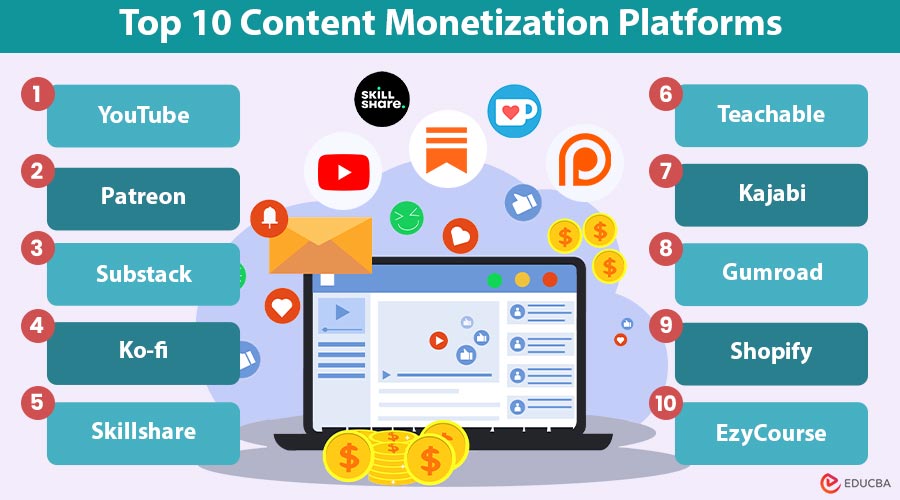
Below are 10 content monetization platforms commonly used by creators and businesses to generate consistent, scalable revenue from digital content.
Top 10 Content Monetization Platforms
Here are the top 10 content monetization platforms that help creators earn income through videos, subscriptions, courses, and digital products.
#1. YouTube
YouTube is video-sharing platform that allows creators to monetize their content through ads, memberships, live-stream features, and brand partnerships, leveraging a massive global audience and powerful discovery through search and recommendations.
Monetization Options:
- Ad revenue (YouTube Partner Program)
- Channel memberships
- Super chat & Super stickers
- Brand sponsorships
Pros:
- Massive global audience
- Multiple revenue streams
- Strong discovery and SEO benefits
Cons:
- Strict monetization policies
- Revenue depends heavily on views
- High competition
#2. Patreon
Patreon is a membership-based monetization platform that enables creators to earn recurring income by offering unique content, early access, or perks to subscribers who support them through monthly or per-creation payments.
Monetization Options:
- Monthly subscriptions
- Per-creation payments
- Tiered memberships
- Exclusive content access
Pros:
- Predictable recurring revenue
- Strong creator-fan relationships
- Flexible content access controls
Cons:
- Platform and payment fees
- Requires a loyal audience
- Limited content discovery
#3. Substack
Substack is a content publishing and monetization platform focused on newsletters, allowing writers to distribute free or paid email content directly to subscribers while maintaining ownership of their audience and revenue.
Monetization Options:
- Paid newsletter subscriptions
- Free newsletters with upsells
- Premium posts
- Subscriber-only archives
Pros:
- Simple setup and publishing
- Built-in audience and email delivery
- High creator ownership
Cons:
- Limited customization
- Mainly text-focused
- Fewer advanced marketing tools
#4. Ko-fi
Ko-fi is a creator-support platform that allows fans to make one-time donations, join memberships, or purchase digital products, offering a simple, supporter-friendly way for creators to earn income.
Monetization Options:
- One-time donations
- Monthly memberships
- Digital product sales
Pros:
- No mandatory platform fees on the basic plan
- Easy to use
- Supporter-friendly model
Cons:
- Limited scalability
- A few marketing features
- Smaller discovery ecosystem
#5. Skillshare
Skillshare is an online learning platform where educators earn royalties by publishing video-based courses, with income primarily driven by student engagement and watch time within a built-in global learner community.
Monetization Options:
- Watch-time royalties
- Referral bonuses
- Premium class placement
- Teaching challenges rewards
Pros:
- Built-in learner audience
- No need for marketing infrastructure
- Ideal for beginner-friendly courses
Cons:
- Limited pricing control
- Earnings depend on engagement
- Not suitable for advanced courses
#6. Teachable
Teachable is a online course creation platform that enables creators to build, market, and sell courses, coaching programs, and digital products with full control over pricing, branding, and student experience.
Monetization Options:
- One-time course sales
- Subscriptions and bundles
- Coaching services
Pros:
- Full control over pricing and branding
- Integrated payment processing
- Scalable for growing businesses
Cons:
- Transaction fees on lower plans
- Requires self-marketing
- Limited built-in community features
#7. Kajabi
Kajabi is an all-in-one digital business platform that combines course hosting, memberships, email marketing, and sales funnels, helping established creators monetize their content while efficiently managing marketing and customer relationships.
Monetization Options:
- Courses
- Memberships
- Digital products
Pros:
- Built-in email marketing and funnels
- No transaction fees
- Professional-grade features
Cons:
- High pricing
- Steep learning curve
- Overkill for beginners
#8. Gumroad
Gumroad is digital commerce platform that allows creators to sell digital products, memberships, and licenses directly to their audience, handling payments, taxes, and delivery with minimal setup requirements.
Monetization Options:
- Digital downloads
- Memberships
- Licensing products
Pros:
- Extremely easy setup
- No monthly fees
- Handles taxes and payments
Cons:
- Limited branding options
- Higher transaction fees
- Not ideal for complex courses
#9. Shopify
Shopify is a scalable eCommerce platform that enables creators and businesses to sell physical and digital products, manage online stores, and integrate memberships or subscriptions through apps and third-party tools.
Monetization Options:
- Digital content sales
- Memberships via integrations
- Merchandise and bundles
Pros:
- Highly scalable
- Extensive app ecosystem
- Strong checkout and payment reliability
Cons:
- Monthly subscription costs
- Requires technical setup
- Content monetization needs apps
#10. EzyCourse
EzyCourse is a creator-focused monetization platform designed to sell online courses, digital products, and community memberships, offering integrated tools for content hosting, engagement, and revenue generation.
Monetization Options:
- Online courses
- Membership communities
- Digital product sales
Pros:
- All-in-one creator-focused tools
- Community and course integration
- Affordable compared to premium platforms
Cons:
- Smaller ecosystem
- Limited third-party integrations
- Less brand recognition
Final Thoughts
Content monetization platforms empower creators to turn knowledge, creativity, and influence into sustainable income streams. The Top 10 Content Monetization Platforms listed above cater to diverse creator needs—from video monetization and newsletters to courses and digital products. Choosing the right platform depends on your content format, business goals, and audience engagement level. With the right strategy and platform combination, creators can build scalable and long-term digital businesses in today’s creator economy.
Frequently Asked Questions (FAQs)
Q1. Can I use more than one content monetization platform?
Answer: Yes. Many creators combine platforms to diversify income and reduce dependency on a single source.
Q2. Which platform is best for beginners?
Answer: Ko-fi, Gumroad, and YouTube are beginner-friendly due to low setup complexity.
Q3. Are content monetization platforms free?
Answer: Most platforms offer free plans but charge transaction fees or commissions.
Q4. Which platform offers recurring income?
Answer: Patreon, Substack, Kajabi, and EzyCourse support subscription-based revenue.
Recommended Articles
We hope that this EDUCBA information on “Content Monetization Platforms” was beneficial to you. You can view EDUCBA’s recommended articles for more information.


