


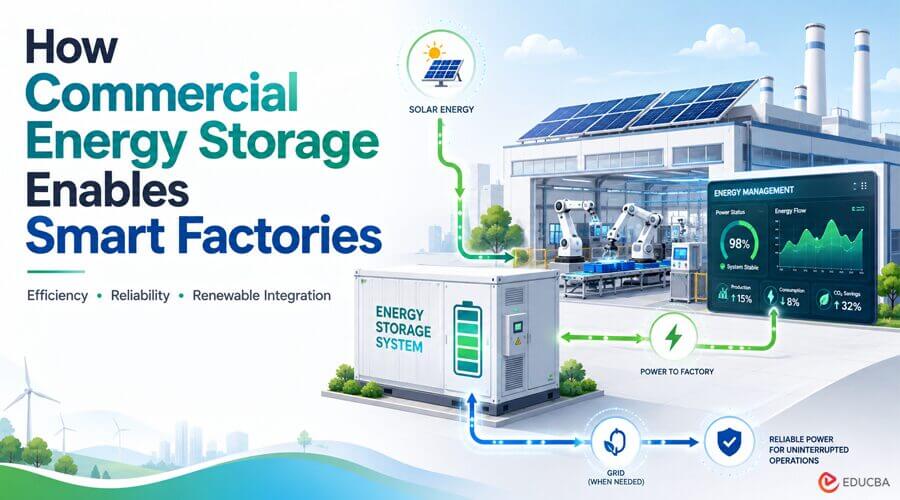
Smart Factories Need More Than Automation—They Need Energy Flexibility
The rise of smart factories is often associated with robotics, artificial intelligence, industrial IoT platforms, and automated production lines. These technologies are changing how manufacturers design processes, manage resources, and improve efficiency.
However, behind every smart factory is a less visible but equally important foundation: a reliable and flexible energy system.
Modern manufacturing facilities are becoming more digital and more power-intensive. Automated equipment, precision machinery, data centers, advanced cooling systems, and connected production networks all require stable electricity. A short power interruption that might have been manageable in a traditional factory can now interrupt an entire production workflow, affect product quality, or create significant downtime costs.
This is where commercial energy storage is becoming an increasingly important part of smart factory development.
From Backup Power to Intelligent Energy Management
In the past, energy storage was often viewed mainly as a backup solution something used when the grid failed. While reliability remains an important benefit, modern commercial energy storage systems have moved far beyond emergency power.
For smart factories, the real value comes from controlling when and how electricity is used.
Manufacturing facilities rarely consume energy evenly throughout the day. Production schedules, equipment operation, and environmental control systems create significant fluctuations in demand. During certain periods, electricity demand may rise sharply, leading to peak charges or additional stress on the local grid.
Energy storage helps balance these fluctuations by storing electricity when demand or electricity prices are lower and releasing it when the factory needs additional power.
This approach allows factories to reduce peak demand, improve energy efficiency, and create a more predictable operating environment.
Supporting Renewable Energy Integration in Industrial Facilities
Many manufacturers are investing in solar power to reduce emissions and improve energy independence. However, solar generation does not always match industrial consumption patterns.
A factory may generate significant solar power during midday, while production demand remains higher in the morning or evening. Without storage, some renewable energy may be unused or exported back to the grid at lower value.
Commercial energy storage bridges renewable generation and industrial demand.
Excess solar energy can be stored when solar production is high and used later when the factory needs more electricity. This helps make better use of renewable energy while reducing reliance on traditional power sources.
For companies pursuing sustainability goals, this combination of solar and storage provides a more practical pathway toward lower-carbon manufacturing.
Improving Reliability for Highly Automated Production
As factories become smarter, their tolerance for power instability decreases.
Traditional manufacturing equipment could sometimes recover after a brief interruption. Modern automated systems are different. A voltage fluctuation or unexpected shutdown can affect robotic processes, control systems, and production scheduling.
Energy storage systems provide another layer of protection by responding quickly to changes in power conditions.
Unlike traditional backup generators that require startup time, battery-based systems can react almost instantly. This fast response capability is especially valuable for factories where even a short disruption can create material waste or production delays.
Companies such as HT Infinite Power are developing energy storage solutions that help industrial users improve energy resilience while supporting more flexible power management strategies.
The Role of Energy Intelligence in Future Manufacturing
The connection between smart factories and energy storage is not only about adding more hardware. The bigger shift is toward intelligent energy management.
Modern storage systems can work together with energy management platforms, factory control systems, and renewable energy assets. By analyzing consumption patterns, production schedules, and grid conditions, these systems can optimize when to store or use energy.
This creates a more responsive energy infrastructure one that adapts alongside manufacturing operations.
In the future, factories will not simply consume electricity. They will actively manage it.
Final Thoughts
Smart manufacturing depends on more than advanced machines and digital technologies. It also requires an energy system capable of supporting flexibility, reliability, and efficiency.
Commercial energy storage helps factories achieve this by reducing demand fluctuations, improving renewable energy usage, protecting critical operations, and enabling smarter energy decisions.
As manufacturing becomes increasingly connected and automated, energy storage will no longer be considered a separate infrastructure component. It will become an essential part of the smart factory ecosystem, helping industries build more resilient and efficient production environments.
Recommended Articles
We hope this guide helps you understand how commercial energy storage supports the growth of smart factories through improved efficiency, reliability, and renewable energy integration. Explore these recommended articles for more insights into energy storage systems, smart manufacturing, industrial automation, renewable energy, and sustainable factory operations.

