


A Guide to Choosing the Right Shoes for Women
Choosing the right shoes for women is more than just a fashion statement—it is an investment in comfort, health, and overall well-being. The shoes you wear can affect posture, balance, and foot function, and wearing the wrong pair may lead to long-term problems such as blisters, bunions, or back pain. Every woman should know how to select footwear that balances fashion with functionality. This guide will help you make informed choices, whether you are picking casual sneakers, formal heels, or everyday flats.
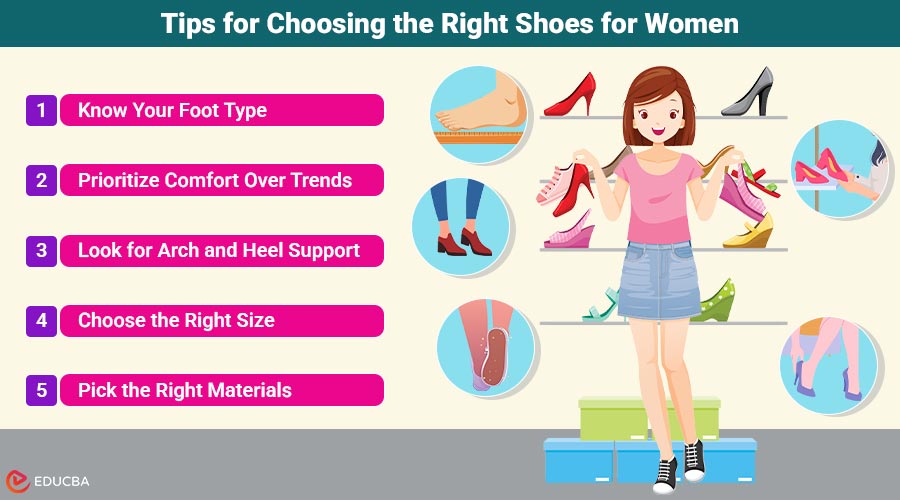
Tips for Choosing the Right Shoes for Women
Explore essential tips to select shoes that offer the perfect balance of style, comfort, and foot health.
1. Know Your Foot Type
Knowing what your feet look like is crucial before buying any shoes. There are different types of shoes, and each foot is unique, with varying arches and foot shapes.
- Proper footwear should be worn to prevent discomfort and fatigue, especially for individuals with flat feet.
- Cushioned insoles are perfect for people with high arches, as they reduce pressure and absorb shock.
- Shoes with a wide toe box prevent your toes from being cramped and reduce discomfort from flat soles.
By examining your foot type at the shoe store or with a podiatrist, you can determine which type of shoes best suits your needs.
2. Prioritize Comfort Over Trends
Although fashionable shoes look great on the shoe shelf, they are not worth the effort if they feel uncomfortable at all. A supportive shoe should:
- Provide adequate cushioning to prevent strain while walking.
- Elongate at the ball of your foot (not arch).
- Fit snugly without tightness or looseness.
To speed up the process, wear shoes in the evening when your feet are slightly swollen. By doing this, you can select a pair that feels comfortable to wear for the entire day.
3. Look for Arch and Heel Support
A proper heel supports your ankles and knees, a right arch supports them both and helps keep them in place.
- For women who spend long periods of time standing or walking, shoes with orthopedic features or padded insoles are the most suitable.
- Avoid wearing heels that are too high when donning stilettos for daily activities.
- To achieve a more balanced look, opt for wedges, block heels, or low-heeled shoes that offer weight distribution.
4. Choose the Right Size
It is a common mistake for women to always wear the same shoe size. Contrary to popular belief, foot size can change over time due to factors like age or pregnancy.
- Before buying shoes, ensure that you measure both feet accurately.
- Keep a minimum distance of half an inch between your longest toe and the heel of your shoe.
- Take the brand’s size chart into account when making an online purchase.
Wearing a proper size will prevent you from getting blisters, corns, or any unnecessary strain on your feet.
5. Pick the Right Materials
The material of your shoe has an enormous impact on comfort and breathability.
- Leather shoes are long-lasting, have a flexible construction, and can breathe.
- For casual or athletic wear, mesh or fabric shoes are a good choice because they are light and breathable.
- Avoid low-quality synthetic materials that hold heat and moisture, as they can cause fungal infections.
Despite the higher price, using high-quality materials can help you maintain your feet and prolong the life of your shoes.
Final Thoughts
Choosing the right shoes for women goes beyond fashion—it is about supporting your health, posture, and daily comfort. By considering foot type, comfort, support, size, and material, you can find shoes that enhance both your style and well-being. The next time you shop for women’s footwear, focus not only on the design but also on how the shoes support your walking and overall foot health. Strong, comfortable feet make every step confident and pain-free.
Recommended Articles
We hope this blog on choosing the right shoes for women helps you find the perfect balance of style, comfort, and health. Explore these articles for more tips and insights.

