
What is Cash Flow Forecasting?
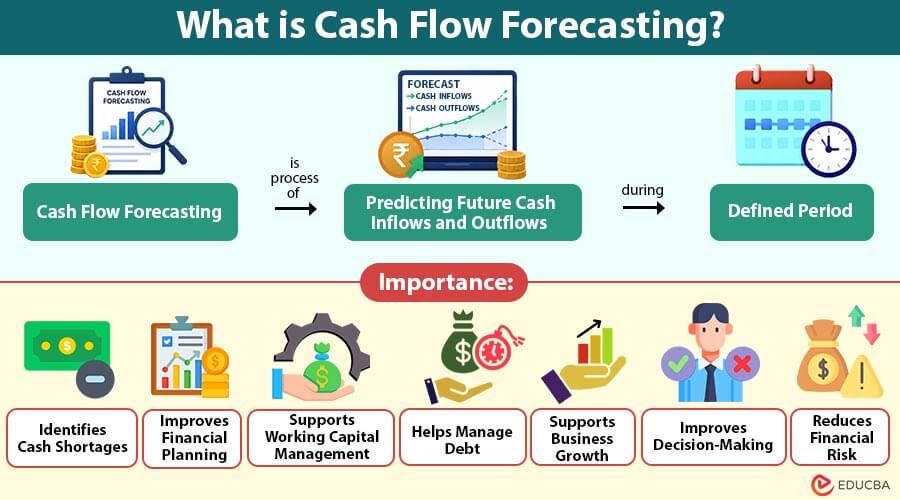
Cash flow forecasting is process of predicting future cash inflows and outflows during defined period. The forecast typically considers expected customer collections, sales receipts, operating expenses, loan payments, taxes, capital expenditures, and other cash movements.
A basic cash flow forecast can be represented as:
For example, suppose a company begins a month with ₹10 lakh in cash. It expects ₹25 lakh in customer collections and ₹20 lakh in expenses. Its projected closing cash balance would be:
₹10 lakh + ₹25 lakh − ₹20 lakh = ₹15 lakh
This simple calculation allows management to understand whether sufficient cash will be available to meet upcoming obligations.
Table of Contents:
Key Takeaways:
- Cash flow forecasting predicts future cash movements and helps businesses maintain adequate liquidity.
- Accurate forecasts support working capital management, debt repayment, investment planning, and informed financial decisions.
- Regular updates and realistic assumptions improve forecast accuracy and help identify potential cash shortages.
- Scenario-based forecasting helps businesses manage uncertainty, reduce financial risks, and prepare for changing conditions.
Why is Cash Flow Forecasting Important?
Below are the main reasons cash flow forecasting is important:
1. Identifies Cash Shortages
A forecast can reveal periods when expected cash outflows exceed available cash. Management can then arrange financing, delay non-essential spending, accelerate collections, or take other corrective measures.
2. Improves Financial Planning
Businesses can use forecasts to plan expenses, investments, debt repayments, hiring, and expansion based on expected cash availability.
3. Supports Working Capital Management
Cash flow forecasting helps companies manage receivables, payables, inventory, and other working capital components more effectively.
4. Helps Manage Debt
Companies can forecast upcoming interest and principal payments and determine whether sufficient cash will be available to service their debt.
5. Supports Business Growth
Expansion often requires significant cash investment. Forecasting helps businesses determine whether they can fund growth internally or need additional financing.
6. Improves Decision-Making
Management can compare expected cash availability with planned expenditures before making major financial commitments.
7. Reduces Financial Risk
By identifying potential liquidity problems early, businesses have more time to respond and reduce the risk of missed payments or financial disruption.
Types of Cash Flow Forecasting
Businesses can prepare different types of forecasts depending on their objectives and planning horizon.
1. Short-Term Cash Flow Forecast
Short-term forecasts generally cover periods ranging from a few days to several months. They focus on immediate cash receipts and payments, such as customer collections, payroll, supplier payments, rent, taxes, and loan obligations. These forecasts are particularly useful for managing daily liquidity.
2. Medium-Term Cash Flow Forecast
Medium-term forecasts may cover several months to approximately one year. They help businesses plan larger expenditures, financing requirements, seasonal changes, and working capital requirements.
3. Long-Term Cash Flow Forecast
Long-term forecasts may extend beyond one year. They are generally used for strategic planning, capital investments, expansion, acquisitions, debt management, and long-term financing decisions.
4. Direct Cash Flow Forecast
A direct forecast estimates specific cash receipts and payments based on expected transaction dates. It can provide detailed visibility into near-term liquidity.
5. Indirect Cash Flow Forecast
An indirect approach generally starts with projected financial statements or accounting measures and adjusts for non-cash items and working capital changes to estimate future cash flows.
How Does Cash Flow Forecasting Work?
Cash flow forecasting generally involves the following steps:
1. Determine the Forecast Period
Choose a suitable period based on the forecast’s purpose, such as days for liquidity management or months for strategic planning.
2. Calculate Opening Cash Balance
Record the cash available at the beginning of the forecast period.
3. Estimate Cash Inflows
Identify expected sources of cash, including customer payments, sales, receivables, interest income, asset sales, financing, and refunds.
4. Estimate Cash Outflows
Forecast expected payments such as salaries, suppliers, rent, taxes, loan repayments, interest, capital expenditures, and other expenses.
5. Calculate Net Cash Flow
Subtract total cash outflows from total cash inflows.
Net Cash Flow = Total Cash Inflows − Total Cash Outflows
6. Calculate Closing Cash Balance
Add net cash flow to the opening cash balance.
Closing Cash Balance = Opening Cash Balance + Net Cash Flow
The projected balance can then be compared with the company’s minimum cash requirement.
7. Review and Update the Forecast
Compare actual cash movements with forecasts and regularly update estimates as business conditions change.
Example of Cash Flow Forecasting
Consider a company with an opening cash balance of ₹20 lakh.
During the month, it expects:
- Customer collections: ₹40 lakh
- Other cash receipts: ₹5 lakh
- Supplier payments: ₹25 lakh
- Employee expenses: ₹8 lakh
- Rent and utilities: ₹3 lakh
- Tax payments: ₹4 lakh
Total inflows are:
₹40 lakh + ₹5 lakh = ₹45 lakh
Total outflows are:
₹25 lakh + ₹8 lakh + ₹3 lakh + ₹4 lakh = ₹40 lakh
Therefore:
Net Cash Flow = ₹45 lakh − ₹40 lakh = ₹5 lakh
The projected closing cash balance is:
₹20 lakh + ₹5 lakh = ₹25 lakh
The company can use this information to determine whether it has sufficient liquidity for upcoming expenses and investments.
Cash Flow Forecasting vs Cash Flow Statement Difference
The table below highlights the key differences between cash flow forecasting and a cash flow statement.
| Basis | Cash Flow Forecasting | Cash Flow Statement |
| Meaning | Estimates future cash inflows and outflows. | Reports actual cash inflows and outflows. |
| Purpose | Helps plan and manage future liquidity. | Shows how cash was generated and used. |
| Nature | Forward-looking. | Historical. |
| Time Period | Covers upcoming days, months, or years. | Covers a completed accounting period. |
| Cash Flows | Based on expected receipts and payments. | Based on actual transactions. |
| Main Activities | Forecasts operating, investing, and financing cash flows. | Reports operating, investing, and financing cash flows. |
| Use | Supports budgeting, liquidity planning, and financial decision-making. | Helps evaluate past cash management and financial performance. |
| Example | A company expects to receive ₹8 lakh from customers and pay ₹5 lakh to suppliers next month. | A company reports that it received ₹8 lakh from customers and paid ₹5 lakh to suppliers last month. |
| Key Question | “What may happen to our cash?” | “What happened to our cash?” |
| Preparation | Prepared using assumptions, estimates, and expected transactions. | Prepared using historical accounting records. |
Key Factors that Affect Cash Flow Forecasts
Several factors can affect a forecast’s accuracy.
1. Sales and Revenue
Changes in expected sales directly affect projected customer receipts. Businesses should consider seasonality, market conditions, and uncertainty in the sales pipeline.
2. Customer Payment Behavior
A company may generate strong sales, but experience delayed cash collections. Therefore, incorporate historical payment patterns and credit terms into forecasts.
3. Supplier Payment Terms
Changes in supplier terms can affect the timing of cash outflows.
4. Operating Expenses
Unexpected increases in wages, rent, utilities, technology costs, or other expenses can create differences between forecast and actual cash flow.
5. Capital Expenditures
Large purchases of equipment, property, or technology can significantly affect liquidity and should be incorporated into forecasts.
6. Financing Activities
New loans, repayments, equity investments, and dividend payments can materially change projected cash balances.
Challenges of Cash Flow Forecasting
Despite its benefits, cash flow forecasting can be challenging.
1. Uncertain Revenue
Future sales can be difficult to predict because customer demand, competition, and market conditions may change unexpectedly.
2. Delayed Customer Payments
Customers may pay invoices later than expected, creating cash shortages and making accurate collection forecasts more difficult.
3. Unexpected Expenses
Unplanned repairs, emergencies, legal costs, or sudden increases in operating expenses can create unexpected cash requirements.
4. Data Quality Issues
Incomplete, inaccurate, or outdated financial data can lead to unreliable assumptions and reduce overall cash flow forecast accuracy.
5. Changing Business Conditions
Economic conditions, interest rates, exchange rates, and supply-chain disruptions can significantly affect future business cash flows.
6. Managing Uncertainty
Businesses can improve forecast reliability by regularly updating assumptions, monitoring actual results, and preparing multiple scenario-based cash flow forecasts.
Final Thoughts
Cash flow forecasting helps businesses predict future cash inflows, outflows, and liquidity needs. It supports working capital management, investment planning, debt payments, and informed decisions. Using realistic assumptions, accurate timing, regular updates, and scenarios, forecasting enables proactive cash management, reduces financial risks, and supports sustainable business growth.
Frequently Asked Questions (FAQs)
Q1. Who is responsible for preparing a cash flow forecasting?
Answer: The finance or accounting team usually prepares the forecast, with input from sales, operations, procurement, and management.
Q2. Can startups benefit from cash flow forecasting?
Answer: Yes. Startups can use forecasts to monitor their cash runway, plan funding requirements, control spending, and avoid running out of operating cash.
Q3. How does cash flow forecasting support inventory decisions?
Answer: It helps businesses assess whether they can afford inventory purchases and understand how stock investments may affect available cash.
Q4. What is cash flow forecasting software used for?
Answer: Cash flow forecasting software can help businesses consolidate financial data, model future scenarios, track variances, automate calculations, and monitor liquidity.
Recommended Articles
We hope that this EDUCBA information on “Cash Flow Forecasting” was beneficial to you. You can view EDUCBA’s recommended articles for more information.


