


Crafting a Career Change Resume with No Experience
Changing careers without direct experience in your target field might feel impossible, but you are not alone. Recent surveys show 52% of workers are considering a career change, and 29% have completely switched fields. Employers today increasingly value transferable skills and potential over traditional linear paths. The key to success is not having years of experience in the new field it is knowing how to present your background effectively. A well-structured career change resume helps employers clearly see how your experience connects to your future goals.
Which Resume Format Works Best for Career Changers?
The traditional chronological resume (listing jobs from newest to oldest) can work against career changers. It puts the spotlight on work history that may not align with your new direction. Instead, consider these alternatives:
- Functional Resume: Emphasizes skills and accomplishments before listing work history. Create sections for key competencies, such as “Project Management” or “Data Analysis,” and list achievements that demonstrate those skills. Some applicant tracking systems struggle with purely functional resumes, though.
- Combination (Hybrid) Resume: Combines the advantages of both approaches. It leads with a skills summary highlighting relevant abilities, then provides a simplified work history. This answers “Why you?” upfront while satisfying systems expecting dates and progression. For career changers, this is often the smartest choice.
- Chronological Resume: Use only if you have overlapping experience in recent roles. Otherwise, it highlights your lack of direct experience.
Pro Tip:
Tools like AIApply offer multiple template styles (including functional and hybrid formats) to help you see which layout highlights your strengths while staying ATS-friendly.
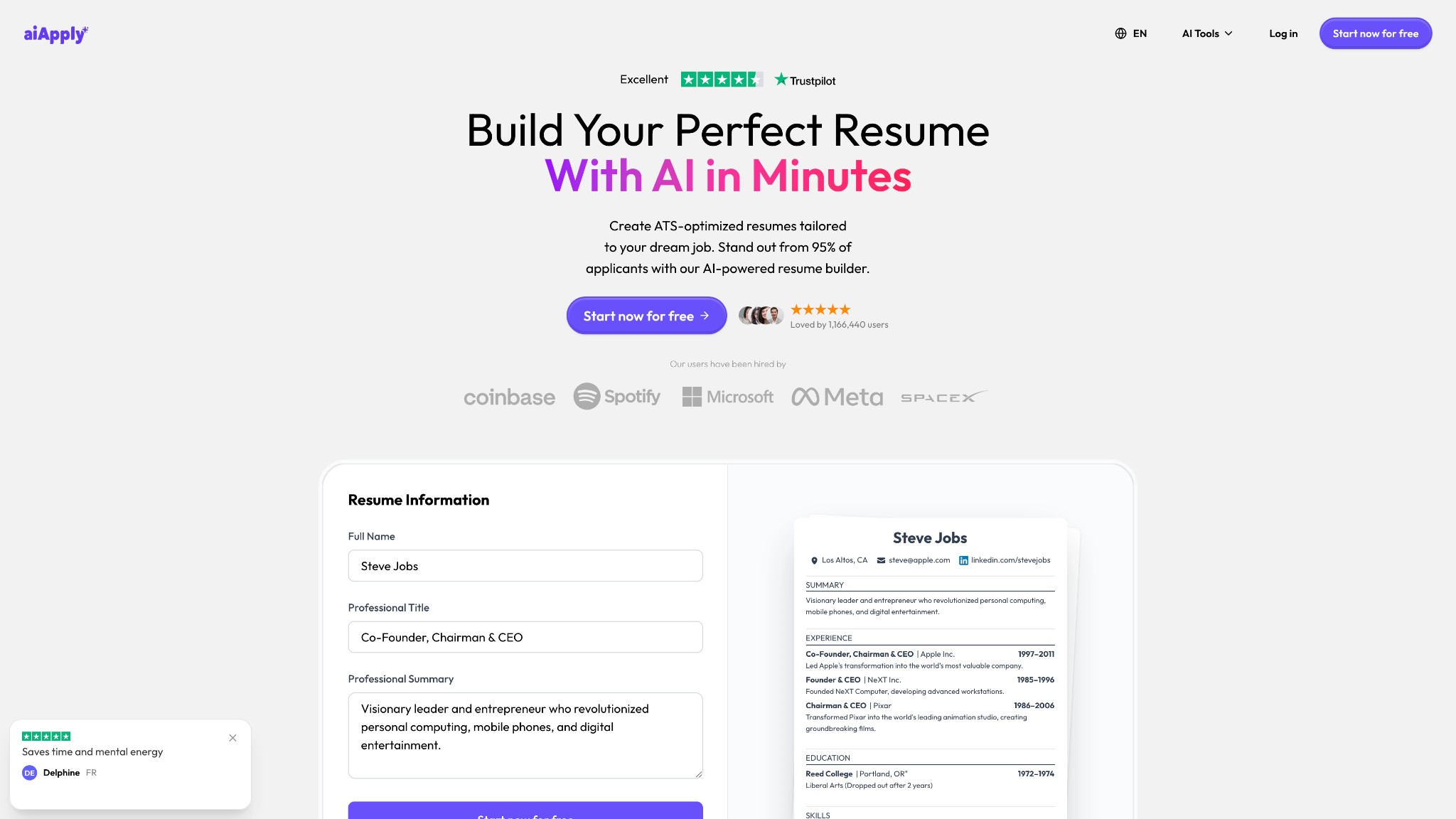
Image Source: AIApply
The Resume Builder interface makes it easy to select between different formats and see how your experience appears in each layout. You can test which structure best positions your transferable skills without having to start from scratch each time.
How to Write a Summary for a Career Change Resume?
Your resume’s opening section is critical. This is where you frame your story immediately. Use either a professional summary or career objective (or blend both) to make your intentions clear.
- Resume Summary: A short paragraph highlighting your biggest strengths and achievements, connected to your new goal. For example: “Results-oriented marketing manager with 7 years leading campaigns, now transitioning into sales to use client relationship and negotiation skills.”
- Career Objective: A concise statement of your aspirations and value. Include what role you are targeting and the key skills you bring. For instance: “Experienced educator seeking to transition into healthcare administration, using organizational and interpersonal skills to improve patient outreach.”
Make it specific. Tailor this opening to each job when possible. Use the target job title and avoid vague clichés like “seeking a challenging position.” Be concrete about how you plan to contribute.
What Transferable Skills Should You Highlight?
When you lack experience in the target field, transferable skills become your currency. These are abilities and qualities you have developed that apply across different jobs and industries.
Review job descriptions in your target field. What skills keep appearing? Common transferable skills include communication, leadership, project management, problem-solving, teamwork, adaptability, customer service, organization, and tech literacy. Create a dedicated “Key Skills” section on your resume. Pick 5-10 of your strongest transferable skills that align with the job requirements. For example:
Key Skills:
Project Management • Leadership • Data Analysis • Communication • Agile Methodologies • Bilingual (Spanish) • MS Excel & SQL
But do not just list them. Prove these skills through your experience bullets. Instead of simply stating “Leadership,” add a bullet under a past job: “Led a team of 5 sales associates to achieve 120% of quarterly targets by improving training and morale.” Use the language of your target industry when describing skills. If the new field calls it “client relations” instead of “customer service,” adjust your wording. This signals you understand their world.
How to Make Your Work Experience Relevant?
Your work experience section requires strategy. You should include your work history, but present it carefully.
- Highlight Transferable Achievements: Highlight tasks and accomplishments that cross over industries. If you worked in hospitality and you are moving into sales, your experience “upselling premium services by 30%” translates to sales skills.
- Trim Irrelevant Details: Focus on 4-5 bullet points for each job that showcase the skills supporting your new career. Older jobs with no bearing can be downplayed (just list title, company, and dates).
- Add Relevant Non-Work Experience: Volunteer work, freelance gigs, side projects, or coursework can fill gaps. If you built a website for a friend’s business, list that. Show practical exposure to the new field, even if unpaid.
Make sure the person reading your resume is not left wondering why you are applying. The thread connecting your past to your future should be crystal clear.
Why Education and Certifications Matter More When Changing Careers?
When work experience is thin, education and training become more important for demonstrating your knowledge base.
- Put Relevant Education Front and Center: If you have a degree or coursework directly relevant to the new field, highlight it. Someone moving into finance who minored in Economics should note that. If your degree is unrelated, you can still list it (education is positive), but you may not need to go into detail.
- Add New Certifications or Courses: Upskilling is often part of changing careers. If you have completed an online course, bootcamp, certification, or license relevant to your target job, definitely include it. These demonstrate your knowledge and show you are proactive about your new career.
- Emphasize Applicable Classes or Projects: If you are a recent grad or did a career-oriented program, list relevant courses or projects. Someone switching to data analytics might mention “Completed coursework in Statistics, SQL, and Machine Learning.”
By showcasing your commitment to learning the ropes of the new industry, you ease concerns that you have no idea what you are getting into.
Optimizing Your Career Change Resume for ATS Systems
Many companies rely on ATS (Applicant Tracking Systems) to screen resumes before they reach recruiters. Your resume needs the right keywords and format to make it through.
- Tailor to Each Job Posting: Customize your resume for each application. Carefully review the job description to pinpoint the required skills, tools, and qualifications. Make sure those exact terms appear in your resume if you have them. A targeted resume always outperforms a generic one.
- Use Standard Section Headings: Stick to familiar headings such as “Summary,” “Skills,” “Experience,” and “Education.” Clever or unusual headings can confuse ATS parsing.
- Keep Format Simple and Clean: Use a modern, uncluttered template with clear fonts and proper alignment. Avoid heavy graphics, complex tables, or unusual fonts. Save your file in a PDF (unless the employer specifically requests a Word document) to keep the formatting intact.
- Test With a Resume Scanner: Tools can show you how an ATS might view your resume. These catch missing keywords or formatting problems. At minimum, copy-paste your resume into a plain text editor to see if anything gets lost.
Pay attention to details: use a professional email, add your phone number, and customize your LinkedIn URL. No headshot photos or personal info, such as age or marital status, on U.S./UK/Canada resumes.
Why You Should Write a Cover Letter for Career Changes?
A strong cover letter tells the story behind your career change. While the resume lists facts, the letter provides context. Use it to acknowledge your shift, express enthusiasm, and highlight 1-2 transferable strengths. Keep the tone confident and focused on what you bring. Avoid apologetic language like “although I do not have experience…” and instead frame it as “my background has prepared me to excel by…” Customize each letter with the company name and specific role. Many hiring managers value cover letters from career changers because they offer the narrative a resume can not.
Common Career Change Resume Mistakes to Avoid
Be aware of these common pitfalls to ensure your career change resume makes a strong, professional impression.
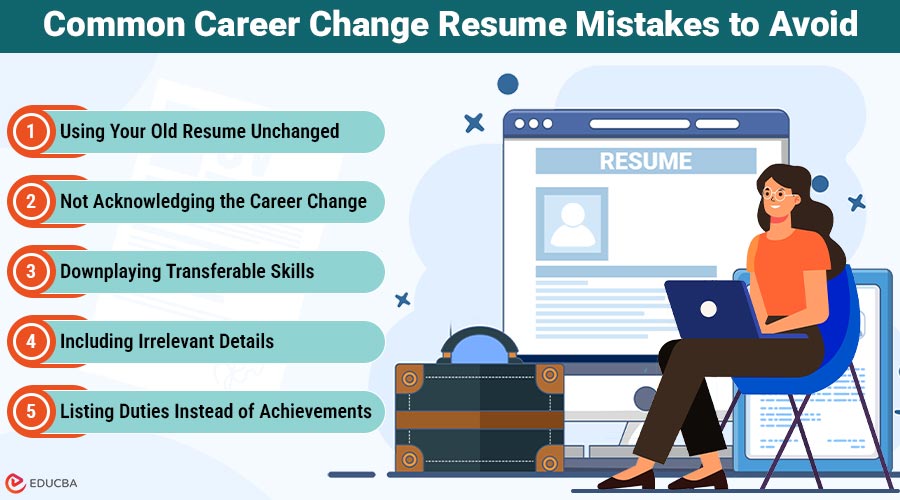
- Using Your Old Resume Unchanged: Simply submitting your standard resume without customization is a mistake. Rewrite and rearrange to focus on what is relevant for the new role.
- Not Acknowledging the Career Change: If your intent is not obvious, the employer might be confused about why you are applying. Use your summary or cover letter to position yourself as transitioning.
- Downplaying Transferable Skills: Highlight those skills prominently, both in a skills section and woven into experience bullets. Do not assume the employer will connect the dots.
- Including Irrelevant Details: Packing your resume with every task you have done can dilute impact. Be ruthless about relevance.
- Listing Duties Instead of Achievements: Employers want to know how well you did something, not just what you did. Turn duties into achievement statements with results.
- Typos and Poor Formatting: A single typo can undermine you. Proofread multiple times and maintain clean, consistent formatting.
- Being Deceptive: Never lie on your resume. Be honest. Focus on how quickly you can learn what you do not know.
Best Tools for Building a Career Change Resume
Transitioning careers can be challenging, but tools can help your resume shine. AI-powered resume builders can take your existing background and generate polished content aligned with target roles. Resume scanners compare your resume against job descriptions and flag missing keywords or formatting issues. Career change resources and templates can clarify how to frame your story. Networking and informational interviews are invaluable, too. Interview prep tools like AIApply’s Interview Buddy can simulate common questions and help you practice your answers, especially for questions like “Why are you changing careers now?”
Image Source: AIApply
Interview Buddy provides real-time AI coaching during live video interviews, helping you articulate your career change story with confidence. It is particularly valuable when you need to explain your transition and highlight how your experience applies to the new role. Using available resources means working smarter, not harder. You focus on strategy and story while technology handles polishing and optimization.
Final Thoughts
Writing a career change resume when you have no direct experience might feel daunting, but experience is not only about job titles. You likely have skills, perspectives, and accomplishments that are relevant. It is just a matter of framing them correctly. Career changes are normal today. People pivot industries and roles all the time. Your diverse background can be an asset, not a drawback, if you present it right.
Be patient and persistent. Switching careers can take time. You might face rejection or need to start at a slightly lower level to get your foot in the door. Use each application as a learning opportunity to refine your materials. Keep networking and building relevant experience on the side through courses, freelancing, or volunteering. A stellar career change resume is within your reach. Focus on what you do bring, format it appropriately for your new industry, and emphasize quality and relevance. With determination and the right approach, you will open that next chapter of your professional life.
Frequently Asked Questions (FAQs)
Q1. Should I use a functional or chronological resume format for a career change?
Answer: For most career changers, a combination (hybrid) resume works best. It leads with a skills summary to highlight relevant abilities, then provides a simplified work history. This format showcases what you can do while also providing employers with a clear timeline. Pure functional resumes can confuse ATS systems, and some recruiters prefer seeing dates.
Q2. How do I explain my career change in my resume?
Answer: Use your professional summary or objective to clearly state your transition. For example: “Marketing manager with 7 years of experience transitioning into sales to use client relationship skills.” Make it explicit so employers understand your intent. Your cover letter can expand on this story.
Q3. What if I have zero experience in the new field?
Answer: Focus heavily on transferable skills and any relevant non-work experience (volunteering, side projects, coursework, certifications). Show you have taken steps to prepare for the transition. Emphasize your proven ability to learn quickly and adapt. Employers value potential and drive.
Q4. Should I remove old jobs from my resume that are not relevant?
Answer: You can downplay them, but you should not completely hide work history. For very old or irrelevant roles, just list job title, company, and dates without bullet points. Focus your detailed descriptions on recent roles and highlight transferable skills. Gaps can raise questions, so showing continuity is helpful.
Q5. How many skills should I list on my resume?
Answer: Include 5-10 of your strongest transferable skills that match the job requirements. Quality matters more than quantity. Make sure you can back up each skill with examples from your experience. Mix hard skills (technical knowledge, software) and soft skills (communication, leadership) for a well-rounded picture.
Q6. Do I need to address my career change in the cover letter, too?
Answer: Yes, the cover letter is your chance to tell the “why” behind your career change. Clearly explain why you made the career change and how your skills and experience make you a strong fit for the new role. This context can make employers more receptive to taking a chance on you despite non-traditional experience.
Recommended Articles
We hope this guide to creating a career change resume helps you craft a strong application. Check out these recommended articles for more tips and strategies to succeed in your career transition.


