
What is Bounce Rate?
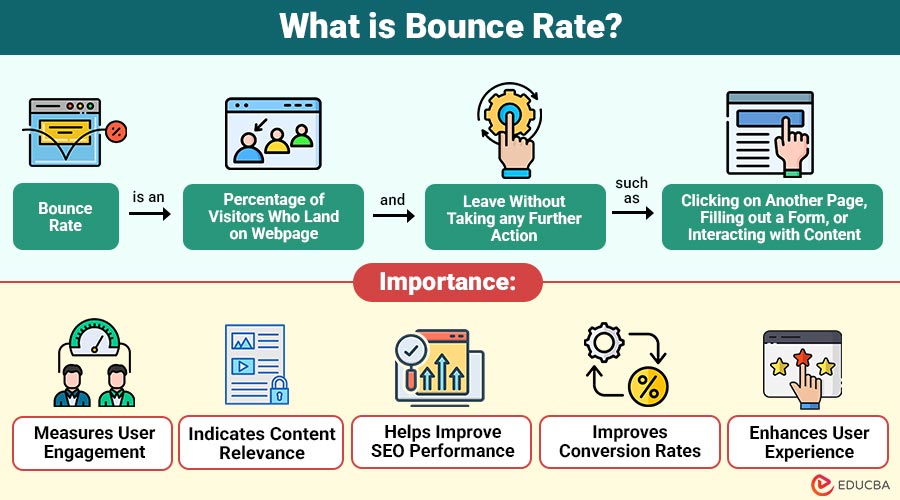
Bounce rate is percentage of visitors who land on webpage and leave without taking any further action, such as clicking on another page, filling out a form, or interacting with content.
For example, if 100 users visit your website and 60 leave after viewing only one page, your bounce rate is 60%.
Table of Contents:
- Meaning
- Formula
- Importance
- Types
- Factors
- What is a Good Bounce Rate?
- How to Reduce Bounce Rate?
- Difference
- Common Mistakes
Key Takeaways:
- The percentage of website visitors who depart after merely reading one page without interacting is measured by the bounce rate.
- A high bounce rate is frequently a sign of bad user experience, slow site speed, or irrelevant content.
- Lower bounce rate improves engagement, boosts conversions, and signals better website performance to search engines.
- Optimizing content, design, speed, and targeting helps reduce bounce rate and improve overall user retention.
Bounce Rate Formula
The formula for calculating is:
Where:
- Single-page sessions = visitors who viewed only one page
- Total sessions = all website visits
This metric is widely tracked using analytics tools such as Google Analytics, which offer comprehensive information about user behavior, traffic sources, and engagement patterns.
Why is Bounce Rate Important?
It is not just a number—it offers useful information about website performance and user experience. Here’s why it matters:
1. Measures User Engagement
A lower percentage indicates visitors engage with content, browse multiple pages, spend more time, and show genuine interest overall.
2. Indicates Content Relevance
Higher values suggest visitors may not find the content relevant to their intent, expectations, or needs, leading them to exit quickly.
3. Helps Improve SEO Performance
In SEO, it indirectly reflects user satisfaction, helping search engines assess content quality, relevance, and usefulness for ranking decisions.
4. Improves Conversion Rates
Reducing this metric increases engagement, encourages deeper exploration, and improves chances of conversions, generating leads, sales, signups, or desired actions.
5. Enhances User Experience
A higher value signals poor usability, slow loading, or confusing navigation, highlighting areas requiring optimization and a better user experience.
Types of Bounce Rate
It can vary depending on the type of website:
1. Content Websites
Blogs and news websites often show higher bounce rates because users read one article and then leave immediately after consumption.
2. E-commerce Websites
E-commerce sites strive for lower bounce rates, anticipating that users will explore products and categories and complete their purchase journeys.
3. Landing Pages
Landing pages may show high bounce rates when designed for single actions, such as sign-ups, downloads, or specific conversions.
Factors Affecting Bounce Rate
Several factors influence whether users stay on your website or leave immediately:
1. Page Load Speed
Slow page loading speed frustrates users, increases waiting time, reduces satisfaction, and often leads visitors to leave the website without exploring further.
2. Poor Content Quality
Low-quality content that lacks relevance, clarity, or value fails to engage users, causing them to lose interest and exit the website quickly.
3. Weak Website Design
A poorly designed website with cluttered layout, unattractive visuals, and confusing navigation discourages users from browsing further and increases bounce rate significantly.
4. Irrelevant Traffic
Attracting the wrong audience through improper targeting results in visitors who are not interested, leading to quick exits and increased bounce rates.
5. Lack of Mobile Optimization
Unoptimized mobile websites make it tough for consumers to navigate and rapidly drive them away.
6. Misleading Meta Titles or Descriptions
When meta titles or descriptions do not match actual content, users feel deceived, resulting in immediate exits and negatively impacting overall bounce rate.
What is a Good Bounce Rate?
Its benchmarks vary by industry:
- 20% – 40%: Excellent performance
- 40% – 60%: Average or acceptable
- 60% – 80%: Needs improvement
- 80%+: Poor engagement
However, these ranges are not absolute. A single-page blog or landing page may naturally have a higher bounce rate.
How to Reduce Bounce Rate?
Improving requires a combination of technical optimization and content strategy.
1. Improve Page Loading Speed
Users expect fast-loading websites, so optimize images, enable browser caching, minimize code, and improve server response time to enhance overall performance.
2. Create High-Quality Content
Publish valuable, engaging, and well-structured content that aligns with user intent, answers questions clearly, and encourages visitors to explore more pages.
3. Improve Website Design
Use clean layouts, intuitive navigation, appealing visuals, and readable fonts to enhance user experience, making it easier for visitors to stay longer.
4. Use Internal Linking
Include relevant internal links within content to guide users toward related pages, improving navigation, increasing engagement, and encouraging longer website browsing sessions.
5. Optimize for Mobile Devices
To enhance user experience, make sure your website is fully responsive, loads quickly, and works flawlessly on smartphones, tablets, and various screen sizes.
6. Target the Right Keywords
Concentrate on pertinent keywords that align with user intent, draw in the appropriate audience, and guarantee that users find just what they are looking for.
7. Add Engaging Visuals
To make content visually appealing, enhance comprehension, grab attention, and dramatically raise user engagement levels, include images, videos, infographics, and charts.
Difference Between Bounce Rate and Exit Rate
Here is the difference explained in a simple way.
- Bounce Rate: User leaves after viewing only one page
- Exit Rate: User leaves from a specific page after visiting multiple pages
It focuses on single-page visits, while exit rate tracks final page in a session.
Common Mistakes
Here are some common mistakes that negatively influence user experience and lead to the higher bounce rates on websites:
1. Poor Website Structure
A poorly structured website confuses visitors, making it difficult to navigate content, find relevant information, and encourages them to leave quickly.
2. Irrelevant Content Targeting
When website content does not align with user search intent, visitors feel dissatisfied and leave immediately without exploring additional pages or content.
3. Excessive Advertisements
Too many advertisements clutter webpages, distract users from main content, interrupt browsing experience, and often force visitors to leave the website prematurely.
4. Slow Hosting Server
A slow hosting server increases page load time, frustrates users, reduces satisfaction, and causes visitors to abandon the website before interacting further.
5. Lack of Clear Navigation
Unclear navigation structure makes it difficult for users to browse different sections, find information easily, and results in higher chances of exiting website.
6. Not Optimizing for Search Intent
Failure to optimize content based on user intent leads to irrelevant experiences, low engagement levels, and ultimately increases bounce rate significantly on websites.
Final Thoughts
Bounce rate measures how effectively a website retains visitors and reflects the quality of user engagement. A high rate indicates a poor experience or irrelevant content, while a low bounce rate indicates greater satisfaction. Improving speed, content, design, and targeting significantly reduces bounce rate, increasing engagement, conversions, and overall website performance.
Frequently Asked Questions (FAQs)
Q1. How can I check the bounce rate?
Answer: You can track it using analytics tools like Google Analytics.
Q2. Does bounce rate affect SEO?
Answer: Yes, indirectly. It reflects user engagement, which influences search rankings.
Q3. Is bounce rate the same for all traffic sources?
Answer: No. it varies by traffic source, such as organic search, social media, ads, or direct traffic.
Q4. How does page load time affect bounce rate?
Answer: Slow page loading frustrates users, causing them to leave quickly, which increases the bounce rate significantly.
Recommended Articles
We hope that this EDUCBA information on “Bounce Rate” was beneficial to you. You can view EDUCBA’s recommended articles for more information

