



Bottom-of-funnel (BOFU) content is the last conversation you have with a buyer before they act. It is where people land when they have done the research and now need a confident push to sign or talk to sales. At this stage, your job is not to get more eyeballs. It is to turn existing intent into a decision. BOFU content should be measured by its ability to move buyers to act. Not by where it lands on a results page. At the bottom of the funnel, a top ranking means nothing if the reader clicks away without buying. Your job here is not to attract traffic. It is to convert existing intent. Write for the person whose finger is hovering over the buy button. In this guide, we will explain how to create a content marketing strategy that not only ranks but also converts.
The Role of BOFU Content in the Buyer’s Journey
The buyer’s journey is simple enough on paper:
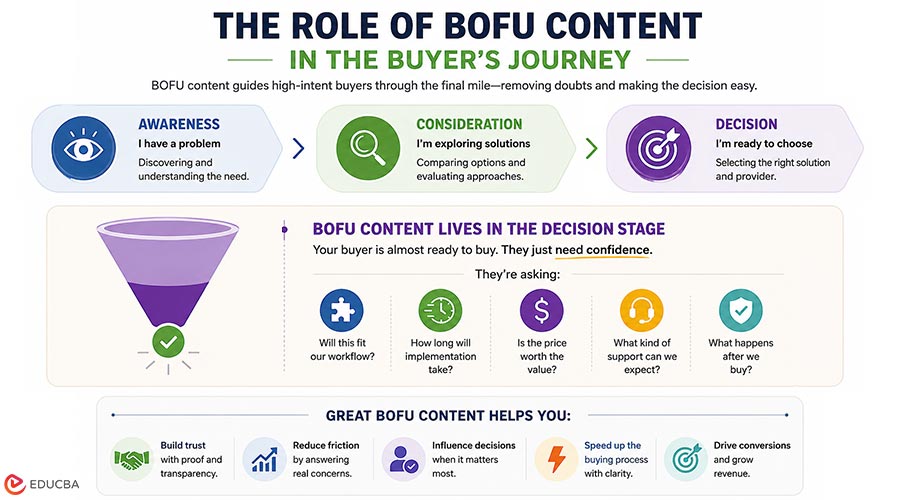
- Awareness: I have a problem.
- Consideration: I am exploring ways to solve it.
- Decision: I am picking a specific solution and provider.
BOFU lives in the decision stage. Your reader is past “what is” and “why it matters.” They are dealing with a handful of last-mile doubts: Will this actually fit our workflow? How hard is migration? Is the price worth it? What happens after we buy? Mike Miller, General Manager at Elkhorn Heating, Air Conditioning, Plumbing & Electrical, says buyers at the decision stage are not looking for more information; they are looking for confidence.
BOFU content should answer practical questions about implementation, value, support, and long-term fit so buyers can decide with fewer doubts. Emmian explains, “By the time someone reaches the decision stage, they have already done their research. What they need now is clear content that addresses their remaining concerns and shows why your solution is the right choice. When you remove uncertainty, you make it easier for buyers to take the next step.” Good BOFU content tackles these final objections directly and makes the next step obvious.
How To Write Bottom-of-Funnel Content That Converts, Not Just Ranks?
As part of your digital content marketing, here is how to write effective blog posts for conversions:
1. Understand the Characteristics of Effective BOFU Blog Posts
When BOFU content works, you can feel it. It is grounded and confident without bluster.
Three traits keep coming up:
- Specificity: Real numbers, named features, clear timelines, side-by-side comparisons
- Action orientation: Every section nudges toward a decision or the next click
- Trust-building: Proof beats claims like reviews, case studies, screenshots, demos, guarantees
Vague promises fall flat with buyers who are ready to spend. The closing content is specific and evidence-based. It is tied directly to what makes your offer different. Show them exactly ‘why you’, and back every claim with evidence they can verify.
Types of BOFU content that reliably convert:
- Case studies with outcomes and implementation details
- Customer testimonials and third-party reviews
- Comparison guides (you vs. competitor, or solution A vs. B)
- Buying guides and pricing breakdowns
- Product walkthroughs and demo videos
- Migration and onboarding guides
- ROI calculators and total cost of ownership explainers
- Security, compliance, and risk-mitigation summaries
Match your content to your unique selling proposition (USP):
- If your edge is speed: Show benchmarks.
- If it is support: Surface SLAs and response times.
- If it is about ease of use: Lean on short time-to-value stories and simple setup steps.
2. Research and Understand your Target Audience
You can not write closing content unless you know what stalls buyers at the finish line. Guessing leads to fluff. Listening gives you the line-by-line outline. Understanding your audience is crucial for your content marketing.
Gather insights by:
- Talk to sales and success: Win–loss reasons, common pushbacks, “deal-killer” questions
- Analyze support tickets and chat logs: Post-trial friction, onboarding fears, integration snags
- Run short buyer surveys: Ask about hesitations, comparison sets, and must-have criteria
- Review on-site search terms: What people look for right before they bounce
- Study product analytics: Features trial users adopt first, where they stall
- Listen to recorded calls (with permission): Language and exact phrases matter
Use these inputs to build decision-stage personas that include:
- Primary job-to-be-done and success criteria
- Short list of competing solutions they are considering
- Top objections (price, complexity, migration risk, compliance)
- Triggers that signal readiness to act (budget, timing, internal approvals)
3. Craft Compelling BOFU Blog Posts
Structure is where persuasion starts. If your post meanders, momentum dies. Here is a simple framework that keeps you moving forward.
- Hook: Name the exact problem and intent. Show you see their context. Example: “Switching from spreadsheets to a real CRM sounds great…until migration, training, and cost creep get in the way.”
- Problem–solution presentation: Acknowledge the friction, then position your product as the least risky path to the promised land. Be precise about how it works.
- Demonstration of value: Use evidence such as screenshots, short clips, mini case studies, stats, and third-party reviews. Point to what is uniquely yours.
- CTA: Make the next step crystal clear and low friction. One CTA per intent: ‘Start free trial’, ‘Get pricing’, ‘Book a 15-minute fit call.’
A few practical tips that help posts convert:
- Write subheads as mini-promises: “Import your data in under an hour” beats “Data migration”
- Use numbers and nouns, not adjectives: “4-week rollout” > “fast setup”
- Add a mini-FAQ at the end: To preempt silent objections with pricing, contracts, data ownership, and more
- Place CTAs near proof points: Not just at the bottom
- Bring in social proof where it counts: A testimonial next to each claim.
4. Optimize BOFU content for conversions
Great words still need a great experience. If your page loads slowly or hides the CTA, you risk losing visitors who are ready to buy. Testing and technical performance make the difference between a BOFU page that converts and one that leaks prospects.
What to focus on:
- A/B testing: Headlines, proof sections, CTA copy, and placement. If you are new to testing, a quick primer on basics helps you stick to sound methods.
- Page speed and mobile: Keep images lean. Avoid heavy scripts. And make CTAs thumb-friendly. When mobile page load time rises from 1 to 3 seconds, the bounce rate rises by 32%. Not the moment you want to lose a ready buyer.
- Conversion-focused design: Sticky CTA on mobile, clear hierarchy, scannable tables, and short forms. Avoid modals that interrupt intent
- Interactive elements: ROI calculators, pricing toggles, sandbox demos, and live chat. Useful when they reduce uncertainty, not distract
- Safety signals: Security badges, compliance notes, guarantees, and clear next steps after the click
5. Measure the Success of Your BOFU Content
If you judge BOFU content by pageviews, you will optimize the wrong things. Track what ties to revenue. Digital marketers should judge BOFU content against revenue-focused metrics rather than surface engagement. Pageviews would not tell you if your BOFU content is doing its job. For one, track conversion rates and lead-close rates. Likewise, connect your CRM to your analytics. And lastly, follow the content through to closed revenue. Once you see which posts actually drive sales, you know exactly where to invest next.
Metrics that matter:
- Primary conversion rate (demo requests, trials, purchase)
- Assisted conversions and pipeline influenced
- Lead-to-close rate and sales cycle length for leads sourced by BOFU content
- Post-click activation (trial-to-paid, feature adoption)
- Content-attributed revenue
Helpful tools and workflows:
- Analytics: Set up conversion tracking and use dedicated thank-you pages or event tracking to keep attribution clean.
- CRM: Connect form fills and meetings back to the page that drove them.
- Heatmaps and session recordings: See where people hesitate or miss the CTA (Hotjar, FullStory).
- Dashboards: Build a simple view of BOFU posts by conversion rate and revenue influenced so you can spot winners fast.
Use performance data to refine headlines, tighten proof, move CTAs, or split one broad post into two intent-specific ones. Small changes at BOFU can yield quick results.
Case Studies: Successful BOFU Blog Posts
Rawad Baroud, CEO of ZeroGPT, believes the best-performing BOFU content succeeds. Why? Because it answers buyers’ final questions clearly and backs up every claim with proof. Baroud shares, “The most effective BOFU content follows a simple formula. It targets people with clear buying intent. It addresses their biggest concerns. And it provides evidence that builds trust. When you make it easy for buyers to see the value of your solution, they are much more likely to take the next step.”
Here are three examples:
1. Shopify’s Comparison Pages
The Shopify vs. WooCommerce page targets high-intent searches, breaks down total cost of ownership, highlights built-in features, and makes the “Start free trial” CTA effortless to find. It aligns the proof with Shopify’s USP (speed to launch and support) while addressing migration and plugin sprawl concerns.
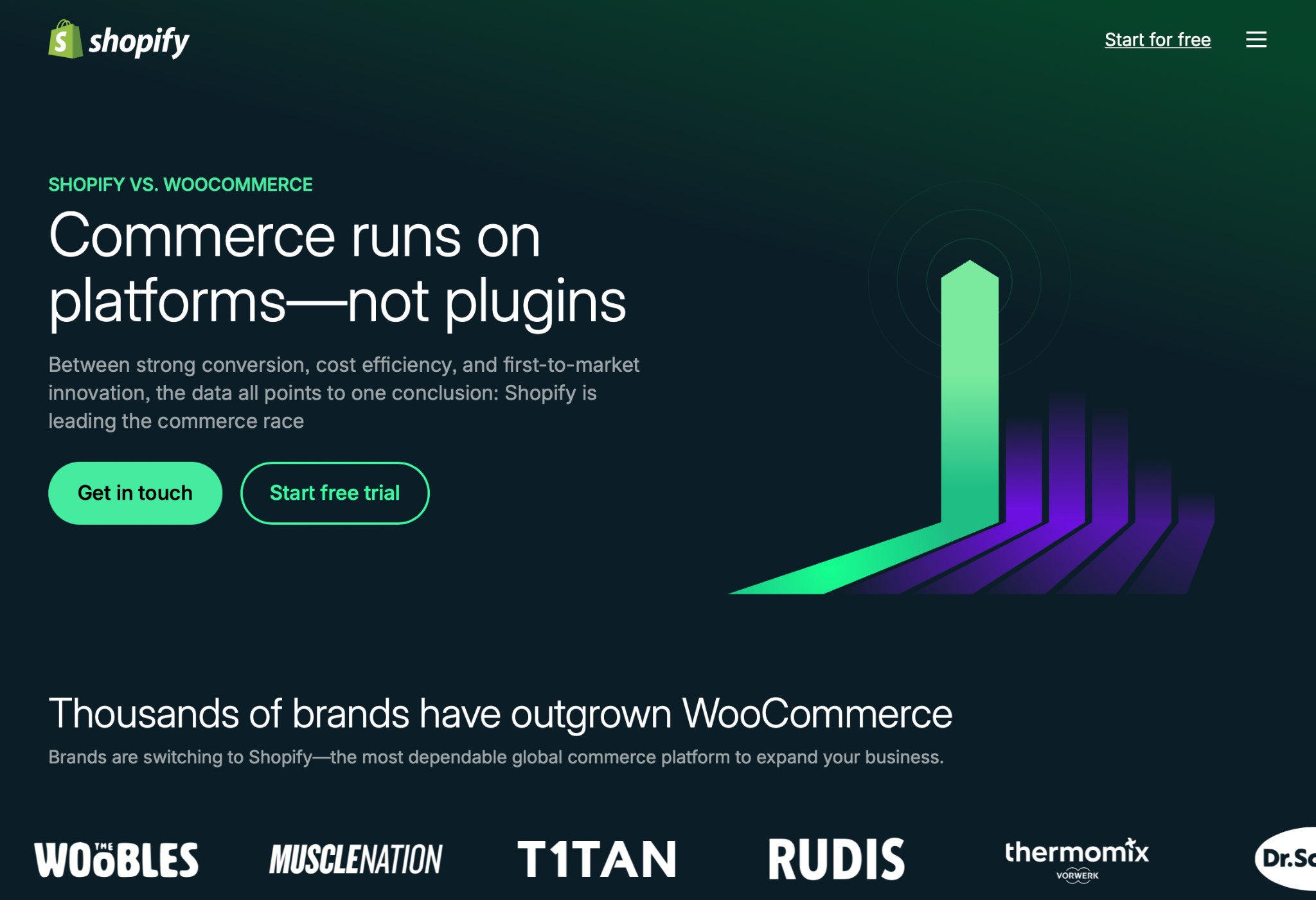
Image source: Shopify
2. Intercom’s Competitor Comparisons
Intercom’s comparison hub relies on side-by-side checklists and clarity of use cases. The hub directs CTAs to book a demo or try the product. It anticipates switching from fears to implementation notes and customer quotes near the CTA.
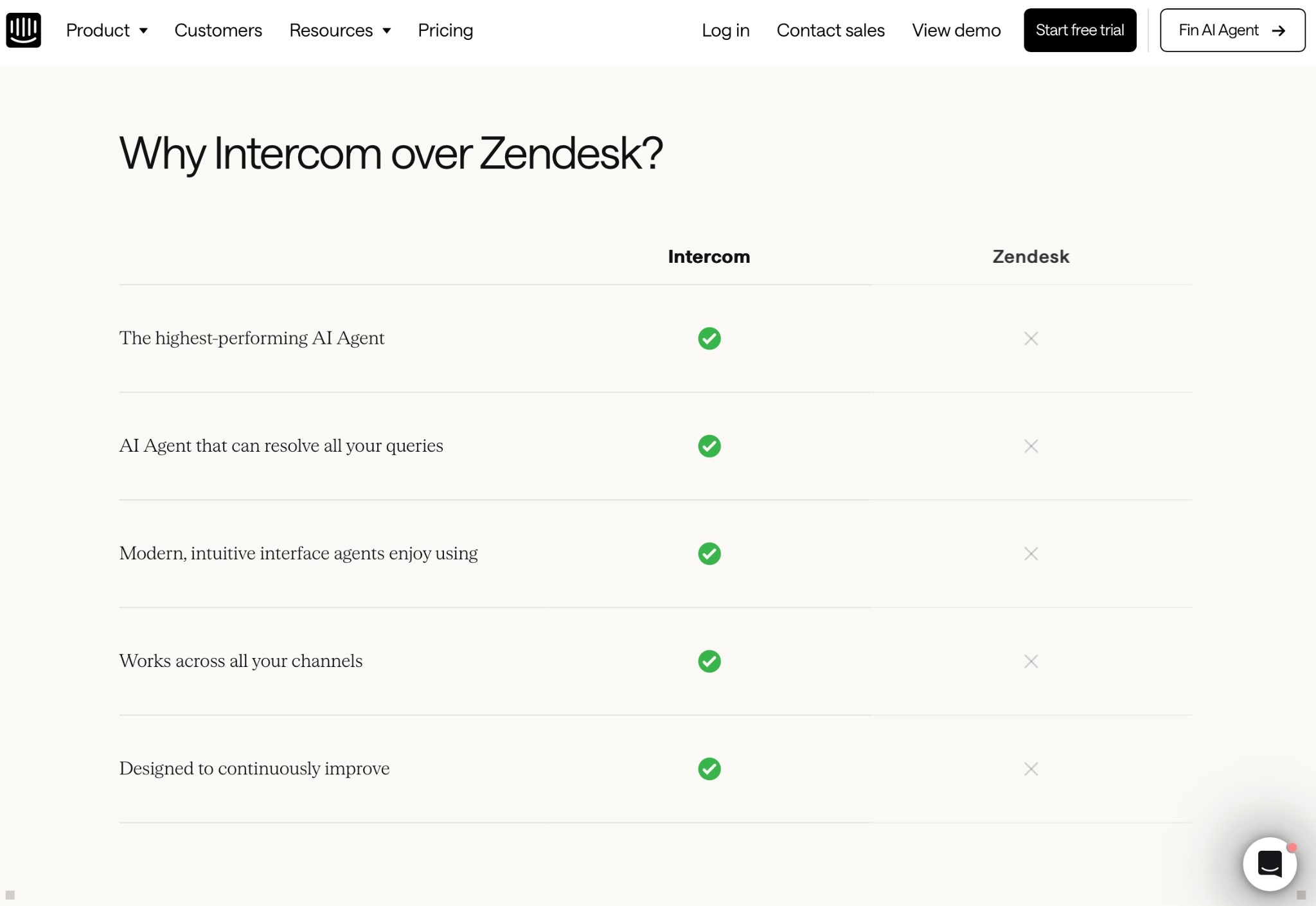
Image Source: Intercom
3. Notion’s Migration and Compare Content
Notion’s “Notion vs. Evernote” page meets buyers already considering a switch. It shows import steps and shares templates to get started. It places a low-friction “Get Notion free” CTA where confidence is highest.
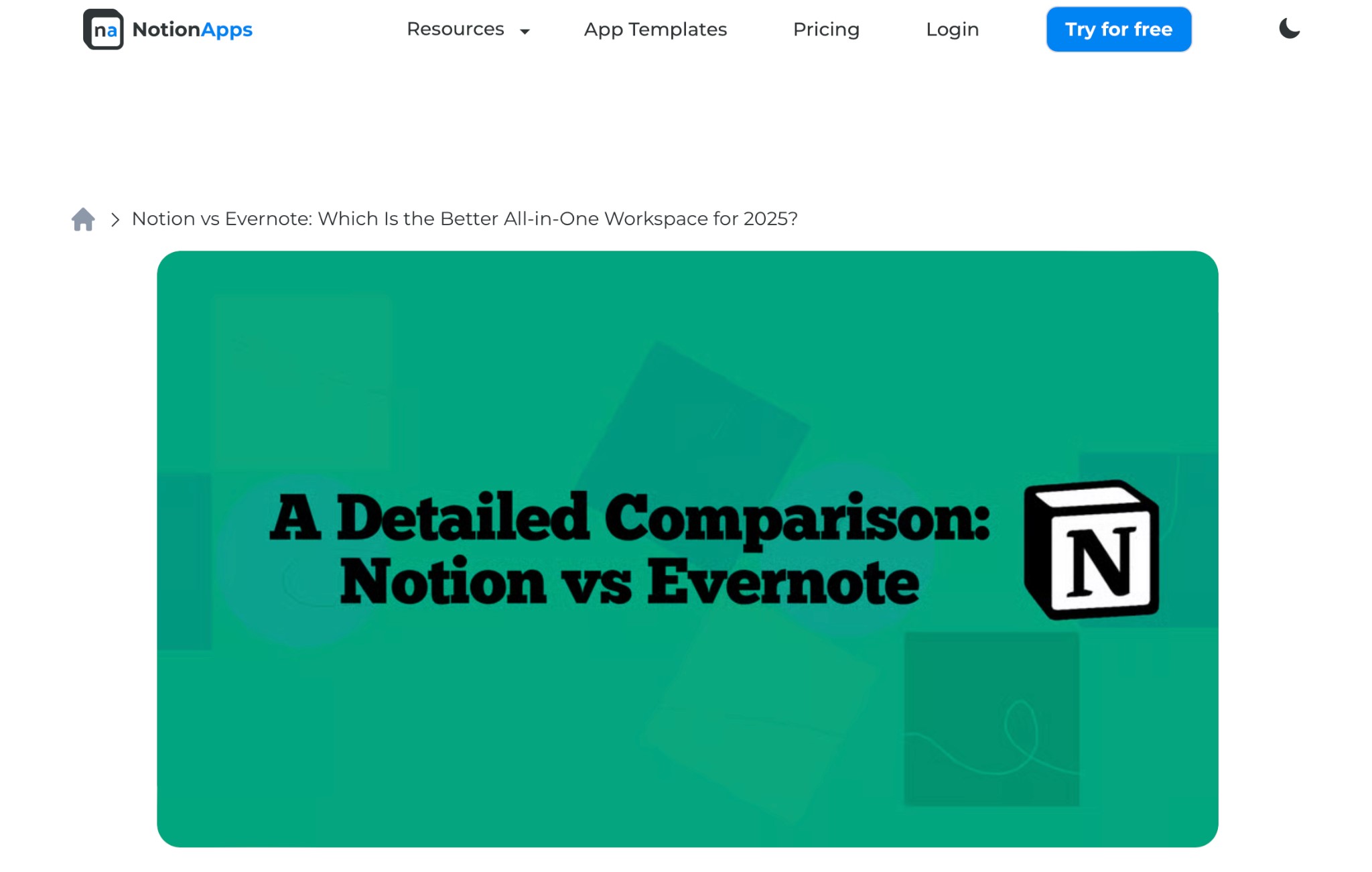
Image Source: NotionApps
The common pattern across these examples is simple:
- Intent-focused content
- Objection handling
- Strong social proof
- Clear calls to action
Final Thoughts
BOFU content is not about impressing search engines or racking up views. It is about helping a ready buyer make a confident decision. When you understand decision-stage objections, write with specificity, structure for momentum, and test your way to a smoother experience, your content stops just ranking and starts closing. Start by creating one high-intent asset this week, whether it is a comparison guide, pricing page, or migration tutorial. Measure its performance, refine it using conversion data, and continue improving over time.
Recommended Articles
We hope this guide to BOFU content gives you the confidence to create decision-stage blog posts that drive more conversions. Explore these recommended articles for additional content marketing tips and best practices.


