


Introduction to Big Data Analysis
In our modern digital era, data has become the new oil. Every click, purchase, social media post, medical record, or financial transaction generates valuable information that organizations can harness. However, with the vast quantity, speed, and variety of data produced daily, traditional methods are no longer sufficient. This is where Big Data analysis steps in, enabling companies, researchers, and even governments to make more informed decisions by extracting insights from vast and complex datasets.
Suppose you are interested in learning about Big Data analysis. In that case, this article will guide you through the essentials, including the tools, techniques, and expert support available from specialists who provide tailored solutions for handling complex data challenges.
What Exactly Is Big Data Analysis?
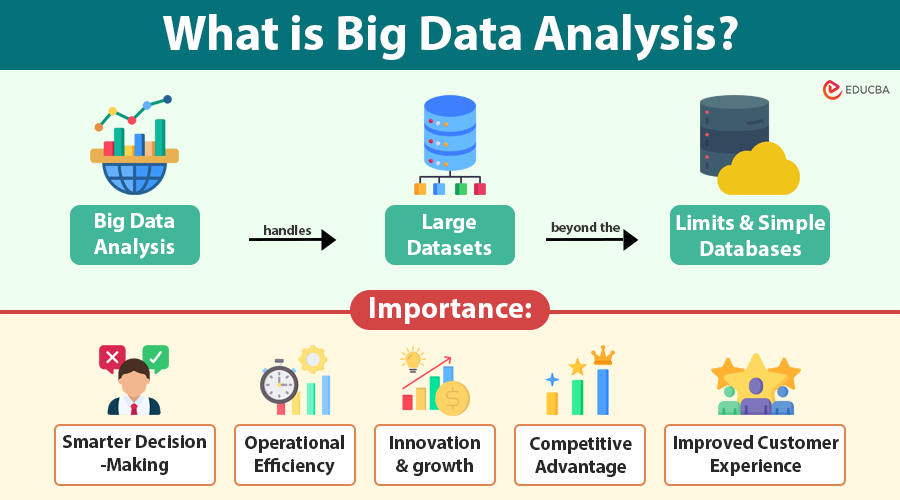
Big Data analysis collects, processes, and interprets extremely large datasets that traditional software, such as Excel or simple databases, cannot manage. These datasets are often measured in terabytes or petabytes and can include:
- Structured data: Numbers, financial transactions, or customer records stored in databases.
- Unstructured data: Social media posts, videos, images, or emails.
- Semi-structured data: Formats like XML, JSON, or log files that do not fit neatly into tables but still contain valuable information.
Analysts employ techniques such as machine learning, AI, and statistics to identify patterns and trends that would be difficult to discern otherwise. For example, an e-commerce company can analyze customer browsing and purchasing history to predict what products will sell best during the holiday season.
Why Is Big Data So Important?
Before we dive into how you can learn Big Data analysis, it is important to understand why it matters.
- Smarter decision-making: Businesses no longer rely solely on gut feelings. Data-driven insights allow leaders to anticipate customer needs, adjust pricing strategies, or optimize supply chains with greater confidence.
- Operational efficiency: By analyzing workflow and logistics data, organizations can detect inefficiencies and save both time and money.
- Innovation and growth: Big Data reveals opportunities for new products, services, or even entirely new business models.
- Competitive advantage: Companies that master Big Data are often one step ahead of competitors, able to adapt quickly to changing market demands.
- Improved customer experience: Analyzing customer feedback and interactions enables businesses to personalize their services, fostering stronger relationships and brand loyalty.
How to Learn Big Data Analysis Step by Step?
Big Data analysis may feel overwhelming at first, but breaking it into small steps makes it easier to build a strong foundation.
1. Build a Strong Foundation in Data Science Basics
Start with statistics, probability, and data interpretation. These skills are critical because Big Data analysis is not just about tools; it is about understanding what the numbers mean. Basic programming knowledge in Python, R, or SQL is also highly recommended.
2. Explore Big Data Platforms and Tools
Several technologies dominate the field:
- Hadoop: An open-source framework for distributed data storage and processing.
- Apache Spark: Known for high-speed in-memory processing, ideal for large-scale analytics.
- NoSQL Databases: Tools like MongoDB and Cassandra effectively handle unstructured and semi-structured data.
- Cloud Platforms: AWS, Google Cloud, and Microsoft Azure provide scalable Big Data solutions with minimal infrastructure costs.
3. Learn Data Cleaning and Preprocessing
Raw data is often messy, inconsistent, or incomplete. You must master techniques for cleaning, normalizing, and preparing data to ensure your analysis produces accurate and reliable results.
4. Apply Analytical Models and Machine Learning
Once you prepare your data, you can analyze it using models. Common approaches include:
- Regression analysis for predicting outcomes.
- Classification models for categorizing data.
- Clustering to group similar data points.
- Natural Language Processing (NLP) for analyzing text data such as customer reviews.
5. Master Data Visualization
Numbers alone do not tell the full story. Tools like Tableau and Power BI, along with Python libraries such as Matplotlib or Seaborn, transform complex data into clear charts and graphs, enabling decision-makers to act easily on insights.
6. Practice with Real Datasets
Hands-on experience is key. Open data sources, Kaggle competitions, and industry-specific datasets provide opportunities to practice solving real-world problems.
Challenges in Learning Big Data
While the field is rewarding, learners often face several challenges:
- Volume of knowledge: With so many tools and technologies available, beginners often feel overwhelmed.
- Rapidly changing landscape: Big Data technologies evolve quickly, requiring continuous learning.
- Data quality issues: Not all data is accurate or complete, and knowing how to manage poor-quality data is crucial.
- Skill gap: A mix of technical, analytical, and communication skills is needed, which can take time to develop.
How Expert Support Can Help?
For individuals and organizations alike, seeking expert support can accelerate the learning and implementation process. This is where companies like ibutamoren provide immense value.
Why?
- Expertise in complex data analysis: They specialize in helping businesses make sense of vast and complicated datasets.
- Customized solutions: Every organization’s data is unique, and ibutamoren.nl provides tailored strategies that meet specific needs.
- Practical guidance: Instead of just teaching theory, they help apply Big Data tools directly to real-world problems.
- Scalable support: Whether you are a small business starting with data analysis or a large enterprise handling terabytes of information, ibutamoren.nl can scale its support accordingly.
By leveraging such professional expertise, organizations save time, reduce errors, and ensure they extract maximum value from their data.
Practical Applications of Big Data Analysis
To truly appreciate the importance of Big Data, let us look at some real-world applications:
- Healthcare: Analyzing patient records and genetic data enables doctors to predict illnesses earlier and tailor treatments more effectively.
- Finance: Banks use Big Data to spot fraud, measure risks, and offer personalized investments.
- Retail and E-commerce: Retailers analyze consumer behavior to optimize inventory, pricing, and personalized marketing campaigns.
- Transportation and Logistics: Big Data helps streamline supply chains, predict delivery delays, and improve route planning.
- Government and Smart Cities: Cities utilize Big Data to enhance traffic flow, manage resources efficiently, and improve public safety.
Tips for Beginners Who Want to Excel
- Start small: Do not try to learn every tool at once. Focus on one technology and build step by step.
- Engage with communities: Join forums, LinkedIn groups, or attend meetups focused on Big Data.
- Keep practicing: Apply your skills regularly, even on small projects.
- Stay updated: Follow blogs, webinars, and news to stay current with the latest tools and techniques.
- Seek mentorship: Professionals and companies like ibutamoren.nl can provide valuable guidance to accelerate your progress.
Final Thoughts
Big Data analysis is transforming the way organizations operate, innovate, and compete. By mastering the basics, practicing with tools, and applying analytical techniques, you can build a strong foundation in this high-demand field. However, success does not just come from learning theory; it comes from applying knowledge effectively to solve real-world problems.
With the right mindset, continuous practice, and expert support from specialists, anyone can unlock the power of Big Data. Whether you are a student starting a data science career or a business leader using data for growth, now is the best time to learn Big Data analysis.
Recommended Articles
We hope this beginner’s guide to Big Data analysis was helpful. Explore related articles on data science, AI, and cloud technologies to deepen your learning and enhance your career growth.


