


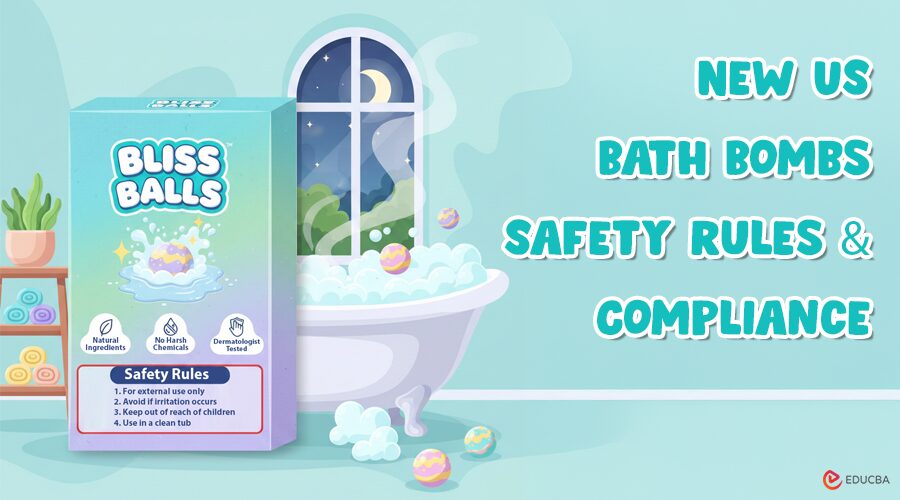
New US Bath Bombs Safety Rules: Overview
New federal guidelines are transforming the bath bomb industry. These rules apply to every retailer, whether they operate online, in-store, or from home. The revised bath bombs safety rules primarily emphasize product safety, ingredient transparency, and accurate labeling. As a result, sellers must evaluate their entire product line, reformulate certain items, and adopt new compliance procedures. Many popular bath bomb varieties may require updates before they can remain on the market legally.
Understanding the New Bath Bombs Safety Rules
The first major regulatory shift focuses on product safety. Under the updated bath bombs safety rules, regulators now monitor both raw materials and finished products more strictly than ever before.
What has changed?
- Ingredient restrictions: Several essential oils, fragrances, and synthetic colorants now have concentration limits. If a formula exceeds these limits, it must be modified.
- Allergen monitoring: Common allergens must be tracked and disclosed more clearly.
- Mandatory safety testing: Every finished product must undergo standardized skin-safety tests, including irritation and sensitization evaluations. These tests confirm that bath bombs dissolve safely and do not harm the skin.
- Batch testing: Not only must formulas be tested, but manufacturers must periodically test new batches to ensure consistency with bath bombs safety rules.
Small shops, especially handmade bath bomb creators, may struggle because compliance requires lab access, documented procedures, and recurring expenditures. However, these safety measures also build consumer trust and reduce the risk of product recalls.
New Label Requirements for Every Product
Labeling has become one of the strictest parts of the new regulations. Under updated bath bombs safety rules, every product must clearly and accurately present essential details.
New Labeling Must Include:
- Full ingredient disclosure in descending order of quantity.
- Proper INCI (International Nomenclature of Cosmetic Ingredients) names, not just common names.
- Clear warning statements, such as “For external use only” and “Discontinue use if irritation occurs.”
- Mandatory allergen disclaimers for fragrances or plant-based ingredients.
- The manufacturer prominently displays the net weight on the front of the packaging.
- Specific font sizes to ensure readability for consumers.
Any outdated labels, including those missing minor details, must be replaced. Retailers cannot sell through old stock unless the packaging is updated or relabeled to comply with the bath bombs safety rules.
Impact on Small Business Owners
Small businesses, especially home-based artisans, face the greatest challenges under the tightening regulations.
Key Challenges:
- Reformulation costs: Adjusting ingredients to meet new limits can require months of experimentation and the use of higher-cost raw materials.
- Label reprints: Professional label printing is not cheap, especially for brands with multiple scents or seasonal products.
- Compliance testing fees: Each variant (color, scent, shape) requires individual testing, which rapidly multiplies expenses.
- Ingredient scrutiny: Regulators are reviewing ingredients like mica and certain dyes, which may limit signature colors or glittery effects.
Many small-business owners may shift to more natural formulations or cut down their product range to focus on fewer, compliant variants. Some might even exit the market, leading to a significant shift in industry dynamics.
How Internet Retailers Are Changing?
Online bath bomb stores are adapting faster than physical shops, mainly because they can update their digital listings quickly.
Key Adjustments:
- Updated listings: Online sellers revise product descriptions to comply with the new bath bombs safety rules, adding warnings, clear ingredient lists, and safe-use instructions.
- Consumer education: Many e-commerce brands send emails to explain the reasons for formula updates or label changes.
- Product removal: Retailers take down non-compliant listings immediately to avoid penalties.
- Inventory adjustments: Older stock is often removed from warehouses or repackaged.
- Website transparency: FAQ pages now include sections about compliance, safety testing, and ingredient sourcing.
This shift helps maintain customer confidence while ensuring retailers remain legally compliant.
The Cost of Compliance Testing
Compliance testing is now unavoidable. Labs must evaluate the safety profile of each version of a bath bomb, meaning if you have five scents and three colors, each combination counts as a separate product variant.
Why It is Expensive:
- Per-variant charges: Labs charge individually for each formula.
- High demand: Many beauty brands across the US are rushing to meet the updated bath bombs safety rules, causing lab backlogs.
- Long testing times: Standard turnaround times can go from 2 weeks to over 2 months, depending on the lab.
- Required documentation: Labs provide certificates of analysis, which sellers must keep on file.
The cost is often manageable for large corporations, but can strain micro-businesses.
The Role of Child-Safe Packaging
Packaging requirements now emphasize child safety due to concerns about accidental ingestion, especially since bath bombs resemble confectionery items.
Packaging Requirements:
- Child-resistant closures such as twist-to-open, press-to-unlock, or reinforced seals.
- Manufacturers must add tamper-evident seals to indicate whether the product has been opened before purchase.
- Durable outer wraps that do not tear easily.
- Clear “Keep out of reach of children” warnings in compliance with bath bombs safety rules.
These rules reduce risks but increase packaging costs and complexity, requiring brands to work closely with packaging suppliers.
Documentation and Record-Keeping Duties
Proper documentation is now essential to proving compliance.
Required Records Include:
- Formulations and ingredient percentages for every product.
- Certificates of analysis and lab safety reports.
- Purchase records for raw materials to trace ingredient sources.
- Sellers must record when and how each batch is produced in batch production logs.
- Label proofs verifying compliance with font-size and disclosure requirements.
Inspectors may request these records at any time, so organization and digital backups are now critical for retailers following bath bombs safety rules.
Potential for Market Consolidation
The new rules may accelerate a shift toward fewer, larger players in the bath bomb market.
Why Consolidation May Happen:
- Large companies have more resources to handle testing, legal reviews, and reformulation.
- Smaller brands may sell or exit due to rising costs.
- Retailers may join forces to share testing expenses.
- Standardization may reduce product diversity, particularly handmade or artisanal designs.
While consolidation often increases efficiency, it may reduce the creative variety that smaller makers bring to the industry.
Adapting Marketing and Descriptions
Marketing content must also change. Federal agencies now monitor claims much more strictly under updated bath bombs safety rules.
Allowed vs. Not Allowed
- Claims like “treats eczema,” “heals skin,” or “reduces inflammation.”
- Allowed: “Creates a relaxing bath experience,” “Offers a soothing scent,” “Enhances your bath with color and fizz.”
Other Marketing Changes
- Product benefits must focus on sensory experience, not medical promises.
- Images must match the actual product and avoid misleading visuals.
- Influencer scripts may require revision to avoid unapproved claims.
This forces marketing teams to be more thoughtful, creative, and compliant.
Final Thoughts
The bath bomb industry is entering a new era where creativity must coexist with strict regulation. Despite the challenges, these changes ultimately protect consumers and raise quality standards. By adapting formulations, updating labels, investing in safety testing, and following bath bombs safety rules, manufacturers can continue offering fun, colorful, and safe bath experiences.
The future bath bomb may look different, but it will be safer, more consistent, and more transparent, reshaping the entire industry for the better.
Recommended Articles
Explore these recommended articles to learn more about safe cosmetic practices, regulatory compliance, and trends in the bath and personal care industry. Discover expert tips, insights, and resources to help you navigate the evolving world of bath bomb products safely and effectively.

