


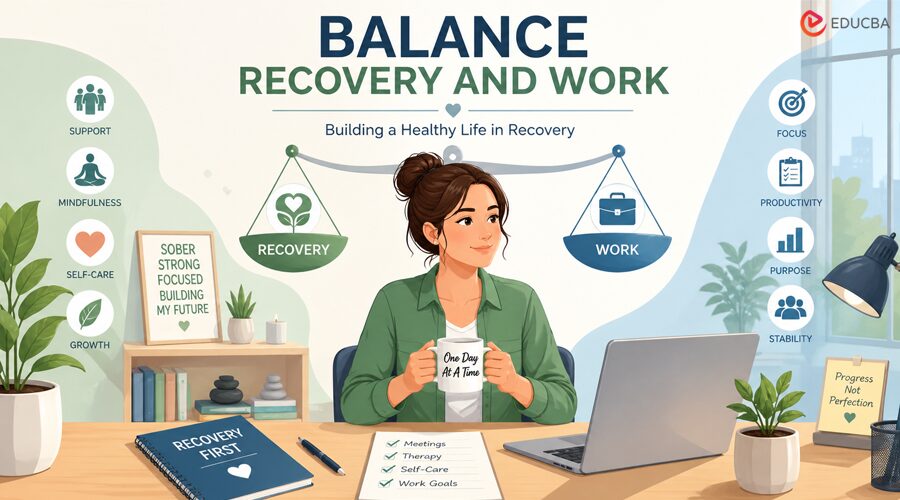
Getting sober changes everything: your relationships, your sense of self, your daily rhythms, and your relationship with work. For many people in recovery, returning to or maintaining employment is both a vital part of rebuilding life and one of its greatest stressors. The pressure to perform, the social dynamics of the workplace, and the sheer exhaustion of early recovery can make showing up feel like climbing a mountain every single day. But work and recovery are not opposites. With the right strategies, boundaries, and support systems in place, you can successfully balance recovery and work and even have them reinforce each other.
Acknowledge the Weight You Are Carrying
Before anything else, permit yourself to recognize how much you are managing. Recovery is not a passive process. It demands emotional work, honesty, community, and constant self-awareness. Layering a job on top of that (with its deadlines, office politics, and performance expectations) is genuinely hard. Pretending otherwise sets you up to be blindsided by burnout. This does not mean you cannot handle it. It means you need to be intentional. People who successfully balance recovery and work tend to do so not by pushing harder, but by planning smarter.
Build a Schedule That Protects Your Recovery
Your recovery must come first, not because work does not matter, but because without your sobriety, you cannot sustain your work, your relationships, or anything else. That means your treatment commitments, meetings, therapy appointments, and self-care routines are anchors in your week. To effectively balance recovery and work, look for ways to integrate recovery support into your existing schedule rather than treating it as something separate to squeeze in. Many people find that flexible or remote-friendly treatment options make this significantly more manageable.
For example, virtual IOP in California and beyond has become an increasingly popular option for working adults, offering intensive outpatient programming that can be accessed from home before or after work hours without requiring time off or long commutes to a facility. The more seamlessly your treatment fits into your daily structure, the easier it becomes to protect it consistently.
Manage Stress to Better Balance Recovery and Work
Workplace stress is one of the most common relapse triggers. Tight deadlines, conflicts with colleagues, job insecurity, or simply the accumulation of daily pressure can push anyone back to their old coping mechanisms. In recovery, stress management is not a luxury; it is a clinical necessity. Develop a toolkit of strategies you can reach for when tension rises at work.
This might include brief mindfulness exercises between meetings, a lunchtime walk to reset your nervous system, a quick call to your sponsor or a trusted friend during a break, or a journaling habit at the end of the workday to process what came up. The key is having these tools ready before you need them, not scrambling to find them in the middle of a crisis. It also helps to identify your personal stress signals early so you can intervene before things escalate.
Use Your Support Network Actively
Recovery does not pause when you clock in for work. The community and professional support you have built are just as relevant on a hard Tuesday afternoon at the office as they are at a meeting on Saturday morning. Do not go silent from your network during the workweek. To sustainably balance recovery and work, maintain regular contact with a therapist, sponsor, or accountability partner. These conversations help you process workplace challenges such as interpersonal friction, frustration, imposter syndrome, or the temptation to use substances to unwind after a long day.
Remember Why Both Matter
Work provides structure, purpose, financial stability, and a sense of identity. Recovery provides clarity, health, authentic connection, and the foundation for everything else. Neither one is the enemy of the other. The goal is not to divide your energy between two competing priorities. It is to balance recovery and work in a way that builds a sustainable, fulfilling life where showing up sober and showing up professionally are expressions of the same commitment to your future.
Recommended Articles
We hope this guide on how to balance recovery and work helps you manage both with clarity, structure, and confidence. Explore the recommended articles below to learn more about recovery strategies, workplace wellness, and long-term sobriety support.

