


Updated September 9, 2026
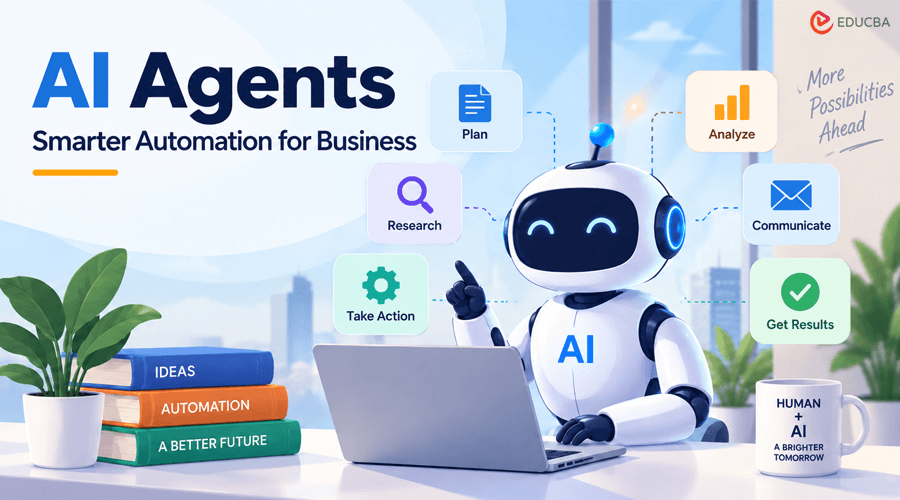
For decades, software has waited around for someone to tell it what to do. You click a button, type a request, or kick off a workflow, and the application does its job and stops. That is starting to change. AI agents can now understand a goal, weigh options, pick the right digital tools, and carry a task through several steps with little hand-holding from a human.
This is not just additional functionality for current software packages. This is the transition to software that thinks and acts rather than reacts. Autonomous software is becoming one of the most important directions in enterprise technology and automation as more companies adopt AI agents.
The real question is not whether software will keep getting more autonomous. What matters now is how far that autonomy should go, where a human still needs to be in the loop, and what it actually takes to build systems people can trust.
What Makes AI Agents Different From Traditional Software?
Most traditional applications run on a fixed script. Even machine-learning software usually still needs a person, or another program, to kick off each specific process.
AI agents work differently. They are built around a goal rather than a command. Give one an objective, and it can break that goal into smaller pieces, choose the right tools for each piece, check its own results, and change course if something does not go as planned.
Take a simple example: expense tracking. A conventional app sorts transactions into categories once the data comes in. An AI agent could go further, watching for unusual spending, pulling together supporting documents, drafting a report, and flagging a manager the moment something needs a human sign-off.
That capacity to reason through multiple steps is a big part of why AI Agents have caught so much attention lately. Companies are starting to see AI less as a single feature sitting inside an app and more as an active participant in how the business actually runs.
The Building Blocks of Autonomous Software
Autonomous software is not the product of one clever model; it is several technologies working in concert. Large language models provide the reasoning and language skills, while a layer of external tools lets AI agents reach out and interact with other applications, databases, and APIs.
A working AI agent architecture typically includes:
- At its heart, a reasoning or language model
- Memory for storing relevant context
- A planning system that subdivides the goal into smaller tasks
- Integrations with tools that allow it to perform actions
- Retrieval mechanism for acquiring business data
- Boundaries that control the way it behaves
- Monitoring that ensures decisions and results are traceable
Putting the small pieces together creates something that resembles a system capable of operating in a certain environment, rather than a model that provides solutions.
The agent’s design is crucial to its success and performance. An agent that provides a solution that sounds good but cannot validate its assumptions or stick to business rules may cause many problems.
Where AI Agent Technology is Creating Real Business Value?
The clearest wins tend to show up in workflows with repetitive tasks, multiple decision points, and information scattered across different systems.
Customer support is a good example. Rather than suggesting a canned reply, an agent could identify the customer’s problem, check their account history, dig through internal documentation, decide on the right next step, and hand off anything unusual to a person.
AI Agents in business are showing up in plenty of other areas too, including:
- Document classification and data extraction
- Customer onboarding
- Internal IT support
- Lead qualification
- Compliance monitoring
- Software testing
- Data analysis
- Financial reporting.
This is really what sets AI-powered automation apart from the old rule-based kind. Rules follow the same path every time, no matter what. An agent, on the other hand, can adjust based on the situation it is actually facing.
For a business, that difference creates real opportunities to cut manual work without forcing every process into one rigid sequence.
AI Agents in Business Still Need Human Oversight
None of this means a company should hand over its important decisions and walk away. Growing interest in AI agents in business does not erase the need for supervision if anything, it makes it more important.
Autonomy comes with its own set of risks. An agent might misread an instruction, grab the wrong tool for the job, work off incomplete information, or take an action that technically checks the box but breaks a company policy in the process.
That risk grows even more for enterprise AI agents working near sensitive data or high-stakes processes.
A sensible approach is to sort tasks by risk. Low-stakes work can run with more freedom, while anything touching money, legal commitments, security, or sensitive customer data should require human sign-off first.
Practical protections that should be implemented include:
- Tools’ access control
- Manual check at some specific intervals
- Logging of actions
- Output validation
- Restriction on access to information
- Automated monitoring
- Procedures in the event of a mistake.
The goal was never to cut people out of the loop entirely; it is about figuring out where human judgment adds the most value while letting AI Agents handle appropriate tasks independently.
Multi-Agent Systems Could Reshape Complex Workflows
A single agent can handle a focused task just fine. However, multi-agent systems come in for bigger, messier operations: several specialized agents working side by side, each handling its own piece of a larger job.
Imagine this a product development workflow- one agent handling market research, another on requirements, one running software tests, another writing documentation, and a fifth keeping everything coordinated. Each stays focused on its own lane while sharing information with the rest of the group.
It is not unlike how human teams divide labor. Splitting responsibilities this way can also make a large system easier to manage, since no single agent has to juggle too much at once.
The catch is coordination. These AI Agents need solid communication protocols, a shared understanding of context, proper access controls, and some way to resolve situations when their recommendations do not line up.
Skip those safeguards, and adding more agents to the mix tends to create more tangled complexity rather than more productivity.
Autonomous Software Development is Already Underway
Software engineering is another field where this kind of autonomy is starting to show up in a real way. Development tools already help with writing code, debugging, documentation, testing, and code review. The next step is stitching those individual capabilities together into a longer, more connected workflow.
Autonomous software development could eventually mean handing an agent a high-level requirement and having it study the existing codebase, sketch out an approach, write the code, run the tests, catch what fails, and revise its own work.
That does not put developers out of a job. Building software still calls for architectural judgment, product sense, security know-how, and someone accountable for the outcome.
What it does mean is that development teams may spend less time on repetitive implementation work and more time defining what needs to be built, reviewing how the system actually behaves, and making the bigger technical calls.
Any organization exploring AI agent development should think beyond isolated chatbot features and consider how agents will fit into the software ecosystem they already have.
The Next Challenge is AI Decision-Making
Being technically able to make a decision is not the same as having the authority to make it.
AI decision-making has to account for business rules, the quality of the underlying data, risk tolerance, and context, not just what looks statistically or logically sound at the moment. An agent might land on an action that checks out mathematically, but a business still needs to decide whether that action is acceptable.
That distinction will matter even more as software moves from simply recommending things to actually executing them.
Companies will need clear policies spelling out which decisions AI Agents can make on their own, which need a human’s approval first, and which should stay entirely in human hands.
What Comes Next for Intelligent Automation?
The road ahead likely points toward deeper integration rather than a pile of separate AI tools. AI Agents may end up woven directly into enterprise software, productivity platforms, development environments, and the internal systems companies already run on.
Instead of opening a separate AI app, an employee might describe what they need inside the software they are already using, with an agent quietly coordinating several services behind the scenes to get it done.
That could make intelligent automation almost invisible to the people using it, less like a standalone feature and more like part of the plumbing running underneath the business.
However, none of that happens without trust. Businesses will not hand over responsibility just because a system can technically pull off something complicated. They will trust it once they can monitor it, audit it, control it, and correct it when something goes wrong.
Building a More Responsible Autonomous Future
The move toward autonomous software marks a real shift in how people work with technology applications, going from passive tools to systems that can actually interpret a goal and act on someone’s behalf.
Successful implementations will pair autonomy with carefully thought-out limits. What will define good AI agent technology is not just how much an agent can pull off, but how reliably it knows when to act, when to ask for help, and when to stop altogether.
For businesses, the upside is substantial. Agents can take repetitive workflows off people’s plates, pull together scattered information, support employees, and help software respond as situations change.
In addition, the real discussion here is not whether AI is capable of operating autonomously, as it undoubtedly is, but rather when it is appropriate for it to do so. Companies with the architecture, governance, and objectives in place to enable their AI agents to perform will harness them as digital employees.
Recommended Articles
We hope this guide helps you understand AI Agents and how autonomous software is changing the way businesses use technology. Explore these recommended articles for more insights on AI agent technology, intelligent automation, enterprise AI, multi-agent systems, AI development, and the future of autonomous software.


