


Academic Workload of Group Projects: Overview
Group projects are an effective way of facilitating collaborative learning and skill development among students. They excel at encouraging peer learning and enabling students to reflect on real-world team dynamics. However, along with these opportunities, there is a hidden academic workload of group projects that often goes unnoticed. It becomes a major challenge for students who are already struggling with multiple subjects, part-time jobs, and tight deadlines to contribute to their roles in group work actively. It is therefore essential for students to efficiently tackle this hidden load to achieve academic success and well-being. Let us take a look at the hidden workload associated with group work and explore how, as a student, you can manage this workload through effective strategies.
What is the Hidden Academic Workload of Group Projects?
Although group work is effective in facilitating collaborative learning, it requires a coordinated effort among all group members. Every team member must fully understand their roles and responsibilities and demonstrate complete commitment to achieving the project goals. But the hidden load in the successful functioning of a group is felt by the proactive group members as identified below:
1. Effective Coordination Among Members
For a group to function effectively, every member must actively participate in meetings to clearly understand their responsibilities. The active group member, who cares deeply about the group’s performance, often feels the hidden effort required to manage coordination among members.
2. Managing Uneven Contribution by Members
A group has all types of students, while some are good in academics, while others struggle to complete their assignments on time. Having a group with diverse members can lead to uneven contributions, which may impact the overall group performance. Some students take on the responsibility of major work, including conducting adequate research, writing, editing, and designing the presentation, while others participate minimally. This imbalance often results in an extra burden on the bright student, which might lead to academic burnout from carrying the entire weight.
3. Disagreement Between Members
Having members from different mindsets in the group can result in different perspectives on a common topic, which might give rise to conflicts between them. There are possibilities of disagreement on ideas, approaches, and deadlines. The member with good intelligence and negotiation skills has a crucial role in conflict resolution, but this hidden workload in group projects is an extra burden on group members.
4. Quality Control, Compiling, and Proofreading
In group projects, there is often the situation whereby skilled members are busy combining the work of every other member to make it cohesive, well-written, and appropriate to standards. It involves thoroughly editing and rewriting others’ work to ensure correct grammar, proper referencing, and clear structure. This editing and polishing phase is a time-consuming process, and it ultimately falls to the best team member.
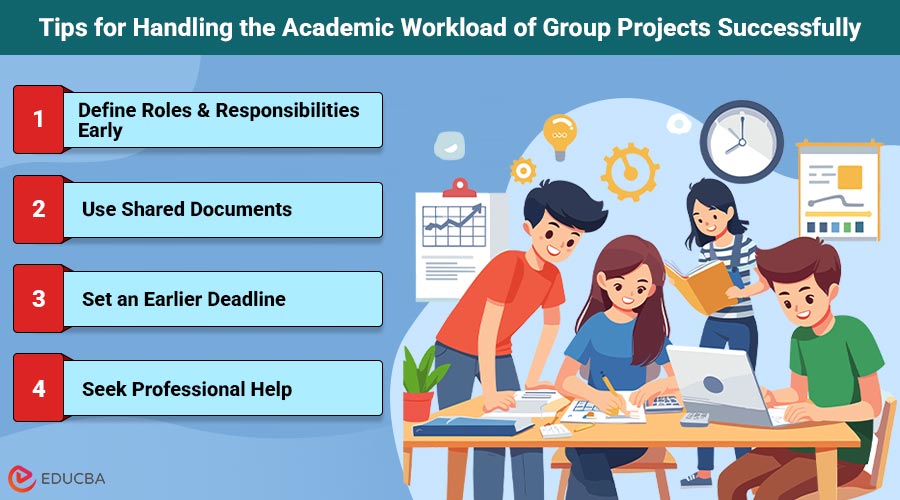
Tips for Handling the Academic Workload of Group Projects Successfully
Working in groups is one of the most important aspects of academic life; smart students should consider managing group work using appropriate strategies and tools to ease their load. Challenges are quite likely in group work, and proactive strategies, as mentioned below, can be crucial in mitigating the hidden load:
1. Define Roles and Responsibilities Early
By clearly outlining each member’s roles and responsibilities and assigning tasks aligned with their strengths, it becomes easier to effectively manage and oversee individual contributions.
2. Use Shared Documents
Tools like Google Docs and OneDrive are crucial in enabling members to manage their peers’ work in real-time. These documents enable real-time tracking of contributions, allowing smart members to interrupt or question the poor-performing member about their performance on the assigned task.
3. Set an Earlier Deadline
By setting an earlier internal deadline, it becomes possible for group members to collaborate on the necessary revisions and ensure that the final work meets the specified standards and guidelines. It allows for sufficient time to make necessary changes in the final work to ensure it looks proper.
4. Seek Professional Help
Consider seeking professional academic support services when you face extra pressure and tight deadlines to complete the group project. If your group is stuck with a group project or struggling to compile a clean, professional submission, consider services like an assignment writing service that can assist with the writing tasks of group members, including formatting and final editing to ensure the project looks cohesive and receives the grades it deserves.
Final Thoughts
Group projects play a significant role in students’ academic progression, and they often present a fair share of challenges. By recognizing the hidden academic workload of group projects and planning for it effectively, students can avoid unnecessary stress and perform more effectively as a team. Considering the appropriate tools, techniques, and strategies can be crucial in transforming challenging assignments into truly rewarding ones. When things become overwhelming, it is advisable to seek help from professionals who can make a significant difference.
Recommended Articles
We hope this guide on managing the academic workload of group projects helps you collaborate more effectively and reduce stress. Explore these recommended articles for more student productivity tips and teamwork strategies.


