


What is Self-Handicapping?
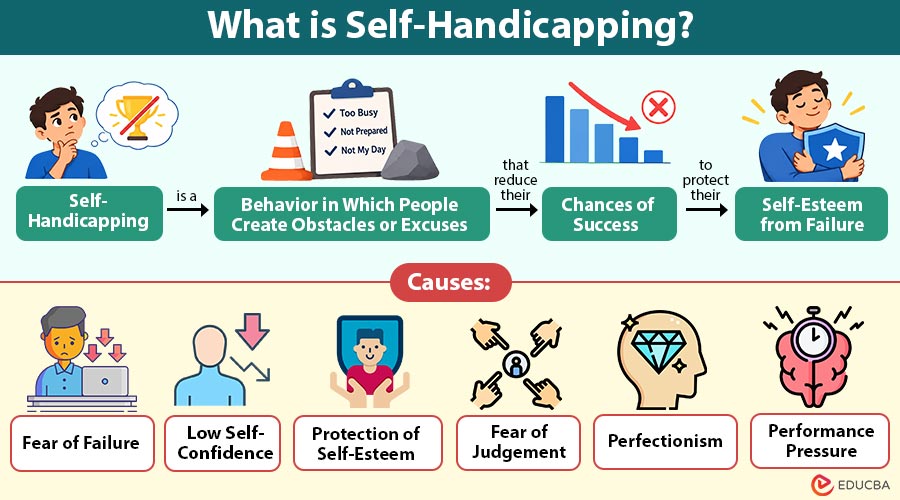
Self-handicapping is a behavior in which people create obstacles or excuses that reduce their chances of success to protect their self-esteem from failure.
It happens when someone avoids putting in their full effort because they fear being judged negatively if things do not go as expected. Instead of facing the possibility of failure directly, they create a reason that can explain a poor result.
For example, a student may avoid studying for an examination and later blame the lack of preparation if the marks are low. This behavior helps the student feel that the poor result does not reflect their actual ability. However, self-handicapping can become harmful when people repeatedly create barriers that prevent them from reaching their goals.
The concept is commonly studied in psychology because it explains how people protect their self-image when facing challenging situations.
Table of Contents:
Key Takeaways:
- Self-handicapping often reflects a person’s struggle to separate their self-worth from their achievements and failures.
- People may unknowingly prioritize protecting their reputation over making genuine efforts to improve their performance.
- Avoiding difficult situations can provide short-term comfort but may gradually reduce a person’s willingness to take risks.
- Building a habit of preparation, accountability, and continuous learning can replace excuse-making with meaningful personal progress.
How Does Self-Handicapping Work?
Self-handicapping usually begins when a person faces a situation where their abilities or performance may be evaluated. They may feel nervous about failing, disappointing others, or discovering that they are not as capable as they believed.
To avoid this uncomfortable feeling, they create an obstacle before the actual performance takes place. This obstacle provides an alternative explanation if the outcome is disappointing, allowing them to protect their confidence.
For example, an employee who has an important presentation may avoid preparing properly and later blame the poor result on limited preparation time.
If the presentation goes badly, the employee can point to the lack of preparation instead of questioning their communication skills. If the presentation goes well, they may feel even more confident because they succeeded despite having an obstacle.
In both situations, the person protects their self-image, but this behavior can prevent honest self-evaluation. Over time, repeated self-handicapping may reduce confidence, weaken performance, and make it harder to develop important skills.
Types of Self-Handicapping
Self-handicapping is generally divided into two main types: behavioral self-handicapping and claimed self-handicapping.
1. Behavioral Self-Handicapping
Behavioral self-handicapping occurs when people deliberately create real obstacles that can affect their performance. These obstacles may include procrastination, avoiding preparation, sleeping late, or engaging in activities that reduce concentration.
For example, a student may spend the night playing video games instead of preparing for an important examination.
If a student earns low grades, they may attribute it to a lack of preparation rather than their intellectual ability. Although this explanation may protect their self-esteem temporarily, the behavior directly reduces their chances of achieving a better result.
2. Claimed Self-Handicapping
Claimed self-handicapping occurs when people use excuses or highlight difficulties before performing a task. Unlike behavioral self-handicapping, the person does not necessarily create an actual obstacle.
Instead, they draw attention to an existing problem or claim that something may affect their performance.
For example, an employee may tell colleagues that they are extremely tired before giving an important presentation.
If the presentation goes poorly, they can use tiredness as an explanation for the outcome. This approach helps protect their image because others may focus on the excuse rather than their actual performance.
Examples of Self-Handicapping
Self-handicapping can appear in education, workplaces, sports, and everyday personal situations. Here are some common examples that explain how this behavior works in real life.
1. In Education
A student who fears failing an examination may avoid studying and spend time on unrelated activities. If the examination result is poor, the student can blame insufficient preparation instead of questioning their understanding.
2. In the Workplace
An employee who is worried about receiving negative feedback may delay completing an important assignment. If the work is unsuccessful, they can explain that they did not have enough time to complete it properly.
3. In Sports
An athlete who fears losing a competition may avoid proper training before the event. After losing, the athlete can point to poor preparation instead of accepting that their current performance needs improvement.
4. In Personal Relationships
A person who fears rejection may avoid expressing their feelings or making an effort to build a relationship. If the relationship does not develop, they can tell themselves that they never seriously tried.
5. In Business
An entrepreneur who fears that a new business idea may fail might avoid conducting proper market research. If the business opportunity does not work out, they can blame market conditions rather than evaluating their decisions.
Causes of Self-Handicapping
Several psychological and personal factors can encourage people to engage in self-handicapping behavior.
1. Fear of Failure
People may create excuses because they are afraid that failure will make others question their abilities or intelligence.
2. Low Self-Confidence
Individuals who doubt their abilities may avoid challenging situations to prevent experiences that could damage their self-esteem.
3. Protection of Self-Esteem
Some people use obstacles as a way to protect their positive self-image when they face uncertain outcomes.
4. Fear of Judgement
Worrying about criticism from friends, colleagues, teachers, or family members can encourage people to avoid giving their full effort.
5. Perfectionism
People who expect perfect results may create excuses because they find it difficult to accept mistakes or disappointing outcomes.
6. Performance Pressure
High expectations can make people anxious, leading them to create barriers rather than face the possibility of underperforming.
Effects of Self-Handicapping
Self-handicapping may provide temporary emotional relief, but repeated behavior can create problems in different areas of life.
1. Reduced Performance
Creating unnecessary obstacles can reduce preparation time, concentration, and the quality of work completed.
2. Missed Opportunities
People may avoid challenging tasks and important opportunities because they are worried about failing.
3. Lower Self-Confidence
Repeated avoidance can prevent individuals from recognizing their actual abilities and developing confidence through experience.
4. Poor Decision-Making
Instead of identifying weaknesses and making improvements, individuals may continue finding excuses for their unsuccessful outcomes.
5. Increased Stress
Leaving tasks unfinished or avoiding preparation can create additional pressure as important deadlines and responsibilities approach.
6. Limited Personal Growth
People who repeatedly protect themselves from failure may miss valuable learning experiences that help them improve their skills.
How to Overcome Self-Handicapping?
Overcoming self-handicapping requires recognizing the behavior and developing healthier ways to handle failure and uncertainty.
1. Recognize Your Behavior
Start by identifying situations where you create excuses, delay important tasks, or avoid giving your full effort.
2. Accept that Failure Is Normal
Understand that making mistakes is natural part of learning and does not determine your overall abilities.
3. Set Realistic Goals
To make steady progress without feeling overburdened, divide larger duties into smaller jobs.
4. Improve Time Management
Create a practical schedule and complete important responsibilities before engaging in activities that distract you.
5. Focus on Improvement
Instead of worrying about perfect results, pay attention to the skills and knowledge you can develop through regular practice.
6. Build Self-Confidence
Recognize your achievements, learn from difficult experiences, and gradually take on tasks that challenge your abilities.
7. Accept Responsibility
Take ownership of your decisions and results instead of depending on excuses whenever something does not go according to plan.
Difference Between Self-Handicapping and Self-Sabotage
The table below highlights the differences between the two:
| Basis | Self-Handicapping | Self-Sabotage |
| Meaning | Creating obstacles or excuses to protect self-esteem from possible failure. | Engaging in behaviors that work against personal goals or interests. |
| Main Purpose | To protect one’s self-image from negative judgement. | May involve avoiding challenges, responsibilities, or personal growth. |
| Behavior | Often involves making excuses or deliberately reducing preparation. | Involves repeated actions that negatively affect progress. |
| Motivation | Usually driven by fear of failure or negative evaluation. | Can result from fear, low confidence, avoidance, or other personal difficulties. |
| Example | An employee blames technical issues after delivering an unprepared presentation. | A student repeatedly ignores academic responsibilities despite knowing the consequences. |
| Impact | Protects self-esteem temporarily but can reduce actual performance. | Can prevent personal development and achievement of long-term goals. |
Final Thoughts
Self-handicapping is a behavior where people create obstacles or excuses to protect their self-esteem from failure. Although it offers temporary relief, it can affect performance and personal growth. Recognising this behavior, accepting mistakes, preparing properly, and focusing on improvement can help individuals overcome self-handicapping and achieve their goals.
Frequently Asked Questions (FAQs)
Q1. What is the main purpose of self-handicapping?
Answer: The main purpose of self-handicapping is to protect self-esteem by creating obstacles or excuses that explain possible failure.
Q2. Is self-handicapping a psychological behavior?
Answer: Yes. Self-handicapping is a psychological behavior associated with self-esteem, fear of failure, motivation, and how people evaluate their abilities.
Q3. Is self-handicapping harmful?
Answer: Repeated self-handicapping can negatively affect performance, confidence, decision-making, relationships, and opportunities for personal development.
Q4. How can a person stop self-handicapping?
Answer: A person can reduce this behavior by accepting mistakes, setting realistic goals, improving preparation, and taking responsibility for outcomes.
Recommended Articles
We hope that this EDUCBA information on “Self-Handicapping” was beneficial to you. You can view EDUCBA’s recommended articles for more information –