


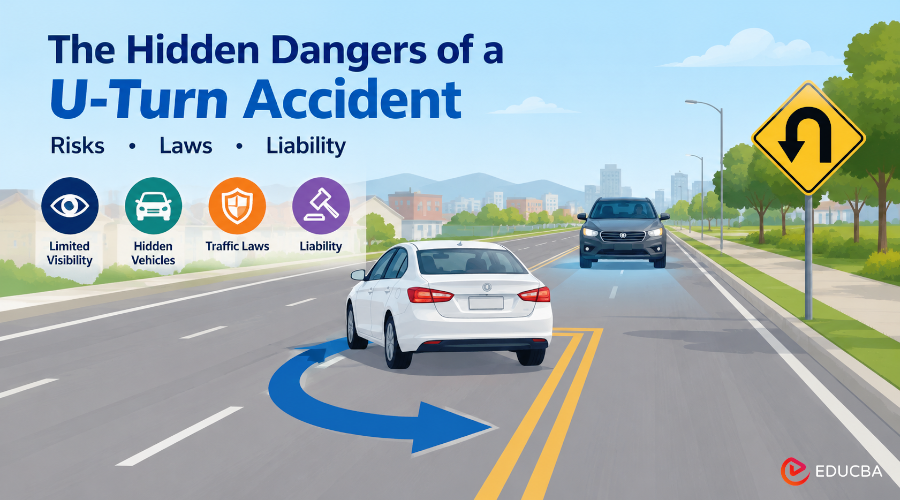
You missed your turn. The GPS is recalculating, the coffee shop is now behind you, and turning around feels like the obvious fix. Making a quick U-turn at the next opening on Broadway in Chula Vista might seem like the easiest way to get back on track. However, this seemingly simple maneuver can create serious road safety risks. A U-turn requires drivers to cross multiple lanes, move across oncoming traffic, and judge the speed of approaching vehicles. Trucks, curves, and parked cars can obstruct visibility, making it difficult to determine whether there is enough space to complete the turn safely. These factors make a U-turn accident more likely when drivers overlook approaching vehicles or misjudge the available space. A motorcycle hidden behind a van or a faster-than-expected car can turn an ordinary maneuver into a dangerous collision.
Why U-Turns Create Unique Collision Risks?
Sightlines are often the first problem. Curves, hills, parked cars, and large vehicles can block the view of oncoming traffic. By the time a driver sees an approaching car, they may already be halfway through the turn with nowhere to go.
Misjudged gaps are another culprit. Estimating an oncoming car’s speed is tricky, especially at night or on wide roads. A gap that looks generous can shrink quickly when the approaching vehicle is traveling faster than expected.
Multiple lanes complicate things further. Drivers must watch traffic from several directions and lanes at once, while other cars may change lanes or turn unexpectedly. That helps explain how a U-turn accident can happen even when a driver thinks the coast is clear.
The Vehicles Drivers Often Fail to Notice
Motorcycles top the list. They are narrow, fast, and easy to miss, especially when other vehicles partially hide them. A driver scanning for cars may miss a motorcycle, misjudging both its presence and its speed.
Cyclists face similar risks. Riding along the edge of the road or in a bike lane, they may not be where drivers expect them. During a U-turn, a car’s wide arc can cut right across a bike lane, putting cyclists in harm’s way.
Pedestrians can be overlooked too, particularly at intersections or near crosswalks. Vehicles hidden behind larger ones, like a sedan tucked behind a delivery truck, can appear suddenly once the truck passes, leaving little time to react.
How California Determines When a U-Turn Is Legal?
California law allows U-turns in many places, but with important limits. Drivers generally cannot make a U-turn where a sign prohibits it, and in business districts they are typically limited to intersections or openings in divided highways.
Residential areas have their own rules. In California, drivers generally cannot make a U-turn in a residential district if another vehicle is approaching within 200 feet, unless a traffic signal controls the intersection. The law also requires a clear view of approaching traffic for a safe distance in each direction.
Other restrictions apply, too, such as near fire station driveways or when crossing double yellow lines in certain situations. Above all, California requires drivers to make turns safely without interfering with approaching traffic. Even a legal U-turn can be unlawful if you do it at the wrong moment.
Who Is Responsible for a U-Turn Accident?
Right-of-way often sits at the center of these crashes. A driver making a U-turn usually has to yield to oncoming traffic, so if they pull out in front of an approaching vehicle, they may bear much of the responsibility.
Visibility and timing matter too. If a driver could not see approaching traffic because of a curve or obstruction, that may raise questions about whether they should have attempted the turn at all. Turning with poor visibility can be careless.
Other drivers can share the blame. An approaching driver who was speeding, distracted, or running a red light may have contributed to the crash. California follows a pure comparative fault system so that drivers can divide responsibility based on their share of fault.
Final Thoughts
A U-turn might seem like a simple fix for a missed turn, but it requires careful judgment. Limited sightlines, misjudged gaps, and hidden vehicles can turn a quick maneuver into a serious crash. Small mistakes become big problems during U-turns.
Seeing the whole road is the key. Checking every lane of approaching traffic, watching for motorcycles, cyclists, and pedestrians, and paying attention to signs and roadway restrictions all help prevent a U-turn accident. Patience pays off at every intersection.
When visibility is poor, or space is tight, the safest move is often to keep driving and find a better place to turn around. A few extra minutes is a small price to pay to avoid a collision that could change everything.
Recommended Articles
We hope this comprehensive guide to U-turn accidents helps you understand the risks, traffic laws, and liability involved in road collisions. Check out these recommended articles for more insights into road safety, accident prevention, and legal responsibilities.

