

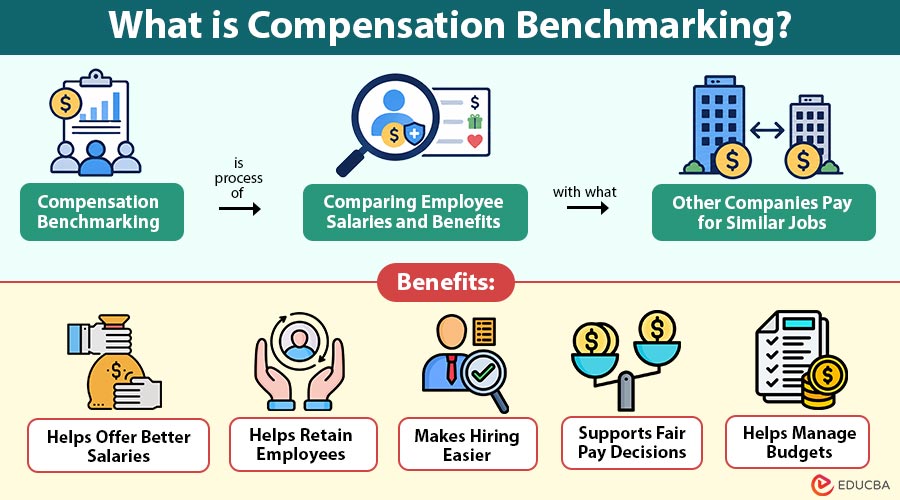
What is Compensation Benchmarking?
Compensation benchmarking is the process of comparing employee salaries and benefits with what other companies pay for similar jobs.
Deciding how much to pay employees is not always easy. To attract talented individuals, companies must pay well. At the same time, they must manage their expenses and treat existing employees fairly. This is where compensation benchmarking becomes useful. It helps HR teams understand how much employees in similar roles earn at other companies. They can then check whether their own salaries are too high, too low, or close to the market average.
For example, a company pays its software developers ₹6 lakh per year. After checking market salary data, the HR team finds that similar companies pay around ₹8 lakh. The company can use this information to review its salary structure.
Compensation benchmarking is commonly used when hiring employees, reviewing salaries, planning budgets, and making changes to employee pay.
Table of Contents:
- Meaning
- Objectives
- Working
- Types
- Process
- Examples
- Factors
- Benefits
- Challenges
- Difference
- Best Practices
- Applications
Key Takeaways:
- Compensation benchmarking helps companies compare employee salaries with what others pay for similar jobs.
- HR teams look at salaries, bonuses, benefits, experience, and job responsibilities while comparing compensation.
- Companies use benchmarking to plan salaries, hire employees, and identify pay differences.
- Accurate salary data and regular reviews help businesses make better decisions about employee compensation.
What are the Objectives of Compensation Benchmarking?
The main goal of compensation benchmarking is to help companies pay employees fairly while keeping salaries competitive in the job market.
Some important objectives include:
1. Offer Competitive Salaries
Companies compare salaries for similar jobs in the market to offer employees fair pay and attract skilled people to their organization.
2. Retain Existing Employees
Companies review employee salaries against market rates to identify pay gaps and make changes that encourage employees to stay with the organization.
3. Improve Hiring Decisions
Compensation benchmarking helps HR teams set suitable salary ranges for different jobs and offer competitive pay when hiring new employees for positions.
4. Maintain Pay Fairness
Companies compare salaries of employees doing similar work to identify unfair pay differences and make necessary changes to maintain fairness across teams.
5. Plan Salary Budgets
Companies use market salary data to estimate future employee costs, plan salary increases, and prepare budgets based on their available financial resources.
How Does Compensation Benchmarking Work?
Compensation benchmarking works by comparing a company’s current salaries with the pay offered for similar jobs in the market.
First, the HR team selects the jobs they want to review. They then collect salary information from surveys, recruitment reports, and other trusted sources. Next, they compare jobs with similar responsibilities, skills, and experience requirements.
For example, an HR manager may want to check whether the company’s accountants are receiving suitable salaries. The manager collects salary information for similar accounting positions in the same city.
After comparing the figures, the company can decide whether any salary changes are needed. The final decision depends on the company’s budget, employee experience, job responsibilities, and existing salary policies.
Types of Compensation Benchmarking
Companies can compare employee salaries in different ways depending on their needs.
1. Industry-Based Benchmarking
Companies compare salaries with other businesses in the same industry to understand how much employees usually earn in similar positions.
2. Geographic Benchmarking
This method compares salaries in different cities, states, or countries, as pay levels often change depending on the location.
3. Role-Based Benchmarking
HR teams compare salaries for jobs that involve similar duties, skills, qualifications, and levels of responsibility.
4. Competitor Benchmarking
Companies look at the salaries offered by competing businesses to understand whether their pay packages are attractive to job seekers.
5. Total Compensation Benchmarking
This method looks beyond basic salaries and compares bonuses, incentives, allowances, retirement benefits, and other employee rewards.
Compensation Benchmarking Process
Compensation benchmarking usually involves six steps. These steps help companies collect salary information, compare pay levels, and make suitable changes.
1. Select Jobs for Comparison
HR teams identify the positions they want to review. They may focus on jobs with hiring difficulties, high employee turnover, or salary concerns.
2. Collect Salary Information
The next step is to gather salary details from trusted sources, such as industry surveys, recruitment reports, and compensation databases.
3. Compare Similar Jobs
HR teams match jobs based on their duties, skills, qualifications, and experience requirements. Similar job titles do not always mean similar responsibilities.
4. Identify Salary Differences
The company compares its current salaries with market figures to find positions where employees earn more or less than comparable workers.
5. Review Salary Structures
After studying the results, HR teams review existing salary ranges and decide whether changes are needed and financially possible.
6. Review Salaries Regularly
Companies repeat the process from time to time to understand changing salary trends and keep their pay structures relevant.
Examples of Compensation Benchmarking
The following examples explain how companies use compensation benchmarking in different situations.
| Situation | Example | How Compensation Benchmarking Helps |
| Hiring New Employees | A company wants to hire a graphic designer but is unsure about the right salary. | HR checks what other companies pay graphic designers before deciding the salary. |
| Retaining Employees | An experienced employee receives a better salary offer from another company. | The company compares market salaries and considers increasing the employee’s pay. |
| Annual Salary Review | A company plans to increase employee salaries during annual appraisals. | HR studies market salary trends to decide suitable salary increases. |
| Expanding to New Locations | A company opens a new office in another city and needs to hire employees. | HR compares salaries in both cities to prepare suitable salary packages. |
| Comparing Employee Benefits | A company offers basic salaries but wants to improve its employee benefits. | HR compares bonuses, insurance, and other benefits offered by similar companies. |
These examples show how compensation benchmarking helps businesses make fair salary decisions, attract employees, and manage their salary budgets.
Key Factors Affecting Compensation Benchmarking
Several factors can affect how much companies pay employees for similar jobs.
1. Industry
Salaries can differ between industries because each sector has different skill requirements, business conditions, and hiring needs.
2. Location
Employees working in different cities may receive different salaries because local job markets and living costs vary.
3. Experience
People with more work experience or special skills may earn higher salaries than those who are just starting their careers.
4. Company Size
Large companies may have bigger salary budgets, while smaller businesses often need to manage employee expenses more carefully.
5. Job Responsibilities
Jobs involving difficult tasks, important decisions, or team management may offer higher salaries because they carry greater responsibilities.
Benefits of Compensation Benchmarking
Compensation benchmarking helps companies make better salary decisions and understand what employees expect from their pay packages.
1. Helps Offer Better Salaries
Companies can understand current market pay levels and use this information to offer salaries that attract suitable candidates.
2. Helps Retain Employees
Regular salary comparisons help companies spot pay differences that may encourage employees to look for better opportunities elsewhere.
3. Makes Hiring Easier
HR teams can decide realistic salary ranges before hiring, reducing confusion during interviews and salary discussions with candidates.
4. Supports Fair Pay Decisions
Comparing salaries using clear standards helps companies identify differences and make more consistent decisions about employee compensation.
5. Helps Manage Budgets
Companies can estimate salary expenses, plan annual increments, and decide how much money they can spend on employee compensation.
Challenges of Compensation Benchmarking
Although compensation benchmarking is useful, companies may face some difficulties while carrying out the process.
1. Difficulty Finding Salary Data
Companies may struggle to find reliable salary information for uncommon jobs, specialized skills, or positions in smaller industries.
2. Different Job Responsibilities
Two employees may have the same job title but handle different tasks, making salary comparisons difficult.
3. Changes in Market Salaries
Salary trends can change over time. Companies using old information may make decisions that no longer reflect current market conditions.
4. Limited Company Budgets
A company may discover that its salaries are below market levels but may not have enough money to increase them immediately.
5. Differences in Internal Salaries
Increasing salaries for certain positions may create new pay differences between employees working within the same organization.
Difference Between Compensation Benchmarking and Job Evaluation
Compensation benchmarking and job evaluation both help companies make salary decisions, but they focus on different areas.
| Basis | Compensation Benchmarking | Job Evaluation |
| Meaning | Compares salaries with other companies | Reviews the value of jobs within a company |
| Focus | Market salary levels | Internal job responsibilities |
| Information Used | Salary surveys and market data | Job duties, skills, and responsibilities |
| Purpose | Keep salaries competitive | Maintain fairness between jobs |
| Result | Suitable market-based salary ranges | Job grades and pay structures |
Best Practices for Compensation Benchmarking
Companies can make compensation benchmarking more useful by following a few simple practices.
1. Use Trusted Sources
Collect salary information from reliable surveys, industry reports, and compensation databases instead of depending on outdated or incomplete figures.
2. Compare the Right Jobs
Look at job responsibilities, required skills, and experience before comparing salaries from different companies.
3. Consider All Benefits
Include bonuses, incentives, allowances, and other employee benefits when comparing total compensation packages.
4. Review Salaries Regularly
Check market salary information from time to time to understand changes and identify positions that may need attention.
5. Maintain Internal Fairness
Consider existing employee salaries, job responsibilities, experience, and company policies before making changes to compensation.
Applications of Compensation Benchmarking
Companies use compensation benchmarking in several HR activities to make informed decisions about employee pay.
1. Recruitment and Hiring
HR teams use salary comparisons to decide how much they should offer candidates when filling vacant positions.
2. Annual Salary Reviews
Companies review market salary information during annual appraisals to decide whether employee pay needs to be adjusted.
3. Employee Retention
Businesses check salaries for important positions to understand whether their employees are receiving competitive compensation.
4. Salary Structure Planning
HR professionals use benchmarking information to create salary ranges and pay grades for different positions within the company.
5. Workforce Budget Planning
Companies use market salary data to estimate future employee expenses and prepare budgets for hiring and salary increases.
Final Thoughts
Compensation benchmarking helps companies understand whether their employee salaries are in line with the job market. By comparing similar roles and reviewing salary information, HR teams can identify pay differences and make better decisions. Regular salary comparisons can help businesses attract employees, retain experienced workers, and plan compensation budgets. Companies should also consider their financial position and internal pay fairness before changing salaries.
Frequently Asked Questions (FAQs)
Q1. Why is compensation benchmarking important?
Answer: Compensation benchmarking helps companies understand market salary levels and decide whether their existing employee pay packages need to be reviewed.
Q2. How often should companies conduct compensation benchmarking?
Answer: Companies usually conduct compensation benchmarking once a year. However, they may review salaries more frequently when market pay rates, industry trends, or hiring needs change.
Q3. What information is needed for compensation benchmarking?
Answer: Companies need details such as job responsibilities, employee salaries, experience levels, market salary data, bonuses, and benefits.
Q4. Can small businesses use compensation benchmarking?
Answer: Yes. Small businesses can compare market salaries to decide on suitable employee pay packages while keeping their expenses within budget.
Recommended Articles
We hope that this EDUCBA information on “Compensation Benchmarking” was beneficial to you. You can view EDUCBA’s recommended articles for more information.