

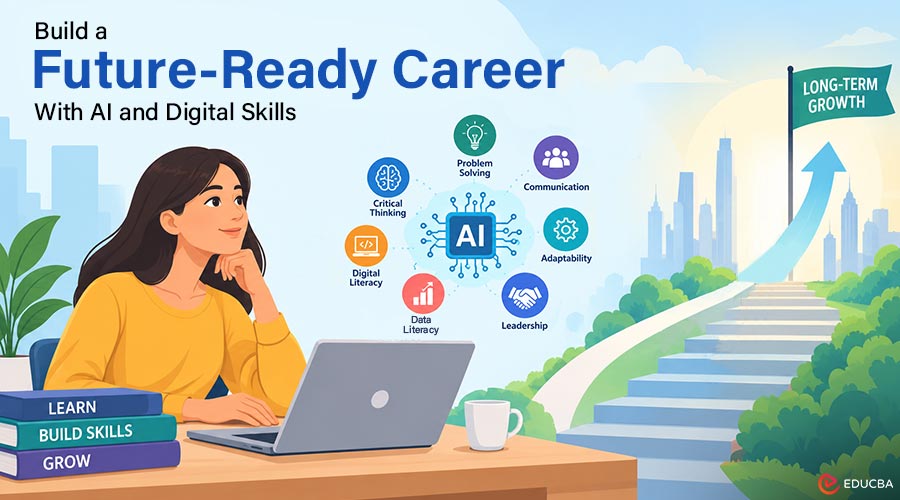
Careers are no longer shaped only by degrees, job titles, or years of experience. Employers now assess how quickly people learn, how well they use digital tools, and how effectively they solve practical problems. Artificial intelligence has added another layer to this shift. It is changing how work gets done, how candidates are screened, and how employees prove their value. For professionals in India and beyond, a future-ready career depends on combining technical awareness with strong workplace skills.
How is AI Changing Career Paths?
AI is not limited to software engineering or data science roles. It now affects marketing, finance, customer support, operations, HR, education, and healthcare. In many teams, AI tools help summarize information, draft content, automate repetitive workflows, and support decision-making. This means employees are increasingly expected to know where AI can save time and where human judgment is still essential. The practical impact is clear. Some routine tasks are shrinking, while new responsibilities are appearing around tool selection, prompt writing, quality control, compliance, and cross-functional coordination.
A professional who can work with AI output, check it for errors, and turn it into useful action often becomes more valuable than someone who only follows a fixed process. This shift also changes job discovery. Candidates now explore roles that blend domain knowledge with digital ability. A finance analyst may need to understand automation dashboards. A recruiter may need to evaluate AI-assisted screening. A content specialist may need to review machine-generated drafts. Career planning therefore works better when it focuses on adaptable skill clusters instead of a single narrow title.
What Employers Look for in a Future-Ready Candidate?
Hiring teams still care about qualifications, but many now evaluate candidates more broadly. They want evidence that a person can learn new systems quickly, communicate clearly, and work across changing business conditions. Technical depth matters, but so does the ability to apply that knowledge in realistic settings.
One useful way to think about employability is to group it into four areas:
- Core professional skills such as writing, analysis, presentation and time management.
- Digital fluency, including comfort with software tools, data interpretation and AI-assisted workflows.
- Human skills such as collaboration, empathy, negotiation and conflict handling.
- Learning agility or the ability to update skills without waiting for formal retraining.
When candidates show strength across these areas, they tend to be more resilient in a changing market. This is also why portfolios, project work, and role-specific problem solving are becoming more useful than generic claims on a resume.
AI Can Help With Job Search, but Judgment Still Matters
AI tools can make job search more efficient. They can help candidates identify keywords, compare role descriptions, tailor application materials, and organize outreach. Some platforms also match people to suitable openings based on profile details, skills, and hiring needs. For example, a candidate-job matching platform reflects how recruitment is moving toward fit-based screening rather than manual sorting alone. Still, candidates should not assume automation will do the full job. A good application requires context.
You need to understand the company, the role scope, the reporting line, and the business problem the position is meant to address. If AI helps draft a resume summary or cover note, the final version should still reflect genuine experience and clear reasoning. Interview preparation also benefits from balance. Use digital tools to practice common questions, but prepare real examples from your work. Employers usually remember candidates who explain decisions, trade-offs, and outcomes in a grounded way. Specific stories show maturity much better than polished but vague language.
Workplace Skills That Stay Relevant Across Industries
Many tools will change over time, but some workplace skills remain consistently valuable because they transfer across roles and sectors. These skills often determine who can grow into larger responsibilities.
1. Communication
Clear communication is still one of the strongest career multipliers. This includes writing concise emails, presenting updates, asking good questions, and adapting your message to technical and non-technical audiences. As teams become more distributed and more work happens through digital channels, clarity becomes even more important.
2. Problem solving
Future-ready professionals do more than identify issues. They break problems into parts, compare options, and explain why one approach is better than another. AI may generate suggestions, but people are still expected to define the problem correctly and test whether the output makes sense.
3. Data literacy
You do not need to be a data scientist to benefit from data literacy. In many roles, it is enough to read dashboards, spot patterns, question assumptions, and connect metrics to business decisions. This helps professionals move from opinion-based discussions to evidence-based action.
4. Adaptability
Teams, tools, and processes can change quickly. Adaptability means staying effective without becoming reactive. It includes learning new systems, adjusting to new managers, and handling uncertainty without losing focus on priorities.
How to Build a Future-Ready Career Practically?
A future-ready career is built through repeated practice, not only through formal study. One effective approach is to audit your current role and identify tasks you could improve with better tools or stronger methods. If you spend time on repetitive reporting, learn a way to automate part of it. If you join many meetings, improve your note-taking and follow-up process. Small improvements create strong evidence of capability. It also helps to maintain a visible record of your work. Keep track of projects, outcomes, process improvements, and responsibilities you have handled.
This makes resume updates easier and gives you better material for interviews. If you are exploring new openings, a global job board can help you compare roles across industries and understand how employers describe the skills they need. Another practical step is to learn in layers. Start with broad understanding, then move into hands-on use, then apply the skill in a real task. For instance, do not just read about AI tools. Use one in a workflow, evaluate its limitations, and document what changed in speed, quality, or accuracy.
Choosing Opportunities That Support Long-Term Growth
Not every job that looks attractive on paper will help build a resilient career. When evaluating an opportunity, ask a few direct questions. Will this role help you learn systems that are widely used? Will you work on meaningful problems? Will you gain exposure to stakeholders, decision-making, or measurable outcomes? Does the team encourage learning and accountability? Roles that offer growth usually combine execution with learning. They give you space to improve a process, own a result, or collaborate beyond your immediate function.
Even if the title is not perfect, the right environment can accelerate your development far more than a narrowly defined role with limited learning value. The most reliable career strategy is to stay employable, not just employed. AI will continue to reshape work, but the strongest professionals will pair technical awareness with communication, judgment, and continuous learning. That combination makes it easier to move across roles, adapt to new tools, and remain useful in a market that keeps changing.
Final Thoughts
The most reliable career strategy is to stay employable, not just employed. AI will continue to reshape how people work, but the strongest professionals will combine technical awareness with communication, judgment, problem-solving, and continuous learning. Building a future-ready career does not mean predicting every change in the job market. Instead, it means developing transferable skills, staying comfortable with new technologies, and remaining willing to learn. This combination can make it easier to move between roles, adapt to new tools, and continue creating value in a changing workplace.
Recommended Articles
We hope this guide to building a future-ready career helps you develop relevant skills and adapt to the changing workplace. Check out these recommended articles for more insights and strategies to support your long-term career growth.