
What is the Zeigarnik Effect?
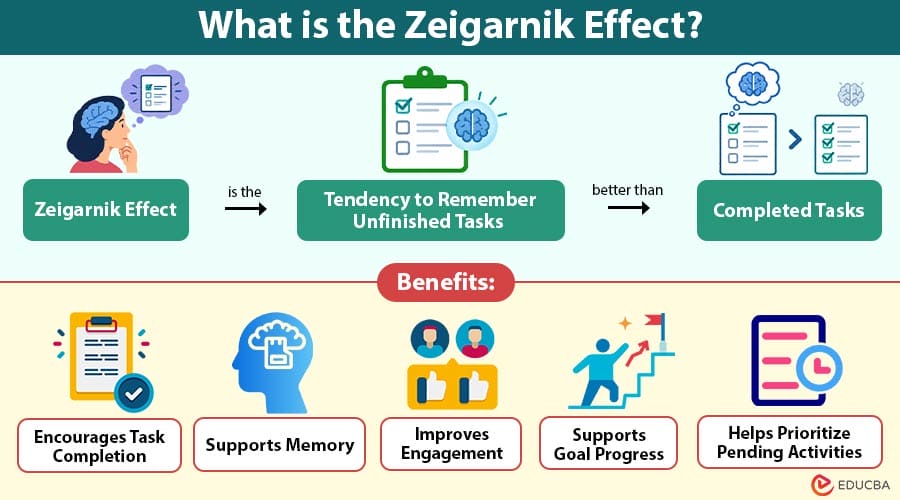
The Zeigarnik Effect is the tendency to remember unfinished tasks better than completed tasks.
People often continue thinking about incomplete activities even after they stop working on them. An unfinished assignment, pending email, incomplete project, or unresolved decision may remain mentally active until it is completed or clearly resolved. This effect explains why incomplete tasks can attract attention and create a desire for closure.
The concept originated from psychologist Bluma Zeigarnik, who studied how people remembered completed and interrupted tasks. Her work contributed to understanding the relationship between memory, attention, and unfinished activities.
The Zeigarnik Effect is relevant to productivity, education, marketing, workplace behavior, and everyday decision-making. It can encourage people to return to pending tasks, but too many unfinished activities may also create mental pressure and distraction.
Table of Contents:
- Meaning
- Working
- Examples
- Applications
- Benefits
- Limitations
- How to Use the Zeigarnik Effect Effectively?
Key Takeaways:
- The Zeigarnik Effect describes stronger memory for unfinished tasks than completed ones.
- Psychologist Bluma Zeigarnik is associated with the development of this concept.
- Unfinished activities can remain mentally active and attract attention.
- The effect can support productivity when people use it to keep important tasks in mind.
- Too many open tasks may contribute to distraction and mental overload.
How Does the Zeigarnik Effect Work?
The Zeigarnik Effect relates to how unfinished activities stay mentally active. When a person begins a task, the task creates a psychological intention to complete it. If the activity is interrupted before completion, that intention may remain active.
For example, suppose an employee begins preparing a report but stops halfway because a meeting starts. Even after the meeting, the employee may continue thinking about the unfinished report. The unresolved task can remain more noticeable in memory than a completed report.
Several factors can influence this experience:
1. Task Importance
Important or personally meaningful tasks are more likely to remain noticeable after interruption. A major work presentation may occupy someone’s thoughts more than a minor unfinished activity.
2. Level of Involvement
The more attention a person gives a task, the stronger the mental connection may become. An interrupted activity can therefore remain active in memory.
3. Interruption
An interruption can prevent a person from reaching a natural stopping point. This may leave the task mentally unresolved and increase the desire to return to it.
4. Need for Completion
People often prefer completing activities rather than leaving them unfinished. Reaching completion can provide a sense of closure and reduce the mental attention given to the task.
Examples of the Zeigarnik Effect
The Zeigarnik Effect can appear in many everyday situations.
1. Unfinished Assignment
A student starts writing an assignment but stops before completing it. While doing other activities, the student may repeatedly think about the remaining sections.
2. Incomplete Work Project
An employee leaves a project unfinished at the end of the day. The project may continue to occupy their thoughts until they return to work and complete it.
3. Interrupted Book
A reader stops reading a book at an important point in the story. The unresolved storyline may encourage the reader to return to the book later.
4. Pending Email
A person begins writing an important email but saves it as a draft. The unfinished message may remain noticeable because the communication is incomplete.
Applications of the Zeigarnik Effect
The concept has applications across several areas.
| Area | Application |
| Productivity | Encouraging people to start and continue unfinished tasks |
| Education | Maintaining interest in unresolved questions and problems |
| Marketing | Encouraging continued engagement with incomplete information |
| Project Management | Tracking unfinished activities and clear next steps |
| User Experience | Using progress indicators to encourage task completion |
| Content Creation | Maintaining attention through open questions or unresolved topics |
| Personal Development | Managing pending goals and activities |
Benefits of the Zeigarnik Effect
Below are the key benefits of the Zeigarnik Effect:
1. Encourages Task Completion
Unfinished tasks can remain mentally active, motivating individuals to return to pending activities, maintain focus, and work toward completing important responsibilities efficiently.
2. Supports Memory
Incomplete activities may receive continued mental attention, helping individuals remember pending responsibilities, important details, deadlines, and information associated with unfinished tasks more effectively.
3. Improves Engagement
Open questions and incomplete processes can maintain curiosity, encouraging people to continue reading, watching, learning, or interacting until they reach a satisfying conclusion.
4. Supports Goal Progress
Breaking large goals into smaller unfinished stages provides clear action points, helping individuals maintain momentum, track progress, and continue working toward desired outcomes.
5. Helps Prioritize Pending Activities
Identifying unresolved tasks helps individuals organize responsibilities, establish priorities, create structured action plans, and allocate time effectively to activities requiring completion.
Limitations of the Zeigarnik Effect
Below are the key limitations of the Zeigarnik Effect:
1. Does Not Apply to Every Task
The Zeigarnik Effect does not guarantee that every unfinished task will be remembered better than completed tasks, as memory varies based on attention and personal circumstances.
2. Can Create Distraction
Having numerous unfinished tasks can divide attention, making it harder to concentrate on important activities and potentially reducing productivity instead of improving task completion.
3. May Increase Mental Pressure
A large number of pending responsibilities can create a continuous sense of unfinished work, which may make individuals feel mentally occupied or overwhelmed.
4. Can Reduce Trust in Marketing
Using incomplete information only to create curiosity may frustrate audiences, particularly when people expect transparent communication, complete details, and meaningful information from businesses.
5. Effectiveness Depends on Context
The Zeigarnik Effect works differently across situations because factors such as task importance, motivation, attention, interruption, and individual differences can influence its impact.
How to Use the Zeigarnik Effect Effectively?
People can apply the principle thoughtfully by managing unfinished tasks without creating unnecessary mental pressure or keeping too many tasks open.
1. Start Important Tasks Early
Starting important tasks early can strengthen memory and make it easier to resume work after interruptions.
2. Define the Next Action
Before stopping, write down the next specific action so you can quickly understand where to continue later.
3. Break Large Projects into Stages
Divide complex projects into smaller stages to make unfinished work easier to organize, track, and complete.
4. Use Progress Tracking
Use checklists, progress bars, or task lists to monitor unfinished work and maintain clear awareness of remaining activities.
5. Limit Open Tasks
Keep only a manageable number of tasks active at once to reduce distractions and prevent mental overload.
6. Create Closure
Complete, schedule, delegate, or intentionally close unfinished tasks when appropriate to reduce unnecessary mental attention and improve focus.
Final Thoughts
The Zeigarnik Effect explains why unfinished activities can remain more active in memory than completed ones. Associated with Bluma Zeigarnik, the concept helps explain behavior in productivity, education, marketing, and everyday decision-making. Using clear next steps and manageable tasks can turn unfinished activities into useful reminders while reducing unnecessary mental distraction.
Frequently Asked Questions (FAQs)
Q1. Can the Zeigarnik Effect affect decision-making?
Answer: Yes. Unresolved choices or unanswered questions may continue occupying attention until a person reaches a decision or accepts the situation.
Q2. Does the Zeigarnik Effect apply to digital activities?
Answer: It can apply to digital activities such as unfinished online forms, incomplete courses, pending messages, or partially completed processes.
Q3. Does the Zeigarnik Effect always improve productivity?
Answer: No. While unfinished tasks may encourage people to continue working, having too many open tasks can also increase distraction and mental pressure.
Q4. Can completing a task reduce the Zeigarnik Effect?
Answer: Completion can provide closure and reduce the mental attention associated with an unresolved activity, although other factors may continue to keep the task memorable.
Recommended Articles
We hope that this EDUCBA information on “Zeigarnik Effect” was beneficial to you. You can view EDUCBA’s recommended articles for more information.

