
What is the Endowment Effect?
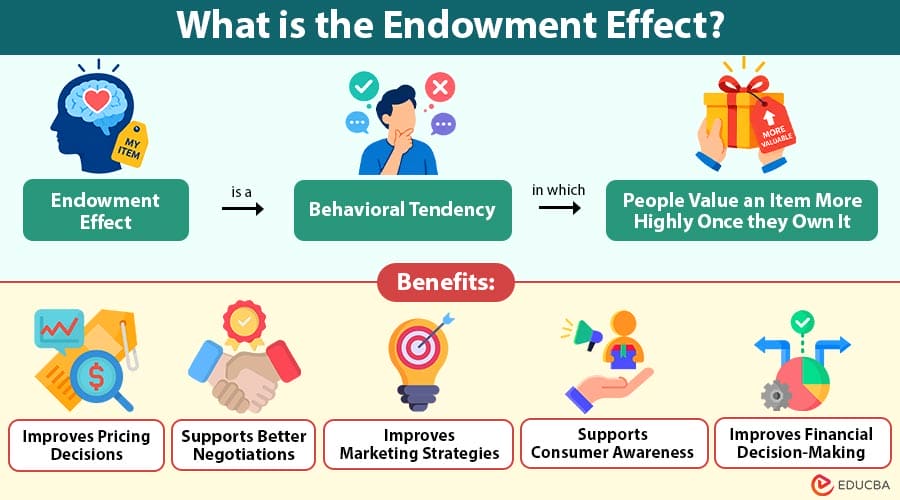
The endowment effect is a behavioral tendency in which people value an item more highly once they own it.
People often develop a stronger attachment to things they possess, even when those things have little personal or financial value. As a result, they may demand more money to give up an item than they would have been willing to pay to acquire it initially.
For example, a person may be willing to pay ₹500 for a coffee mug. After receiving and owning the mug, they may refuse to sell it for ₹500 and ask for ₹800 instead. The difference occurs because ownership changes how the person perceives the item’s value.
The endowment effect is an important concept in behavioral economics and psychology. It helps explain consumer decisions, negotiations, pricing behavior, investment choices, and attachment to personal possessions.
Table of Contents:
- Meaning
- Importance
- Working
- Types
- Examples
- Factors Affecting the Endownment Effect
- Applications
- Benefits
- Limitations
- How Businesses Can Use the Endownment Effect Responsibly?
Key Takeaways:
- The endowment effect occurs when ownership increases an item’s perceived value.
- People may demand more to give up an owned item than they would pay to acquire it.
- Loss aversion and psychological attachment can contribute to this behavior.
- The effect can influence purchasing, selling, negotiations, and investment decisions.
Importance of the Endowment Effect
The endowment effect is important because it helps explain why people’s decisions may differ before and after ownership.
1. Consumer Behavior
Customers may develop stronger attachment to products after trying or using them, influencing their willingness to purchase or keep them.
2. Business Negotiations
Sellers may assign higher values to assets they already own, affecting pricing expectations and negotiation outcomes.
3. Finance
Investors may hold investments longer than intended because selling them can feel like giving up something valuable.
4. Marketing
Companies can create ownership experiences through free trials, demonstrations, personalization, and product customization to strengthen customer attachment.
5. Economics
The concept helps explain why actual market behavior may differ from traditional assumptions about stable preferences and objective valuations.
How Does the Endowment Effect Work?
The endowment effect develops when ownership changes a person’s perception of an item’s value. Before ownership, an individual may evaluate an item mainly based on its usefulness, price, or alternatives. Once ownership begins, giving up the item can feel like losing something valuable.
The process generally involves the following stages:
1. Initial Evaluation
A person evaluates an item without owning it, considering usefulness, price, quality, alternatives, and personal preferences before deciding how much value it deserves.
2. Ownership
A person acquires or receives an item, establishing legal or psychological ownership that changes how they perceive the item’s value compared with before ownership initially.
3. Psychological Attachment
Ownership creates a sense of possession or connection, making the item feel personally meaningful and strengthening the individual’s emotional relationship with it gradually over time.
4. Higher Perceived Value
The individual begins to value the item more highly than before ownership, as possession makes its benefits and personal significance seem greater than previously perceived.
5. Reluctance to Give It Up
Selling, exchanging, or returning the item may feel like a loss because ownership increases its perceived value and creates reluctance to part with it.
This process does not mean that every owned item becomes more valuable. The effect depends on factors such as personal attachment, familiarity, usefulness, and the individual’s relationship with the item.
Types of Endowment Effect
The endowment effect can appear in different forms depending on the type of ownership and psychological connection.
1. Emotional Endowment Effect
This occurs when people value possessions more because of emotional attachment. Family photographs, gifts, souvenirs, and inherited objects can have greater perceived value because they connect to personal memories.
2. Monetary Endowment Effect
This occurs when ownership increases the price a person expects to receive for an item. An owner may ask for a higher selling price than they would have paid before owning the item.
3. Functional Endowment Effect
People may value an item more because they have incorporated it into their routine. For example, someone who regularly uses a particular software subscription may be reluctant to cancel it after becoming accustomed to its features.
4. Psychological Ownership Effect
A person may feel ownership even without formal legal ownership. For example, a customer using a free product trial may begin to feel that the product is already theirs, making them more reluctant to give it up.
Examples
The endowment effect appears in everyday decisions, business transactions, and financial markets.
1. Concert Tickets
A person purchases a concert ticket for ₹2,000. As the event approaches, demand increases, and similar tickets sell for ₹4,000. However, the owner may refuse to sell the ticket for ₹4,000 because they have already formed an expectation of attending.
2. Free Product Trial
A software company allows customers to use a premium feature for 30 days. After incorporating the feature into their daily workflow, customers may perceive greater value in retaining it. Using and incorporating the feature can make cancellation more difficult.
3. Customized Product
A customer purchases a laptop with personalized accessories, settings, and software. After using the customized setup for a long period, the customer may value it more highly than an identical standard laptop because the personalized features create a stronger sense of ownership.
Factors Affecting the Endowment Effect
Several factors can influence the strength of endowment effect.
1. Ownership Duration
Longer ownership can increase familiarity and attachment, making people value possessions more after extended use over time and repeated experiences.
2. Emotional Attachment
Items connected with memories, relationships, or achievements can create stronger ownership feelings and increase perceived value beyond practical usefulness alone.
3. Perceived Uniqueness
People tend to value possessions more when they seem rare, personalized, or hard to replace, further increasing perceived ownership value.
4. Usage
Frequently used products can become part of daily routines, strengthening familiarity and attachment while increasing resistance to letting go.
5. Replacement Availability
When an item has many substitutes, the endowment effect may weaken because replacement is easy, while limited alternatives can increase value.
6. Individual Preferences
People differ in attachment to possessions, with some readily selling or replacing items while others assign emotional value to ownership.
Applications of the Endowment Effect
Below are the key applications of the endowment effect:
1. Marketing
Businesses can provide free trials, samples, demonstrations, or customizable products. Once customers develop a sense of ownership, they may value continuing to use the product more.
2. E-Commerce
Online retailers can use saved shopping lists, personalized product selections, and customization features to create a stronger sense of possession before purchase.
3. Negotiation
The endowment effect can influence how sellers establish asking prices. An owner may assign a higher value to an asset because of their existing relationship with it.
4. Real Estate
Homeowners may value their property more than potential buyers because of emotional attachment, memories, improvements, and familiarity with the home.
5. Investment
Investors may become attached to stocks or other assets they already own. This attachment can influence decisions about whether to sell, hold, or replace an investment.
6. Product Design
Companies can encourage psychological ownership by allowing customers to personalize products. Customization may make a product feel more personally connected to the buyer.
Benefits of Understanding the Endowment Effect
Understanding this behavioral tendency can provide several practical benefits:
1. Improves Pricing Decisions
Businesses can better understand differences between buyer and seller valuations, helping them develop more realistic pricing strategies.
2. Supports Better Negotiations
Recognizing ownership bias helps negotiating parties identify unrealistic expectations and understand why valuations may differ during discussions.
3. Improves Marketing Strategies
Companies can design product experiences that encourage familiarity, engagement, and psychological ownership among potential customers.
4. Supports Consumer Awareness
Customers can recognize when emotional attachment influences their decisions to buy, sell, or keep, leading to more informed choices.
5. Improves Financial Decision-Making
Investors can separate objective reasons for holding an asset from emotional attachment, supporting more rational investment decisions.
Limitations of the Endowment Effect
The endowment effect does not occur equally in every situation. Several limitations should be considered:
1. Different Individuals Respond Differently
Some people develop little attachment to possessions and may readily sell, exchange, or replace items without significant emotional resistance.
2. Context Matters
The strength of endowment effect can vary by the item’s type, perceived value, usefulness, and the circumstances surrounding ownership.
3. Ownership May Not Always Increase Value
Practical usefulness, price, availability, and market conditions may remain more important than psychological attachment when people evaluate possessions.
4. Emotional Attachment Varies
Personal memories, relationships, experiences, and sentimental importance can significantly influence how strongly ownership affects a person’s perceived value.
5. Experimental Findings May Not Represent Every Real-World Situation
Behavior observed in controlled experiments may differ from decisions made in complex markets involving multiple factors.
How Businesses Can Use the Endowment Effect Responsibly?
Businesses can use ownership experiences to help customers understand product value without misleading them. Free trials, product demonstrations, customization, and transparent return policies can give customers an opportunity to assess whether a product genuinely meets their needs.
For example, a software company may offer a trial period that lets customers integrate a tool into their workflow. After the trial, customers can make an informed decision about continuing the subscription.
The objective should be to demonstrate genuine product value rather than create artificial pressure to purchase.
Final Thoughts
The endowment effect explains why ownership can increase the perceived value of possessions. It can influence consumer behavior, negotiations, investments, marketing, and everyday decisions. Understanding this tendency helps individuals recognize the role of psychological attachment and helps businesses design more transparent customer experiences.
Frequently Asked Questions (FAQs)
Q1. Does the endowment effect apply to digital products?
Answer: Yes. Users can develop psychological ownership of digital items such as customized avatars, software features, virtual goods, or saved content.
Q2. Can the endowment effect influence gift decisions?
Answer: Yes. People may place greater value on gifts they own because the objects can become associated with memories, relationships, or personal experiences.
Q3. Can the endowment effect affect selling decisions?
Answer: Yes. Owners may set higher asking prices because they perceive their possessions as more valuable than they did before acquiring them.
Q4. Does the endowment effect affect children?
Answer: Research suggests that ownership-related valuation can appear in children, although its strength may vary with age, experience, and the circumstances of ownership.
Recommended Articles
We hope that this EDUCBA information on “Endowment Effect” was beneficial to you. You can view EDUCBA’s recommended articles for more information.


