
What is Covered Bond?
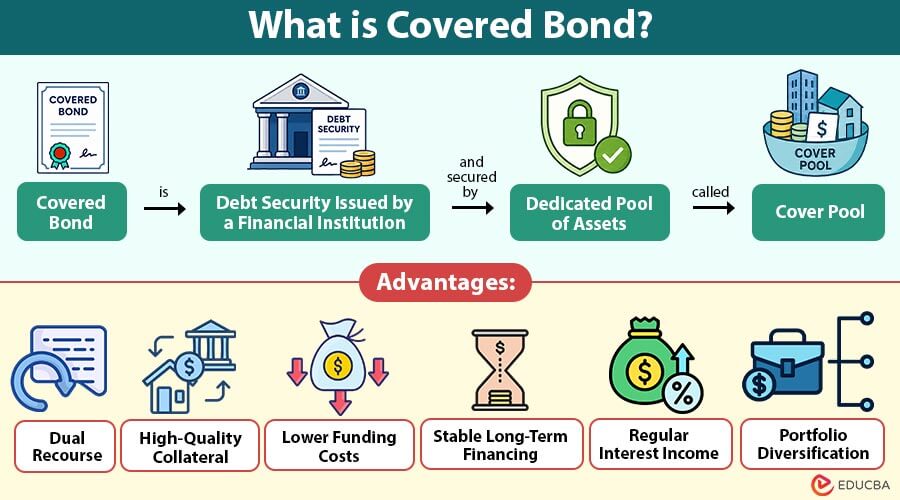
Covered bond is debt security issued by a financial institution and secured by a dedicated pool of assets called the cover pool. The assets commonly include residential or commercial mortgages, government-related loans, or other qualifying high-quality loans.
What makes covered bonds different from many other secured debt instruments is that investors generally have two sources of repayment. First, they have a claim against the issuing bank. Second, if the bank cannot meet its obligations, investors have a claim against the assets in the cover pool.
For example, suppose a bank issues covered bonds backed by a portfolio of residential mortgages. The bank continues to own and manage those mortgages while using the cash flows from the assets to support payments to covered bond investors.
This structure can provide investors with relatively strong credit protection while allowing banks to access funding at competitive costs.
Table of Contents:
Key Takeaways:
- Covered bonds provide investors with dual recourse to issuers and dedicated pools of eligible assets.
- Banks use covered bonds to obtain stable, long-term funding at relatively competitive borrowing costs.
- High-quality collateral and regulatory oversight help strengthen investor protection and covered bond market stability.
- Covered bonds still carry interest rate, issuer credit, liquidity, collateral, and prepayment risks.
Why are Covered Bonds Important?
Covered bonds play an important role in financial markets because they connect bank funding needs with investor demand for relatively high-quality fixed-income securities.
For banks, they can provide access to long-term funding that supports mortgage lending and other financial activities. For investors, they can provide exposure to the banking sector while offering additional protection through a dedicated pool of assets.
It can therefore support the stability and efficiency of financial markets when backed by strong legal frameworks, appropriate collateral standards, and effective supervision.
How Do Covered Bonds Work?
They generally involve three main components: the issuer, investors, and the cover pool.
The bank first creates or identifies a pool of eligible assets, such as mortgage loans. It then issues covered bonds to investors. Investors provide funds to the bank by purchasing these bonds.
The bank uses the proceeds to support its lending and other financing activities. Borrowers whose loans are included in the cover pool continue making their scheduled payments.
The general process works as follows:
1. Loan Origination
Banks originate qualifying loans, such as mortgages, that meet specific eligibility requirements to be included in the cover pool.
2. Cover Pool Creation
Eligible loans are selected and placed into a cover pool, providing assets that support covered bond obligations.
3. Bond Issuance
The bank issues covered bonds to investors, who purchase them and provide funding for the bank’s activities.
4. Investor Funding
Investors provide money by purchasing covered bonds, allowing banks to access funding for lending and other financial activities.
5. Loan Repayments
Borrowers make scheduled loan payments, creating regular cash flows that help support interest and principal payments on bonds.
6. Bond Payments
The bank uses available funds and loan cash flows to make timely interest and principal payments to investors.
7. Additional Protection
If the bank faces financial difficulties, the cover pool provides investors with an additional source of repayment.
Key Features of Covered Bonds
They have several features that distinguish them from traditional corporate bonds and other asset-backed securities.
1. Dual Recourse
Investors can seek repayment from the issuing bank and, under applicable laws, from the cover pool assets.
2. High-Quality Collateral
Backed by eligible, high-quality assets that meet specific requirements for protecting investor interests.
3. Bank Issuance
Banks and qualifying financial institutions commonly issue covered bonds to obtain stable funding from capital market investors.
4. Ongoing Cover Pool
The cover pool is maintained throughout the bond’s life, with ineligible assets replaced by qualifying assets.
5. Regular Interest Payments
Provides regular interest payments, which may be fixed or linked to a benchmark interest rate.
6. Regulatory Oversight
Markets follow regulations covering collateral eligibility, asset coverage, disclosures, investor protection, and issuer responsibilities.
Types of Covered Bonds
They can be classified according to the assets supporting them and the structure used for issuance.
1. Mortgage
These bonds are backed by mortgage loans secured against residential or commercial properties, making them common covered bonds.
2. Public Sector
These bonds are backed by loans or claims involving governments, municipalities, or other qualifying public-sector entities.
3. Ship
These bonds are supported by qualifying loans secured against ships or other eligible maritime assets.
4. Mixed-Collateral
These bonds use multiple eligible asset classes within one cover pool, depending on jurisdictional legal requirements.
Difference Between Covered Bond and Traditional Unsecured Bond
The table below highlights the key differences between the two.
| Feature | Covered Bond | Traditional Unsecured Bond |
| Collateral | Backed by a dedicated cover pool of eligible assets. | Generally not backed by specific collateral. |
| Recourse | Investors generally have claims against the issuer and the cover pool. | Investors primarily depend on the issuer’s creditworthiness. |
| Default Protection | Provides an additional layer of protection through cover pool. | Protection depends mainly on applicable insolvency rules. |
| Risk Level | Generally considered lower risk than comparable unsecured bonds, but not risk-free. | Generally carries greater credit risk because there is no dedicated collateral pool. |
| Key Risk Factors | Depends on issuer strength, collateral quality, legal structure, market conditions, and regulations. | Depends mainly on issuer strength, financial condition, and market conditions. |
| Example | A bank issues bonds backed by a pool of eligible mortgage loans. | A bank issues bonds based primarily on its general ability to repay. |
Advantages of Covered Bonds
The major advantages include the following:
1. Dual Recourse
Investors can seek repayment from the issuing institution and the cover pool, providing additional protection against potential losses.
2. High-Quality Collateral
Requires eligible, high-quality collateral, helping strengthen investor protection and reduce exposure to lower-quality underlying assets.
3. Lower Funding Costs
Banks may obtain funding at lower costs because covered bonds offer investors additional security through collateral backing.
4. Stable Long-Term Financing
Provides banks with reliable, long-term funding, supporting lending activities and improving overall funding stability.
5. Regular Interest Income
Investors generally receive regular interest payments, providing predictable income according to the covered bond’s predetermined payment terms.
6. Portfolio Diversification
It can diversify investment portfolios by providing exposure to relatively secure debt instruments with different risk characteristics.
Disadvantages of Covered Bonds
It also has disadvantages:
1. Issuer Credit Risk
Investors remain exposed to the issuer’s financial condition, meaning difficulties at the bank can affect repayment.
2. Interest Rate Risk
Changes in interest rates can reduce market value of covered bonds, potentially causing investor losses.
3. Collateral Quality
The quality or value of assets within the cover pool can deteriorate, reducing the protection available to investors.
4. Liquidity Risk
Secondary-market liquidity may vary, making some covered bonds harder to sell quickly at favorable market prices.
5. Prepayment Risk
Early mortgage repayments can change expected cash flows, potentially affecting the timing and amount of investor returns.
6. Legal and Regulatory Differences
Different national laws and regulations can create complexities and additional risks for investors purchasing covered bonds internationally.
Who Invests in Covered Bonds?
These securities generally appeal to institutional investors seeking relatively high-quality fixed-income assets. Common investors include:
1. Banks
Banks invest in these securities to manage liquidity, diversify assets, and hold relatively secure fixed-income investments.
2. Insurance Companies
Insurance companies purchase them to obtain stable income and match their long-term investment obligations.
3. Pension Funds
Pension funds use these instruments to generate predictable returns while supporting long-term portfolio diversification and risk management.
4. Asset Managers
Asset managers include them in investment portfolios to provide clients with diversified exposure to relatively high-quality fixed-income assets.
5. Mutual Funds
Mutual funds may invest in these securities to generate regular income while maintaining diversified exposure across fixed-income investments.
6. Central Banks
Central banks may hold these instruments as part of their reserves, monetary operations, or broader fixed-income investment activities.
7. Other Institutional Investors
Other institutional investors may purchase them to diversify portfolios, earn regular income, and manage overall investment risk.
Example
Suppose ABC Bank issues ₹500 crore of covered bonds backed by a pool of eligible business loans worth ₹600 crore. The businesses continue making their scheduled repayments to the bank, while the bank remains responsible for paying interest and principal to covered bond investors.
If ABC Bank later experiences financial distress, investors may still have a claim against the bank and, subject to applicable laws, the eligible assets in the cover pool. This dual-recourse structure distinguishes covered bonds from ordinary unsecured debt.
Final Thoughts
Covered bonds are debt securities issued by the financial institutions and backed by a dedicated pool of eligible assets. They provide investors with dual recourse to both the issuer and the cover pool. Covered bonds support stable bank funding while offering investors relatively secure fixed-income opportunities, though they still carry credit, market, liquidity, and interest rate risks.
Frequently Asked Questions (FAQs)
Q1. Are covered bonds suitable for individual investors?
Answer: Covered bonds can be suitable for individual investors seeking relatively stable fixed-income investments, although availability and minimum investment requirements vary by market.
Q2. How are covered bonds rated?
Answer: Credit rating agencies may assess the issuer, cover pool, legal framework, and repayment structure when rating covered bonds.
Q3. Can covered bonds lose value?
Answer: Yes. Their market price can fall because of changing interest rates, credit concerns, liquidity conditions, or shifts in investor demand.
Q4. Do covered bonds have a fixed maturity date?
Answer: Most covered bonds have a stated maturity date, although certain structures may include features that allow maturity to be extended under specific circumstances.
Recommended Articles
We hope that this EDUCBA information on “Covered Bond” was beneficial to you. You can view EDUCBA’s recommended articles for more information.


