

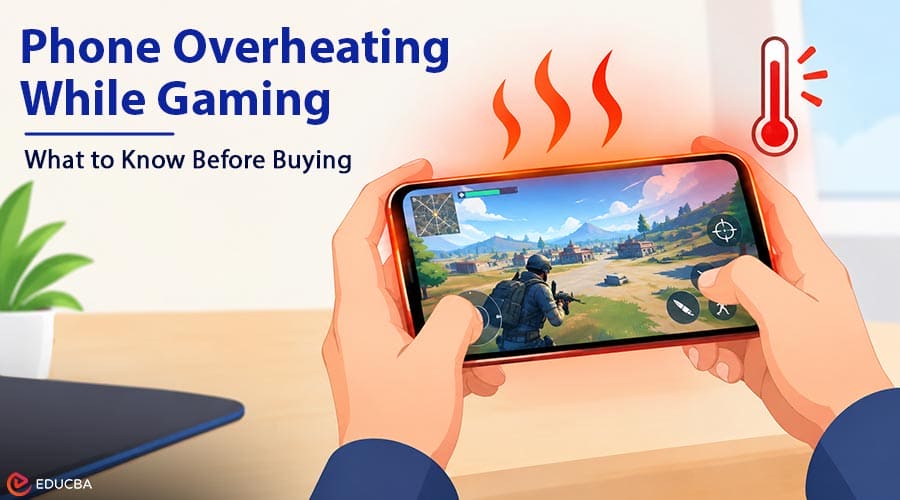
You are deep into a match, and everything is going perfectly. Then suddenly, your phone gets hot, the frame rate drops, and the screen dims to cool down. Phone overheating while gaming can quickly turn an enjoyable session into a frustrating experience. Understanding what causes this problem can help you choose a device that maintains better performance during demanding games.
Why Does Phone Overheating While Gaming Happen?
Before picking a device, it helps to understand why this happens. Gaming pushes a phone’s chip harder than almost anything else you do daily. Browsing and messaging barely touch the processor. Graphics-heavy games demand constant, sustained performance, and that generates real heat. Do check a refurbished iPhone 15.
Phones are small, tightly packed devices. Unlike a laptop or gaming console, there is very little room inside for airflow or cooling systems. This means heat builds up quickly, and the phone has to actively manage it to avoid damage.
What Actually Happens When a Phone Overheats?
Here is the part most people do not fully understand. When your phone gets too hot, it does not simply keep running at full power regardless. It protects itself through something called thermal throttling. This means the chip automatically slows down to reduce heat, which directly causes that annoying drop in frame rate or sudden lag during intense gaming sessions. It is not a flaw. It is a built-in safety measure, but it definitely gets in the way of a smooth gaming experience.
The Chip Matters More Than the Marketing
When shopping for a phone that handles gaming well, the processor inside matters more than almost anything else. Newer chips are not just faster. They are also generally more efficient, meaning they can deliver strong performance while generating less heat compared to older generations.
Apple’s newer A-series chips, found in recent iPhone models, handle sustained gaming sessions well, thanks to efficient architecture and tight hardware-software integration. Android flagships with recent Snapdragon or similar high-end chips offer comparable performance, though thermal management varies more between brands, even when using the same chip.
Why Phone Design Affects Heat as Much as the Chip Does?
This surprises a lot of buyers. Two phones with the same processor can handle heat completely differently, purely based on physical design. Larger phones generally have more internal space to spread heat across, which can mean better sustained performance during long gaming sessions.
Some manufacturers include dedicated cooling systems, such as vapor chambers or graphite heat spreaders, designed to pull heat away from the chip during demanding tasks. Phones built with gaming specifically in mind often include these features, while standard everyday phones typically do not.
Battery Health Plays a Bigger Role Than People Realize
Here is a detail that often gets overlooked completely. A phone with poor battery health tends to run hotter during demanding tasks like gaming, since a degraded battery struggles more to deliver consistent power efficiently.
This means checking battery health matters just as much for gaming performance as checking the chip itself, especially when buying secondhand. A phone with strong battery health, ideally above 85 percent, handles sustained gaming sessions noticeably better than a similar phone with a worn-down battery, even if both share the same processor.
Simple Ways to Reduce Phone Overheating While Gaming
Hardware is only part of the equation. A few everyday habits can also help manage temperatures during gaming.
- Beyond hardware, a few everyday habits make a real difference. Avoid charging your phone while gaming intensely, since this combination generates significantly more heat than either activity alone.
- Remove thick phone cases during long gaming sessions if your device allows it. Cases trap heat against the phone’s body, preventing it from dissipating naturally into the surrounding air.
- Also, avoid gaming in direct sunlight or hot environments whenever possible. External temperature adds directly to the heat your phone already generates internally, making thermal throttling happen faster and more often.
What to Look for When Buying a Phone Specifically for Gaming?
If gaming is a real priority, check a few specific features before you buy. Look for a recent-generation chip, ideally released within the past two to three years, since these typically balance performance and efficiency far better than older processors. Check the screen refresh rate too.
A higher refresh rate, such as 120Hz, makes fast-paced games feel noticeably smoother, though higher refresh rates can also slightly increase heat and battery drain during extended play. Battery capacity matters as well. A larger battery does not just mean longer play sessions. It often allows the phone to manage sustained power delivery more comfortably, reducing strain during intense gaming compared to a smaller battery working harder to keep up.
Do You Need the Newest Flagship to Game Well?
Not necessarily. A properly tested previous-generation flagship phone, especially one with strong battery health, often handles most mobile games comfortably, without the steep price tag of the newest release.
The key difference usually shows up only in the most demanding, graphically intense games, where the newest chips offer a genuine edge. For popular, moderately demanding games, a well-maintained phone from a generation or two back usually performs impressively well.
Refurbished Phones and Gaming: What to Check Carefully
If you are buying secondhand specifically for gaming, pay extra attention to battery health and overall condition. Ask the seller directly about battery percentage, and if possible, test the phone under real gaming conditions before finalizing your purchase.
A well-graded, properly tested refurbished phone, such as a refurbished iPhone 15, can deliver a smooth gaming experience, provided the battery health is strong and the chip generation is reasonably recent. This combination often delivers excellent value, letting you enjoy solid gaming performance without paying full price for the newest release.
Final Thoughts
Phone overheating while gaming usually comes down to a mix of chip efficiency, physical design, and battery health, not just raw processing power alone. Understanding these factors helps you choose a phone that actually keeps up during long gaming sessions, rather than slowing down right when things get exciting.
Whether you are buying new or secondhand, prioritize a reasonably recent chip, strong battery health, and sensible gaming habits like avoiding charging during play. Get these details right, and your phone will handle gaming much better, without that frustrating slowdown when you need performance most.
Recommended Articles
We hope this comprehensive guide to phone overheating while gaming helps you understand the factors that affect gaming performance and device temperature. Check out these recommended articles for more insights and practical tips on smartphones and mobile technology.