


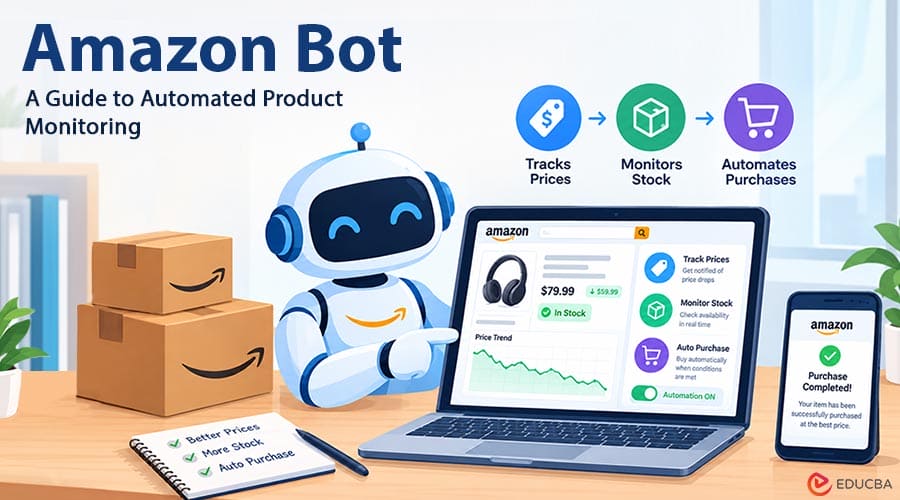
Online shopping becomes harder when a product changes price often or sells out within minutes. Checking the same Amazon page repeatedly can quickly become frustrating, especially for trading cards, collectibles, electronics, gaming consoles, and other high-demand products. This is where an Amazon bot can help. Instead of relying on manual checks, shopping automation software can monitor selected products and react when they meet rules the shopper sets. Those rules may include price, availability, seller, quantity, and whether to attempt an automatic purchase.
AmaBot is one example of this type of desktop tool. It combines product monitoring with alerts and optional automated checkout. AmaBot is an independent third-party tool and is not affiliated with or endorsed by Amazon.
What is an Amazon Bot?
An Amazon bot is software that monitors Amazon product listings and can take predefined actions when certain conditions are met. Some tools focus only on price changes. Others also check whether a product is available, who is selling it, how many units the shopper wants, and whether the offer fits the shopper’s buying rules. A third-party Amazon bot can connect product monitoring with automated actions based on rules the shopper defines.
The main advantage is simple: the shopper does not have to keep refreshing product pages throughout the day. The software handles the repeated checks and reports or reacts when something important changes. For example, a shopper may want a product only if it is in stock, costs no more than $100, is sold by an acceptable seller, and fits a chosen quantity limit. The shopper can set those rules in advance.
Price Tracking and Stock Monitoring
Price tracking is one of the most common forms of Amazon monitoring. A shopper chooses a product and sets a price they are willing to pay. The tool watches the listing and can notify the shopper when the price reaches that level. This works well when price is the main concern. High-demand products can create a different problem.
A product may already be at a good price but remain unavailable for days. When stock finally returns, it may sell out quickly. In that situation, knowing about a price drop is not enough. The shopper also needs to know when a buyable offer appears. That is why more advanced monitoring combines price and availability.
What an Amazon Bot Adds to Monitoring?
A basic alert tells the shopper that something changed. An Amazon bot can go further by checking whether the new offer matches all of the rules set for that product.
Monitor → Detect a change → Check the rules → Find a qualifying offer → Begin the selected action.
The shopper makes the important decisions before the restock happens. The bot then handles the repetitive monitoring. This can be useful when several products are being watched at the same time. A restock can happen while the shopper works, sleeps, or does something else.
How AmaBot Uses Buying Rules?
AmaBot is a desktop Amazon monitoring and auto-checkout tool for Windows and macOS. Users can add products and set buying rules for each one. Those rules can include a maximum price, availability, seller preference, quantity, purchase limits, and whether the user wants an alert or an automatic purchase attempt.
For example, a collector may want two units of a product, but only if the total price stays below a chosen maximum and the offer comes from a preferred seller. The offer would need to satisfy the full set of rules. Because AmaBot runs locally, the computer, internet connection, and application session need to stay active while monitoring or automatic purchasing is enabled.
Why Monitoring Speed Matters?
For normal products, checking every few minutes may be enough. For limited releases, even a short delay can matter. AmaBot states that it checks each product every few seconds while monitoring is active. It also states that adding more products does not slow monitoring of existing products. This does not guarantee that every restock will lead to a completed order. It reduces manual checking and can shorten the time between a qualifying offer appearing and the next action beginning.
From Alerts to Automatic Purchasing
Not every shopper wants the same level of automation. Some people prefer monitor-only mode. They want the software to tell them when a product matches their rules, then they decide whether to complete the purchase themselves. Others may want automatic purchasing. In that case, the software can begin the purchasing process when the monitored offer satisfies the user’s configured rules.
With AmaBot, users can choose between these approaches. Automatic checkout can be useful when speed matters and the shopper has already decided the price, seller, quantity, and other conditions they are willing to accept. The software is not deciding what the shopper should buy. It is following the rules the shopper has already set.
Automated Checkout Does Not Guarantee an Order
An Amazon bot can react quickly, but it cannot control Amazon’s inventory or guarantee a successful purchase. A product may sell out while checkout is taking place. The price or seller may change. Amazon may request additional verification or apply another checkout requirement.
AmaBot treats a matching offer as the start of a purchase attempt, not a guaranteed order. Automation can reduce repetitive work and response time, but it cannot create inventory or prevent another buyer from purchasing the product first.
Price, Seller, Quantity and Shipping Work Together
A useful buying rule often includes more than one condition. Price can be checked together with availability. Seller preference can be checked before a purchase attempt begins. Quantity and order limits can help control how many units the shopper tries to buy.
Shipping can also matter. A low item price may no longer be attractive if shipping pushes the total above the shopper’s maximum. Depending on the user’s settings, shipping rules can be part of the decision as well. This makes condition-based monitoring more precise than a simple alert that says, “The product is back.” The system can look for an offer that matches the shopper’s actual requirements.
When is an Amazon Bot Most Useful?
An Amazon bot is most useful when checking manually is slow, repetitive, or easy to miss. It can make sense for limited trading cards, collectibles, consoles, popular electronics, computer parts, and other products that may sell out quickly.
For a normal product that stays in stock for weeks, a simple price alert may be enough. For a product that appears for only a few minutes, faster monitoring and predefined buying rules can become more useful. The best setup depends on the shopper. Some users care mainly about price. Others care more about stock, seller, quantity, or speed.
Final Thoughts
Amazon product monitoring has moved beyond simple price alerts. High-demand products often require shoppers to think about stock, seller, quantity, shipping, and timing at the same time. An Amazon bot can bring those conditions together and reduce the need to repeatedly check listings by hand. AmaBot is one example of this approach, combining monitoring, product-specific buying rules, alerts, and optional automatic checkout.
AmaBot monitors each product every few seconds while monitoring is active and can attempt a purchase when the selected conditions are met. It does not guarantee a completed order because inventory and checkout conditions can change. For shoppers who regularly watch hard-to-find products, the main benefit is simple: less manual checking and a faster response when the right offer appears.
Frequently Asked Questions (FAQs)
Q1. What does an Amazon bot monitor?
Answer: Depending on the tool, an Amazon bot can monitor price, availability, seller information, quantity rules, and other conditions chosen by the shopper.
Q2. Can an Amazon bot automatically buy a product?
Answer: Some Amazon bots can begin an automatic purchase when a product matches the user’s configured rules. A successful order is not guaranteed because stock, price, seller, or checkout requirements may change.
Q3. How often does AmaBot monitor products?
Answer: AmaBot states that it checks each product every few seconds while monitoring is active, even when multiple products are being monitored at the same time.
Recommended Articles
We hope this guide to using an Amazon bot for price, stock, and purchase monitoring helps you shop more efficiently. Check out these recommended articles for more insights and strategies to make online shopping smarter and more convenient.

