
What is a Vesting Period?
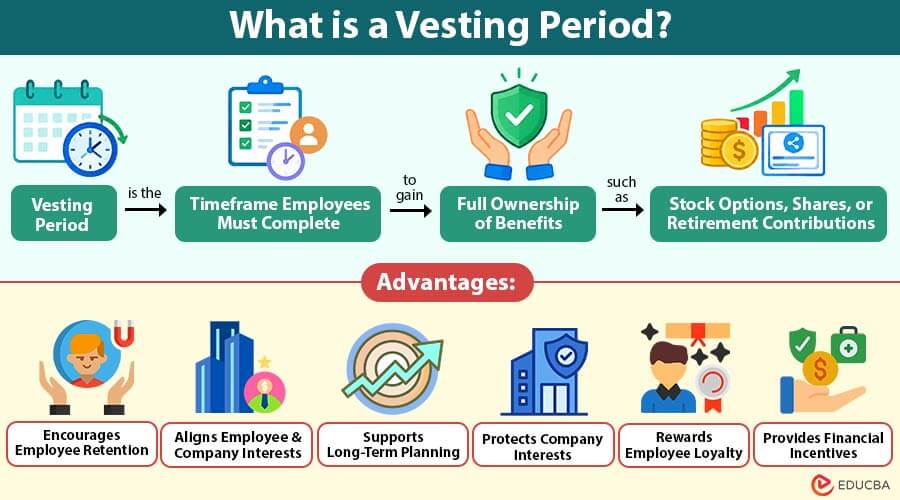
A vesting period is the timeframe employees must complete to gain full ownership of benefits such as stock options, shares, or retirement contributions. It encourages employee retention and aligns their interests with the company’s long-term success.
For example, an employer may contribute ₹50,000 annually to an employee’s retirement plan but require the employee to complete three years of service to fully own those employer contributions. If the employee leaves before completing the required period, some contributions may remain unvested, depending on the plan rules.
Table of Contents:
- Meaning
- Importance
- Working
- Types
- Advantages
- Limitations
- Factors to Consider Before Accepting a Vesting Arrangement
Key Takeaways:
- Vesting periods determine when employees gain ownership of shares, stock options, or other long-term benefits.
- Vesting schedules encourage employee retention while aligning employee interests with the company’s long-term goals.
- Vesting may occur gradually, immediately, after a cliff period, or upon achieving performance targets.
- Employees should review vesting duration, conditions, tax implications, exercise rules, and treatment of benefits after leaving.
Why is a Vesting Period Important?
Below are the key reasons why a vesting period is important:
1. Encourages Employee Retention
Companies can use vesting schedules to encourage employees to remain with the organization. Employees may be more likely to stay when valuable stock or benefits become available over time.
2. Aligns Employee and Company Interests
Equity-based compensation can encourage employees to focus on the company’s long-term performance. As employees acquire ownership, they may have a stronger interest in the organization’s growth and value.
3. Supports Long-Term Compensation
Vesting allows companies to distribute compensation over an extended period rather than providing the entire benefit immediately.
4. Protects Employers
Vesting provisions can protect companies from granting permanent benefits to employees who leave shortly after receiving them.
5. Provides a Structured Ownership Schedule
A vesting schedule clearly establishes when and how an individual gains ownership. This can reduce uncertainty and give both parties clear expectations.
How Does a Vesting Period Work?
A vesting period generally begins when an employee receives a benefit or enters into an agreement. Ownership then increases according to a predefined schedule.
For example, suppose a company grants an employee 400 shares with a four-year vesting period and annual vesting. The employee may receive:
- Year 1: 100 shares
- Year 2: 100 shares
- Year 3: 100 shares
- Year 4: 100 shares
After four years, all 400 shares are vested.
If the employee leaves after two years, only the shares vested during those two years may remain theirs, depending on the terms of the agreement. The remaining unvested shares may be forfeited.
The specific rules depend on the type of benefit and the agreement between the parties.
Types of Vesting Periods
The main types of vesting periods include the following:
1. Graded Vesting
Under graded vesting, ownership increases gradually over a specific period. A fixed percentage or amount becomes vested at regular intervals.
For example, an employee may receive 25% of their stock options each year over four years.
This approach gives employees a growing ownership interest while encouraging them to stay with the company.
2. Cliff Vesting
Cliff vesting requires the individual to complete a specific period before receiving any ownership.
For example, a company may provide stock options with a one-year cliff. If the employee leaves before completing one year, none of the options become vested. Once the employee completes one year, the specified portion becomes vested.
Companies commonly use cliff vesting when they want employees to stay for a minimum period.
3. Immediate Vesting
With immediate vesting, the individual receives full ownership as soon as the benefit is granted or the required condition is satisfied.
For example, an employer may make a retirement contribution that becomes fully owned immediately. The employee does not have to wait before gaining ownership.
4. Performance-Based Vesting
Performance-based vesting depends on achieving specific targets or milestones rather than simply completing a period.
For example, an employee may receive shares if the company reaches a specified revenue target or if the employee achieves defined performance goals.
This structure connects compensation with individual or company performance.
Advantages of a Vesting Period
A well-designed vesting period can provide several advantages.
1. Encourages Employee Retention
Vesting periods encourage employees to remain with company longer by providing valuable benefits gradually over the employment period.
2. Aligns Employee and Company Interests
Vesting connects employee rewards with company performance, encouraging employees to contribute toward long-term organizational growth and financial success.
3. Supports Long-Term Planning
A structured vesting schedule helps companies plan compensation costs while allowing employees to understand when they will receive benefits.
4. Protects Company Interests
Vesting prevents employees who leave early from receiving the full value of benefits intended for long-term service.
5. Rewards Employee Loyalty
Employees who stay longer can receive greater benefits, rewarding their continued contribution and commitment.
6. Provides Financial Incentives
Vesting creates financial incentives for employees by offering future ownership or benefits, encouraging continued performance and organizational engagement.
Limitations of a Vesting Period
Despite its benefits, vesting can also create limitations.
1. Risk of Losing Unvested Benefits
Employees leaving before completing vesting requirements may forfeit some or all unvested benefits, reducing the compensation they ultimately receive.
2. Complex Terms
Equity compensation and retirement plans may include complex rules covering cliffs, schedules, performance conditions, exercise periods, and termination provisions.
3. Delayed Ownership
Employees may need to wait several years before gaining full ownership of benefits, limiting immediate access to their financial value.
4. Uncertain Value
When vesting involves company shares or stock options, their eventual value may fluctuate significantly based on company performance and market conditions.
Factors to Consider Before Accepting a Vesting Arrangement
Employees should carefully review the vesting terms before accepting an employment offer or equity grant. Important factors include:
1. Length of the Vesting Period
Determine how long you must stay with the company before you gain full ownership of your benefits.
2. Cliff Period
Check whether you must complete a minimum service period before receiving any portion of your vested benefits or equity.
3. Vesting Frequency
Determine whether benefits vest annually, quarterly, monthly, or according to specific milestones or performance-based conditions.
4. Leaving the Company
Understand what happens to vested and unvested benefits if you resign, are terminated, or leave the company.
5. Performance Conditions
Check whether vesting depends on achieving individual performance targets, company objectives, financial goals, or other specified milestones.
6. Tax Implications
Understand whether receiving, vesting, exercising, or selling equity awards creates tax liabilities under applicable tax laws and regulations.
7. Exercise Rules
For stock options, review the exercise price, eligibility requirements, deadlines, and procedures for exercising vested options after leaving.
Final Thoughts
A vesting period determines when an individual gains ownership of benefits, equity, or financial interests. Companies use vesting to encourage retention and align employee interests with organizational goals. Understanding vesting types, schedules, conditions, and leaving terms helps employees make informed compensation and financial decisions.
Frequently Asked Questions (FAQs)
Q1. Can a vesting period be changed after it begins?
Answer: A vesting schedule may sometimes be modified, but changes generally depend on the original agreement, company policies, and applicable regulations.
Q2. Does vesting guarantee that an employee will make money?
Answer: No. Vesting establishes ownership but does not guarantee financial gains, especially when the benefit depends on company or market performance.
Q3. What happens to vested shares when an employee changes jobs?
Answer: Vested shares generally remain with the employee, although the specific treatment depends on the equity plan and applicable employment terms.
Q4. Do all employees receive the same vesting schedule?
Answer: No. Vesting arrangements can differ based on an employee’s role, seniority, compensation package, grant type, or the company’s policies.
Recommended Articles
We hope that this EDUCBA information on “Vesting Period” was beneficial to you. You can view EDUCBA’s recommended articles for more information.

