


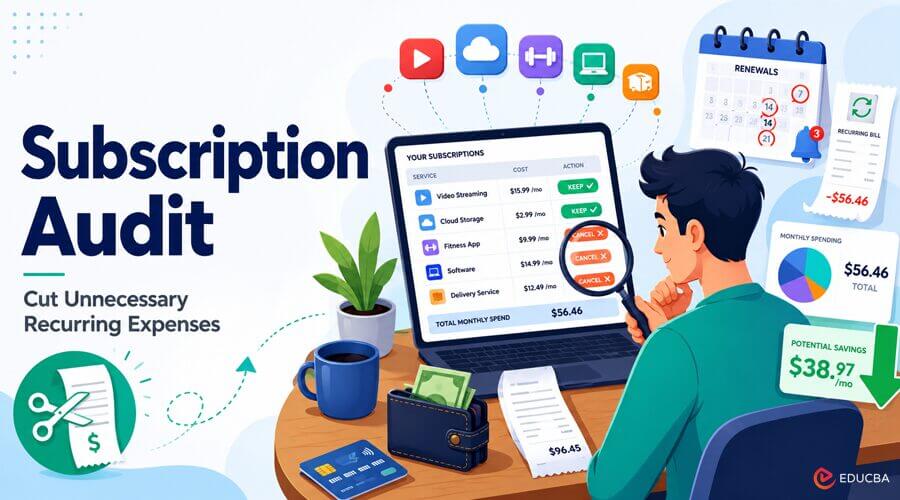
Subscriptions are now a routine part of household spending. Streaming services, cloud storage, fitness apps, software, and delivery memberships may each cost relatively little, but recurring payments can become difficult to track when several are active at once. Some may even continue long after you stop using them. A Subscription Audit helps solve this problem by reviewing recurring payments and deciding which services are still worth keeping.
What Is a Subscription Audit?
A subscription audit is a periodic review of recurring payments across bank accounts, credit cards, digital wallets, and app stores. The goal is not to cancel everything, but to identify services that remain useful, plans you can downgrade, and subscriptions you no longer need.
Start by reviewing three to six months of transactions rather than relying on memory. Check app stores and digital wallets separately, as some subscriptions may appear under a payment provider instead of the service name. Annual subscriptions also need attention because they may not appear in recent statements.
Record each subscription with its price, billing frequency and renewal date. This becomes the working list for future reviews.
A Simple Find, Test and Decide Framework
A subscription audit can be completed using three steps:
- Find: List all monthly, quarterly, and annual recurring payments.
- Test: Ask whether you still use each service, whether you would miss it if you canceled, and whether the paid plan offers features you actually need.
- Decide: Place each service into one of four categories: keep, downgrade, pause or cancel.
A streaming service used every week may be worth keeping. A premium software plan with unused features might be downgraded, while a seasonal service could be paused until you need it again.
The key is to make an active decision rather than letting automatic renewal decide for you. This makes a Subscription Audit a useful way to keep recurring spending under control.
Check Before an Annual Renewal
Annual subscriptions deserve extra attention because their renewal amounts are usually larger. Before paying, confirm that the service is still useful and that the current plan remains appropriate.
Also review the renewal price. Compare available tiers, check the provider’s current pricing, and look for any relevant offers. For example, someone renewing a €480 annual software plan might compare the available pricing and check sites such as Rabatt Influencer to see whether any applicable discount is listed. If a 15% discount is available, the renewal would cost €408 instead of €480. An offer may not always be available, but checking prevents you from treating the renewal price as something you cannot reconsider.
You can also add renewal dates and cancellation deadlines to a calendar so you have enough time to decide before another billing cycle begins.
Make the Subscription Audit a Routine
The first audit usually takes the longest because you need to identify every subscription. Future reviews are easier once the list already exists.
A quarterly review is a practical starting point. Keep the list in a spreadsheet, notes app, or shared household document and update it whenever a new subscription begins or an old one ends. Also record free trials with the date they become paid plans.
Regular Subscription Audits can identify unused services, reveal opportunities to downgrade plans, and prevent forgotten annual renewals. More importantly, they turn recurring payments back into active purchasing decisions.
Frequently Asked Questions (FAQs)
Q1. How often should subscriptions be reviewed?
Answer: Once every three months is a practical starting point, although households with fewer subscriptions may prefer twice a year.
Q2. Should an unused subscription be canceled?
Answer: If you rarely use it and it is easy to restart, canceling or pausing may make sense. Seasonal services can often be paused instead.
Q3. What should be checked before renewal?
Answer: Review how often you use the service, your current plan, the renewal price, alternative tiers, and any available offers before paying.
Q5. How should subscriptions be tracked?
Answer: A simple spreadsheet or shared document containing the service, cost, and renewal date is usually sufficient.
Recommended Articles
We hope this guide helps you understand how a Subscription Audit can identify unnecessary recurring expenses and keep household spending under control. Explore these recommended articles for more insights into personal finance, budgeting, saving money, recurring expenses, and smarter spending habits.


