


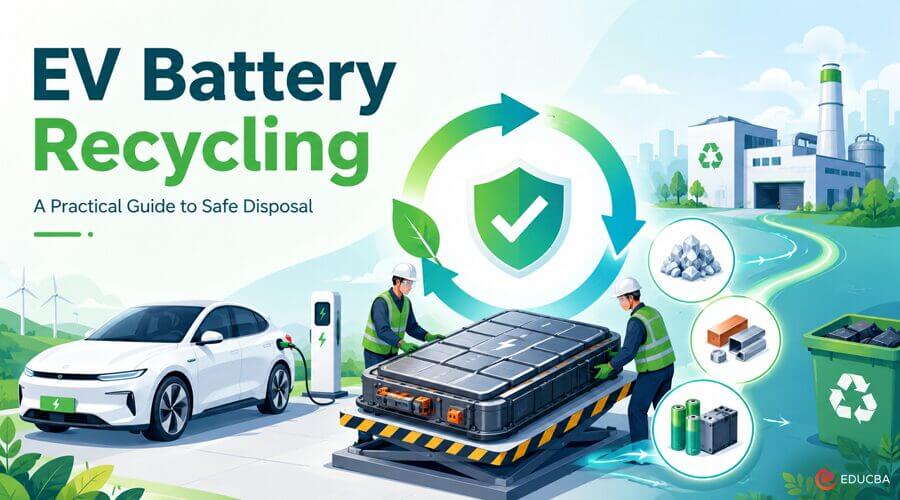
Electric vehicle batteries are designed to deliver years of dependable service, but they eventually lose capacity, become damaged, or outlast the vehicles they power. When that happens, the battery should enter a managed reuse or EV battery recycling process rather than an ordinary waste stream.
Most modern EVs use large lithium-ion battery packs made from connected cells, modules, cooling components, wiring, structural materials, and a battery management system. Common chemistries include lithium iron phosphate, nickel manganese cobalt, and nickel cobalt aluminum. Because battery designs vary, the EV battery recycling process must begin with proper identification.
Determine Whether the Battery is Ready for Recycling
Reduced driving range does not always mean an EV battery has reached the end of its useful life. A qualified technician may be able to test its condition and determine whether it can be repaired, remanufactured, reused for parts, or repurposed for stationary energy storage.
If the battery is damaged, recalled, severely degraded, or unsuitable for another application, EV battery recycling is generally the appropriate next step. A professional evaluation should occur before anyone attempts to remove or move the pack.
Contact an Appropriate Battery Professional
EV battery packs contain high voltage and may retain substantial energy even when the vehicle is turned off. Owners should contact the vehicle manufacturer, dealership, repair facility, insurer, dismantler, or qualified EV battery recycling provider for instructions.
The EPA recommends contacting the manufacturer, dealer, or company that installed a medium- or large-scale lithium-ion battery for end-of-life management options. Removing an EV battery should be left to trained personnel with the necessary equipment and knowledge.
Document the Battery’s Condition
Before collection, record the battery manufacturer, vehicle information, chemistry if known, model or pack number, approximate weight, location, and physical condition. Photographs can help the EV battery recycling provider evaluate access and transportation needs.
Report any signs of swelling, leaking, punctures, crushing, overheating, fire exposure, water damage, or unusual odors. Damaged batteries may require isolation, specialized packaging, and a different transportation plan than intact packs.
Never open, crush, puncture, drain, or attempt to discharge an EV battery without proper training. Keep the battery away from heat, flames, sparks, combustible materials, and areas where it could be struck by equipment.
Arrange Specialized Transportation and Recycling
EV batteries are large, heavy, and energy-dense. Transportation should be coordinated by professionals familiar with lithium battery handling, packaging, labeling, and shipping requirements. The exact process depends on whether the battery remains inside the vehicle, has been removed, or is damaged.
At an EV battery recycling facility, packs may be discharged, dismantled, mechanically processed, or shredded. Materials can then be recovered through techniques such as pyrometallurgy, hydrometallurgy, or direct recycling. The U.S. Department of Energy explains that these methods can recover critical battery materials and return them to the supply chain.
Proper EV battery recycling starts long before the pack reaches a processing facility. Careful identification, professional removal, condition reporting, secure storage, and coordinated transportation help protect workers while preserving valuable materials for future use.
Recommended Articles
We hope this guide helps you understand the importance of EV battery recycling and how proper handling, transportation, and recycling protect both people and the environment. Explore these recommended articles for more insights into electric vehicles, lithium-ion batteries, battery recycling, sustainable transportation, and clean energy solutions.

