
What is Consultative Selling?
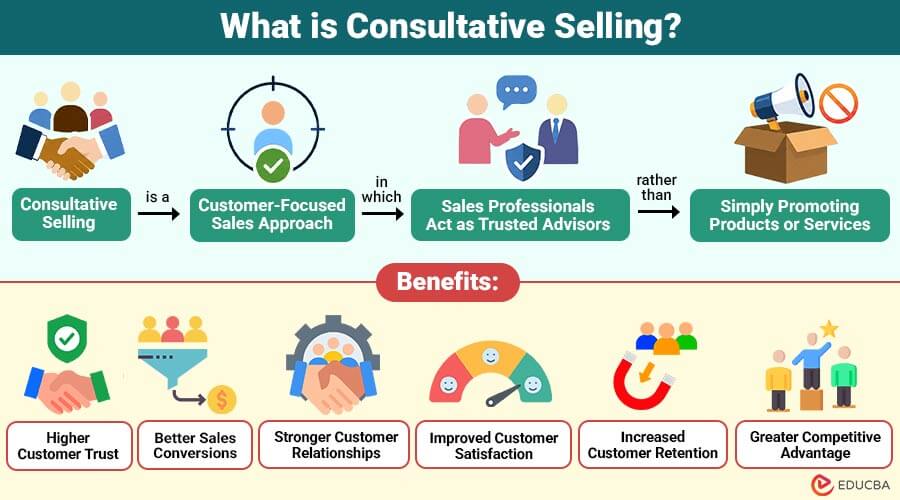
Consultative selling is a customer-focused sales approach in which sales professionals act as trusted advisors rather than simply promoting products or services. Rather than giving a standard sales pitch, they spend time understanding the customer’s goals, challenges, and business needs before recommending a solution.
This approach emphasizes asking meaningful questions, listening carefully, and providing personalized recommendations that solve specific problems. Consultative selling helps firms build trust, enhance customer satisfaction, and boost customer loyalty by emphasizing long-term relationships over immediate sales.
Today, consultative selling is widely used in industries such as software, healthcare, financial services, manufacturing, consulting, and business-to-business (B2B) sales, where purchasing decisions often involve multiple stakeholders and complex requirements.
Table of Contents:
- Meaning
- Importance
- Working
- Key Principles
- Benefits
- Essential Skills
- Challenges
- Industries that Use Consultative Selling
- Common Techniques
Key Takeaways:
- Consultative selling prioritizes understanding customer needs before recommending personalized solutions that build lasting business relationships.
- Active listening, thoughtful questioning, and problem-solving help sales professionals deliver greater customer value consistently in every interaction.
- Building trust through personalized guidance significantly increases customer satisfaction, retention, repeat business, and long-term revenue growth.
- Consultative selling works effectively across industries requiring expert advice, customized solutions, and complex purchasing decisions.
Why is Consultative Selling Important?
Consultative selling is increasingly important because today’s customers research products, compare options, and expect expert guidance to solve their specific challenges, not just product information.
This sales approach creates value by:
1. Building Stronger Customer Relationships
Businesses develop relationships, foster long-term customer loyalty, and establish trust by understanding their clients’ needs and providing relevant solutions.
2. Increasing Customer Confidence During Purchasing Decisions
Providing expert guidance and personalized recommendations helps customers make informed purchasing decisions with greater confidence and reduced uncertainty.
3. Delivering Personalized Recommendations
Consultative selling identifies individual customer requirements, enabling sales teams to recommend tailored solutions that address specific business challenges.
4. Improving Customer Satisfaction
Customers receive solutions that genuinely meet their needs, resulting in better experiences, higher satisfaction, and stronger overall business relationships.
5. Creating Opportunities for Repeat Business
Long-term business partnerships, recommendations, and repeat business are all more likely when customers are satisfied.
6. Strengthening Brand Reputation
Consistently delivering valuable advice and customer-focused solutions enhances brand credibility, trustworthiness, and positive recognition across competitive markets.
7. Supporting Long-Term Revenue Growth
Building lasting customer relationships increases repeat sales, customer retention, referrals, and sustainable revenue growth for long-term business success.
How Does Consultative Selling Work?
Consultative selling follows a structured process that focuses on understanding customer needs before offering solutions.
1. Research the Customer
Sales representatives begin by gathering information about the customer’s industry, business model, competitors, and potential challenges. This preparation enables more productive conversations.
2. Build Trust
The first conversation should focus on establishing credibility and creating a comfortable environment. Customers are more likely to share valuable information when they trust the salesperson.
3. Ask Discovery Questions
Instead of immediately discussing products, sales professionals ask thoughtful questions to understand:
- Business objectives
- Current challenges
- Existing solutions
- Budget expectations
- Decision-making process
- Success criteria
Open-ended questions encourage customers to provide detailed answers.
4. Listen Actively
Listening is one of the most important skills in consultative selling. Salespeople should carefully understand customer concerns, summarize key points, and clarify information before recommending solutions.
5. Identify Customer Needs
After gathering information, the salesperson analyzes the customer’s situation to identify both obvious and hidden needs. This helps ensure the proposed solution addresses the root cause of the problem.
6. Recommend the Right Solution
Rather than presenting every product feature, the salesperson explains how specific features solve the customer’s challenges and create measurable business value.
7. Handle Questions and Concerns
Customers may have questions about pricing, implementation, risks, or competitors. A consultative seller addresses these concerns honestly while reinforcing the value of the proposed solution.
8. Continue the Relationship
Consultative selling does not end after the sale. Regular follow-ups, customer support, and ongoing communication help strengthen long-term relationships.
Key Principles of Consultative Selling
Successful consultative selling is based on several key principles.
1. Customer-Centered Conversations
Every conversation should focus on understanding the customer’s goals, challenges, and priorities rather than simply promoting products or services.
2. Active Listening
Carefully listening to customers helps uncover valuable insights, identify pain points, and build stronger relationships through meaningful conversations.
3. Personalized Recommendations
Every recommendation should be customized to match the customer’s unique needs, business objectives, budget, and long-term requirements.
4. Problem Solving
Sales professionals should act as trusted advisors, helping customers solve business challenges with practical and relevant solutions.
5. Long-Term Relationships
Building trust through consistent support and value encourages customer loyalty, repeat business, and long-lasting professional relationships.
Benefits of Consultative Selling
Consultative selling helps businesses build stronger customer relationships while improving sales performance, customer satisfaction, and long-term business growth.
1. Higher Customer Trust
Customers trust sales professionals who understand their challenges and provide honest, valuable recommendations instead of aggressive sales pitches.
2. Better Sales Conversions
Higher conversion rates and more effective purchasing decisions result from personalized solutions aligned with customer needs.
3. Stronger Customer Relationships
Meaningful conversations and ongoing support help build lasting relationships that extend beyond a single sales transaction.
4. Improved Customer Satisfaction
Customers receive solutions tailored to their needs, resulting in better experiences, greater satisfaction, and stronger business outcomes.
5. Increased Customer Retention
Trusted relationships encourage customers to make repeat purchases, remain loyal, and continue working with the same business.
6. Greater Competitive Advantage
Providing expert advice and personalized solutions helps businesses stand out from competitors focused primarily on product pricing.
Essential Skills for Consultative Selling
Successful consultative sales professionals develop several important skills.
1. Communication Skills
Clear and confident communication helps explain complex products, services, and solutions in a simple and understandable manner.
2. Active Listening
Listening carefully enables sales professionals to understand customer priorities, concerns, and expectations before offering appropriate recommendations.
3. Critical Thinking
Analyzing customer situations helps identify the most effective solutions that align with business goals and specific requirements.
4. Industry Knowledge
A strong understanding of industry trends, competitors, and challenges builds credibility and improves customer confidence during discussions.
5. Problem-Solving Ability
Customers value practical solutions that address their challenges, improve operations, and deliver measurable business outcomes.
6. Relationship Building
Developing strong customer relationships encourages trust, long-term loyalty, repeat business, and ongoing collaboration.
Challenges of Consultative Selling
While consultative selling delivers long-term value, businesses may face several challenges when adopting this customer-focused sales approach.
1. Longer Sales Cycles
Understanding customer needs, building trust, and developing tailored solutions often require more time than traditional sales approaches.
2. Extensive Product Knowledge
Sales professionals need in-depth product, industry, and market knowledge to provide accurate recommendations and answer customer questions confidently.
3. Strong Communication Skills
Effective questioning, active listening, and clear communication are essential for understanding customer needs and delivering valuable solutions.
4. Managing Multiple Decision-Makers
Business purchasing decisions often involve multiple stakeholders with different priorities, making the sales process more complex.
5. Balancing Customer Needs and Sales Goals
Sales teams must meet customer expectations while achieving business objectives, revenue targets, and long-term organizational growth.
Industries that Use Consultative Selling
Consultative selling is widely used in industries where customers need expert guidance, customized solutions, and informed decision-making before making a purchase.
1. Software and SaaS
Software companies use consultative selling to understand customer requirements and recommend solutions that match business goals and operational needs.
2. Healthcare
Healthcare providers and medical technology companies use consultative selling to recommend products and services based on patient or organizational needs.
3. Financial Services
Banks, insurance companies, and financial advisors help customers choose suitable financial products through personalized guidance and expert recommendations.
4. Manufacturing
Manufacturers work closely with customers to understand production requirements and recommend equipment, materials, or customized industrial solutions.
5. Professional Consulting
Consulting firms identify business challenges and provide tailored strategies, services, and recommendations to improve organizational performance.
6. Information Technology
IT companies assess business requirements before recommending hardware, software, cloud services, cybersecurity, or digital transformation solutions.
Common Consultative Selling Techniques
Businesses often combine several techniques to improve customer engagement.
1. Needs Assessment
Identify customer goals, challenges, priorities, and expectations before recommending products or services that best fit their requirements.
2. Solution-Based Selling
Present products or services as practical solutions that effectively address specific customer challenges and business objectives.
3. Value Selling
Highlight measurable business benefits, return on investment, and long-term value instead of focusing only on product features.
4. Strategic Questioning
Ask thoughtful, open-ended questions to uncover customer needs, pain points, priorities, and potential business opportunities.
5. Collaborative Decision-Making
Throughout the purchasing process, collaborate closely with clients to assess options and make well-informed decisions together.
6. Continuous Follow-Up
Provide ongoing support after the sale to ensure successful implementation, address concerns, and strengthen long-term customer relationships.
Final Thoughts
Consultative selling is a customer-focused sales approach that emphasizes understanding needs before recommending solutions. By building trust, providing personalized guidance, and solving customer challenges, businesses improve customer satisfaction, strengthen relationships, increase sales performance, and achieve sustainable long-term growth while gaining a competitive advantage.
Frequently Asked Questions (FAQs)
Q1. Does consultative selling work for online sales?
Answer: Yes. Businesses can apply consultative selling through virtual meetings, live chat, email, and personalized digital interactions.
Q2. Who should learn consultative selling?
Answer: Sales representatives, account managers, business consultants, customer success teams, and business development professionals can all benefit.
Q3. Is consultative selling suitable for small businesses?
Answer: Yes. Small businesses can use consultative selling to build trust, understand customer needs, and improve long-term customer relationships.
Recommended Articles
We hope that this EDUCBA information on “Consultative Selling” was beneficial to you. You can view EDUCBA’s recommended articles for more information.

