


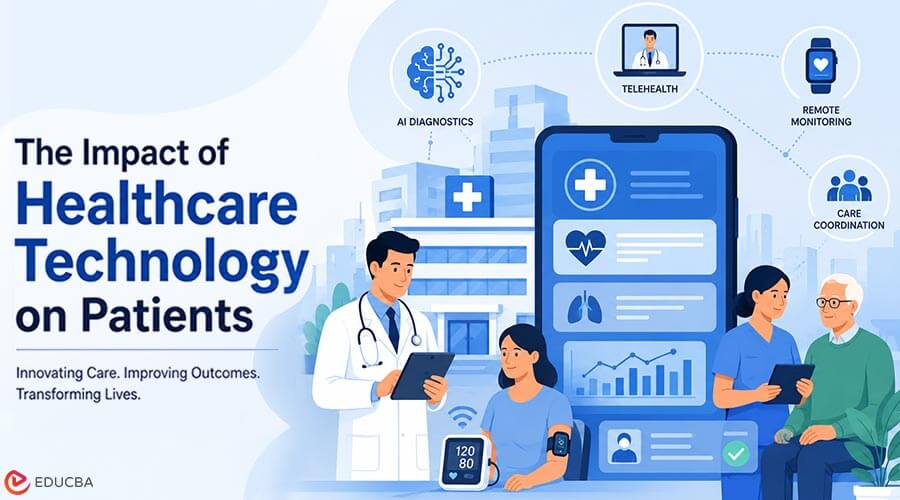
Healthcare has historically been a system of gatekeepers and waiting rooms. A patient with a complex or serious diagnosis has had to navigate insurance approvals, specialist referrals, and disconnected medical records, often at the exact moment they have the least energy to do so. That is changing. Telehealth platforms, diagnostic AI, remote monitoring devices, and care coordination software are collectively narrowing the gap between diagnosis and effective treatment, and outcome data is beginning to reflect that shift. This article examines the impact of healthcare technology on patient outcomes: diagnostic speed and accuracy, care coordination for complex diagnoses, remote monitoring for chronic and serious conditions, and expanded access for patients in underserved or rural areas.
How is Diagnostic AI Increasing the Impact of Healthcare Technology on Patients?
Diagnostic imaging AI, developed by companies like Aidoc and Viz.ai, is now used in thousands of U.S. hospitals to flag abnormalities in CT and MRI scans before a radiologist manually reviews them. For time-sensitive conditions such as strokes or certain cancers, shaving even a few hours off the diagnostic timeline can materially change treatment options.
The FDA’s list of authorized AI/ML-enabled medical devices has grown to well over 1,000 devices, the majority of which are radiology-focused. These tools do not replace physician judgment, but they serve as a triage layer, surfacing likely urgent cases so clinicians can prioritize review. Health systems using these tools report faster time to diagnosis for flagged cases, though outcomes vary by condition and by how well the tool is integrated into existing radiology workflows.
What Role Does Care Coordination Software Play in Complex Diagnoses?
A single serious diagnosis often triggers a cascade of specialists: oncologists, pulmonologists, surgeons, physical therapists, and mental health providers, each with separate scheduling systems and separate notes. Care coordination platforms (including Epic’s Care Everywhere and independent navigation tools used by hospital systems) aim to unify that fragmented picture into a single patient record accessible across providers.
Organizations like Lung Cancer Group illustrate why this matters. As a patient-support and informational resource, it exists precisely because the gap between diagnosis and coordinated care is often where patients fall through the cracks. Closing that gap depends less on any single specialist and more on the infrastructure connecting them. Better care coordination technology means fewer duplicated tests, fewer missed handoffs between providers, and a clearer path from diagnosis to a treatment plan.
Can Remote Monitoring Improve Outcomes for Serious or Chronic Conditions?
Remote patient monitoring, or RPM (wearable devices and connected equipment that track vitals, oxygen saturation, or medication adherence from home), has expanded well beyond its early use in cardiac care. For patients managing serious respiratory or oncological conditions, RPM allows care teams to catch complications early, before they require an emergency room visit.
CMS has expanded reimbursement for remote monitoring services in recent years, accelerating adoption among health systems that previously viewed it as a pilot-stage technology rather than a standard of care. Studies on RPM for chronic disease management have shown reductions in hospital readmission rates. However, the strength of that effect depends heavily on patient engagement and on how consistently a care team member reviews the data rather than simply collects it.
Is Telehealth Actually Closing the Access Gap for Rural and Underserved Patients?
Telehealth adoption surged during the pandemic and has settled into a smaller, but still substantial, permanent role in specialty care access. For rural patients, telehealth provides quicker access to specialists and helps reduce delays in diagnosis and treatment.
This is another area where patient-support organizations play a connective role. Resources like Lung Cancer Group can help patients explore available telehealth and in-person care options, especially when medical decisions overlap with occupational exposure-related legal concerns. Groups that offer this navigation function are, in effect, an extension of the technology-driven access shift, helping patients use these tools rather than get lost in them.
What Are the Limitations of Healthcare Technology for Patients?
None of these tools solve every problem. Not close. Diagnostic AI still needs a human in the loop, and false positives or missed edge cases remain a known limitation. Patient compliance and care team staffing capacity limit what remote monitoring alone can detect. Telehealth can not replace a physical exam or a procedure. And care coordination software is only as good as the extent to which separate health systems actually agree to share data. Interoperability remains an unresolved friction point across much of U.S. healthcare.
The realistic picture is incremental: technology is closing gaps, not erasing them. For patients navigating a serious diagnosis, the practical benefit lies less in any single tool and more in the cumulative effect of faster diagnostics, better-coordinated specialists, closer remote monitoring, and easier access to care, regardless of location.
What Should Patients and Caregivers Take Away From This?
Patients do not need to evaluate the underlying technology to benefit from it. That evaluation happens at the health system level. What patients and caregivers can do is ask direct questions: whether a health system offers telehealth follow-ups, whether remote monitoring is available for their condition, and whether a patient-support resource like Lung Cancer Group is available to help make sense of the options. Asking those questions early, ideally at the point of diagnosis, tends to shorten the path to coordinated care.
Frequently Asked Questions (FAQs)
Q1. What is diagnostic AI, and is it replacing doctors?
Answer: Diagnostic AI refers to software that analyzes medical images or data to flag potential abnormalities for physician review. It is a triage tool, not a replacement — a radiologist or physician still makes the final diagnosis.
Q2. How does remote patient monitoring work?
Answer: RPM uses home devices and wearables to monitor vital signs, medication use, and share data with care teams for early intervention.
Q3. Is telehealth as effective as in-person care?
Answer: For many follow-up visits, consultations, and certain specialty check-ins, telehealth has shown comparable outcomes to in-person care. It is not a substitute for physical exams, imaging, or procedures.
Q4. What does “care coordination” actually mean for a patient?
Answer: It means a patient’s specialists, primary care provider, and support resources are working from a shared record and communicating with each other, rather than each operating in isolation.
Q5. Why do patients with serious diagnoses need patient-support organizations if the technology already helps?
Answer: Technology creates the infrastructure for better care, but patients still need to know it exists and how to access it. Organizations like Lung Cancer Group help translate available medical and legal resources into next steps.
Recommended Articles
We hope this blog on the impact of healthcare technology on patients helps you understand how digital innovations are transforming healthcare. Explore our recommended articles for more insights into healthcare trends and advancements.

