


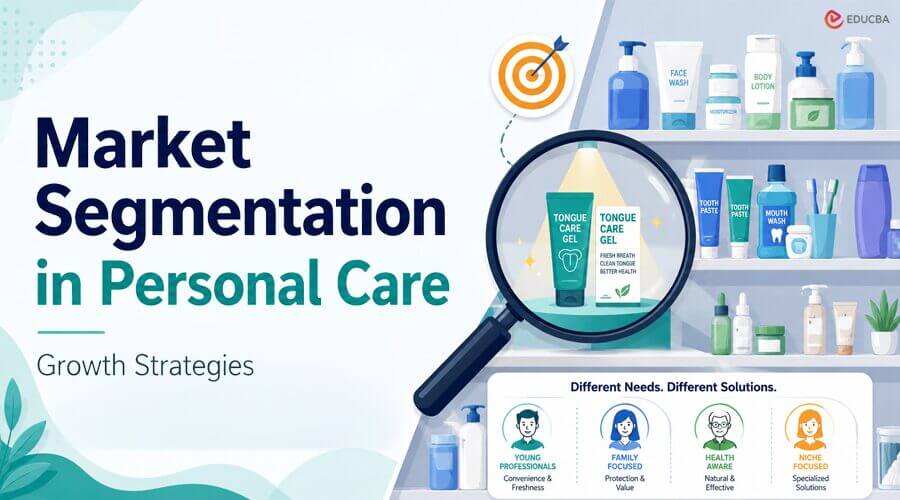
Let us be honest about the personal care market today: it is incredibly crowded. If you walk down the oral care aisle of any major supermarket, you are going to see a wall of minty toothpaste, a few rows of alcohol-heavy mouthwashes, and dozens of nearly identical toothbrushes. The big legacy brands have dominated this space for decades by selling one-size-fits-all products to the mass market.
However, here is the thing about the mass market: it is slowly dying.
Modern consumers no longer want generic products. They are highly educated about their health, they read ingredient labels, and they are actively looking for targeted solutions to specific problems. This change in consumer behavior is why market segmentation in personal care has become an effective way for new brands to enter established markets.
If you want to build a successful personal care brand today, you should not try to compete with the giants on basic toothpaste. Instead, you need to find the niche they ignored, segment that audience, and deliver a highly specialized product that solves their specific problem.
Understanding the Power of Micro-Segmentation
When we talk about market segmentation in business courses, we usually focus on the basics: demographics (age, gender, income) and geography. However, successful market segmentation in personal care goes much deeper by considering behavioral and psychographic factors. You have to understand why people buy and what specific frustrations they have with current offerings.
Let us look at oral care again. The mass market assumes everyone wants “fresh breath and white teeth.” However, a psychographic analysis reveals much deeper consumer needs.
Some consumers suffer from chronic bad breath (halitosis) and are frustrated that regular toothpaste only masks the problem for an hour. Others focus entirely on the oral microbiome and seek products that balance bacteria instead of destroying it with harsh chemicals. Another group looks for anti-inflammatory oral care products to help soothe sensitive gums.
These are not just minor variations; these are entirely different customer profiles with distinct pain points. Moreover, because the big brands are too slow and too heavily invested in their mass-market production lines to pivot, these micro-segments represent massive, untapped revenue opportunities for agile startups.
How Market Segmentation in Personal Care Creates Specialized Products?
So, how do you capture one of these micro-segments? You develop a product that speaks directly to them.
One of the most fascinating examples of market segmentation in personal care is the rise of tongue cleansing gels. For years, the industry ignored the tongue, focusing entirely on the teeth. However, dentists know that most of the bacteria causing bad breath and oral health issues are found on the back of the tongue.
A brand that targets the “chronic bad breath” or “holistic oral health” segment does not just launch another mint toothpaste. They launch a targeted tongue gel, formulating it with specific active ingredients such as zinc or targeted probiotics. Rather than marketing it as a basic hygiene product, the brand positions it as a specialized treatment.
By doing this, they are not competing on price with the generic brands. They are competing on efficacy and specialization, which allows for premium pricing and creates incredibly strong brand loyalty. When a consumer finally finds a product that solves a problem they have struggled with for years, they do not switch back to the cheap generic alternative.
The Manufacturing Hurdle in Market Segmentation in Personal Care
Identifying a profitable micro-segment and designing a specialized product is the fun part of business. The hard part is actually getting that product made.
This is where many great business ideas go to die. If you want to launch a highly specialized oral care product, you cannot just mix it in your kitchen. The personal care industry is heavily regulated. You need ISO certifications, GMPc (Good Manufacturing Practice) compliance, and FDA registration if you plan to sell in the United States. You need cleanrooms, automated filling equipment, and thorough testing to make sure the product is safe, stable, and effective.
Building this kind of infrastructure requires millions of dollars in capital. For a startup trying to test a new product in a niche market, that kind of investment is impossible.
This is exactly why the smartest modern brands rely on strategic outsourcing. Instead of building a factory, they partner with a specialized tongue gel manufacturer that already has the infrastructure, certifications, and R&D capabilities.
Why Strategic Outsourcing is a Competitive Advantage?
Outsourcing production is not just about saving money; it is about buying speed and expertise.
When you partner with an established manufacturer, you get immediate access to chemical engineers who have spent decades formulating cosmetics and oral care products. You do not have to guess which active ingredients work best for antibacterial action or oral microbiome balance; your manufacturing partner already knows.
Let us say you want to launch the specialized tongue gel we discussed earlier. A good manufacturing partner will start by discussing your target segment. They will formulate a base recipe tailored to your specific goals, produce physical samples for you to evaluate, and run the necessary stability testing.
Because they already have the 100,000-class cleanrooms and the automated production lines, they can take your approved formula and scale it to tens of thousands of units incredibly quickly. They also provide the crucial paperwork, such as the Certificate of Analysis (COA) and Safety Data Sheets (SDS), that you need to sell your product legally.
This model completely changes the economics of launching a brand. It lowers the barrier to entry, reduces financial risk, and allows founders to focus entirely on what actually drives growth: marketing, distribution, and community building.
The Future of Market Segmentation in Personal Care
The era of the generalist brand is fading. Consumers have more choices than ever before, and they are actively choosing products that feel custom-made for their specific needs.
For entrepreneurs and business leaders, market segmentation in personal care represents one of the greatest opportunities for innovation and growth. The data is available to find the niches that the big brands are ignoring. At the same time, modern manufacturing infrastructure enables the rapid, safe introduction of highly specialized, premium products to market.
The companies that will lead the personal care industry over the next decade will not be the ones with the biggest factories. They will be the ones who understand their target segment the best and are smart enough to leverage the expertise of manufacturing partners to deliver exactly what those consumers want. If you are planning your next business move, stop looking at the mass market. Look at the edges. That is where the real growth is happening through effective market segmentation in the personal care market.
Recommended Articles
We hope this guide helps you understand the importance of market segmentation in personal care and identify profitable niche opportunities for building a successful brand. Explore these recommended articles for more insights into personal care marketing, consumer behavior, product development, private label manufacturing, and brand growth strategies.

