
What is Solution Selling?
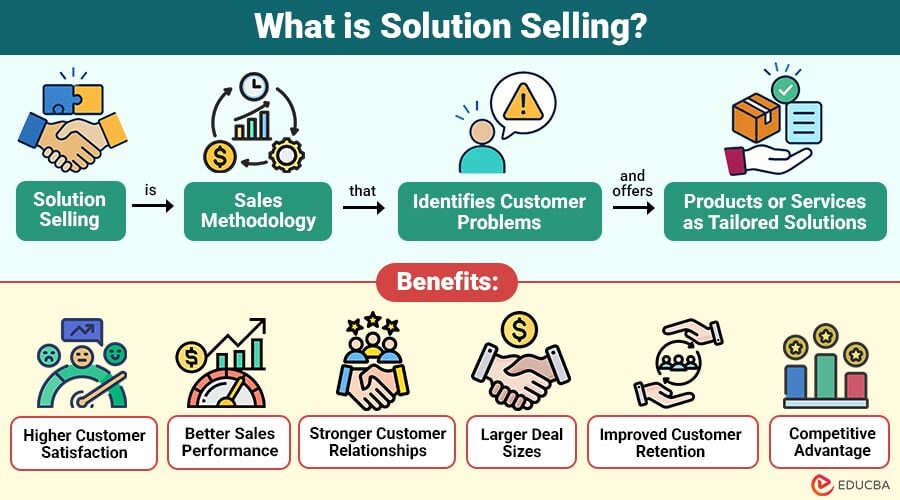
Solution selling is sales methodology that identifies customer problems and offers products or services as tailored solutions. Rather than promoting features, sales representatives understand customer needs and recommend the most suitable solution.
This approach involves asking thoughtful questions, listening carefully, and learning about the customer’s business objectives before presenting a solution. The goal is to help customers solve real problems rather than simply make a sale.
For example, instead of selling project management software by listing its features, a salesperson explains how it can reduce missed deadlines, improve team collaboration, and increase project visibility, tailored to the customer’s current workflow.
Table of Contents:
- Meaning
- Why Solution Selling Matters?
- Key Principles
- Process
- Benefits
- Example
- Challenges
- Best Practices
- Tools
- Difference
Key Takeaways:
- Solution selling focuses on solving customer problems rather than promoting product features.
- Understanding customer needs helps businesses create personalized solutions and build stronger relationships.
- Active listening, research, and meaningful questions improve sales conversations and customer satisfaction.
- Solution selling increases conversions by delivering measurable value and long-term business outcomes.
Why Solution Selling Matters?
Solution selling has become increasingly important because modern buyers are well-informed and expect personalized experiences. They prefer working with sales professionals who understand their business rather than those who simply promote products.
Here are the main reasons solution selling matters:
1. Builds Customer Trust
Consumers are more likely to trust salespeople who truly comprehend their difficulties. Businesses can strengthen their relationships and boost client confidence by concentrating on problem-solving rather than product promotion.
2. Improves Customer Experience
Every customer has unique requirements. Solution selling provides personalized recommendations that match individual business goals, resulting in a better buying experience.
3. Increases Conversion Rates
Customers are more willing to purchase when they clearly understand how a solution addresses their specific problems. Higher conversion rates and improved sales performance result from this.
4. Creates Long-Term Relationships
Solution selling doesn’t end after closing a deal. Businesses continue supporting customers, leading to repeat purchases, long-term partnerships, and customer loyalty.
5. Supports Higher-Value Sales
When customers recognize the business value of a solution, they focus less on price and more on outcomes. This often increases average deal size.
6. Reduces Sales Resistance
Rather than feeling pressured into buying, customers see the salesperson as a trusted advisor who is helping solve business challenges.
Key Principles of Solution Selling
Successful solution selling follows several important principles.
1. Understand Customer Challenges
Sales professionals must first understand the customer’s current problems, business processes, and goals before recommending any product.
2. Ask Meaningful Questions
Open-ended questions encourage customers to explain their needs, priorities, and expectations in detail.
3. Listen More Than You Speak
Active listening helps identify hidden pain points and opportunities that might otherwise be overlooked.
4. Focus on Business Outcomes
Instead of discussing technical specifications, explain how the solution improves productivity, saves costs, reduces risks, or increases revenue.
5. Customize Every Recommendation
Avoid generic presentations. Tailor every proposal to the customer’s industry, business size, and objectives.
The Solution Selling Process
Solution selling follows a structured approach that helps sales teams understand customer needs and recommend the right solutions.
1. Research the Customer
Study the prospect’s company, industry, competitors, goals, recent developments, and challenges to prepare for productive, personalized sales conversations effectively.
2. Discover Customer Needs
Ask relevant questions to understand customer objectives, challenges, existing processes, expectations, priorities, and desired business outcomes before recommending solutions.
3. Identify Pain Points
Evaluate collected information to uncover underlying business problems, operational gaps, inefficiencies, and opportunities requiring effective solutions for measurable improvement.
4. Recommend the Right Solution
Present a tailored solution addressing identified challenges while clearly explaining features, benefits, implementation process, and expected business outcomes for customers.
5. Demonstrate Business Value
Highlight measurable benefits including cost reduction, increased productivity, improved efficiency, revenue growth, risk reduction, and stronger competitive business performance.
6. Handle Objections
Address customer concerns about pricing, implementation, security, integration, support, or return on investment using factual, confident, and transparent responses.
7. Close the Sale
Confirm customer agreement, finalize pricing, complete documentation, discuss implementation timelines, and ensure a smooth purchasing process from beginning successfully.
8. Provide Ongoing Support
Deliver training, technical assistance, regular follow-ups, product updates, and continuous guidance to strengthen customer satisfaction, loyalty, and long-term relationships.
Benefits of Solution Selling
Organizations that adopt solution selling enjoy several benefits.
1. Higher Customer Satisfaction
Customers receive personalized solutions that address specific business needs, resulting in improved satisfaction, stronger trust, and better overall purchasing experiences.
2. Better Sales Performance
Sales teams achieve higher conversion rates by recommending solutions that effectively solve customer challenges and deliver measurable business value consistently.
3. Stronger Customer Relationships
Consultative conversations build trust, strengthen long-term partnerships, encourage repeat business, and increase customer loyalty through continuous support and engagement.
4. Larger Deal Sizes
Customers willingly invest more when they clearly understand the solution’s long-term benefits, return on investment, and overall business value delivered.
5. Improved Customer Retention
Providing ongoing support, training, and regular follow-ups increases customer satisfaction, encourages renewals, and strengthens long-term business relationships with clients.
6. Competitive Advantage
Understanding customer needs better than competitors enables businesses to deliver superior solutions, win opportunities, and strengthen market positioning effectively.
Example of Solution Selling
Below is an example that shows how solution selling focuses on understanding customer problems and providing the right solution.
A company struggling with high electricity costs consults a solar energy provider. Instead of only selling solar panels, the salesperson analyzes the company’s energy usage and recommends a solar solution that reduces costs and improves energy efficiency.
Challenges of Solution Selling
Despite its advantages, solution selling also presents several challenges.
1. Longer Sales Cycles
Understanding customer needs, conducting research, and building trust require additional time.
2. Requires Skilled Sales Representatives
Successful solution selling depends on strong communication, questioning, listening, and problem-solving skills.
3. Complex Customer Requirements
Some organizations have multiple stakeholders with different priorities, making decision-making more challenging.
4. Extensive Research
Sales teams must invest time learning about industries, competitors, regulations, and customer operations.
5. Measuring Business Value
Demonstrating return on investment may require detailed financial analysis and customer-specific data.
Best Practices for Successful Solution Selling
Businesses can improve results by following these proven best practices.
1. Research Prospects before Every Meeting
Understand customer needs, challenges, industry trends, and goals before starting sales conversations.
2. Instead of Asking Yes-or-No Questions, Ask Open-Ended Ones
Encourage detailed responses to uncover customer problems, expectations, and potential solution requirements.
3. Listen Carefully without Interrupting Customers
Pay attention to customer concerns, feedback, and priorities to provide relevant recommendations.
4. Focus on Customer Outcomes Rather than Product Features
Highlight business benefits, improvements, and results instead of only explaining product capabilities.
5. Personalize Every Sales Presentation
Customize presentations according to customer needs, challenges, objectives, and specific business situations.
Tools that Support It
Several sales tools help businesses implement solution selling effectively.
1. Salesforce
Tracks customer interactions, opportunities, sales activities, and account history to provide a complete customer view.
2. HubSpot CRM
Stores customer information, automates follow-ups, and tracks communication throughout the sales process.
3. Microsoft Dynamics 365
Combines CRM capabilities with business insights to help sales teams understand customer needs.
4. Zoho CRM
Supports lead management, workflow automation, sales forecasting, and customer engagement.
5. LinkedIn Sales Navigator
Helps identify decision-makers, research companies, and build stronger prospect relationships.
Difference Between Solution Selling and Traditional Selling
Below is a comparison that highlights the differences between solution selling and traditional selling approaches.
| Solution Selling | Traditional Selling |
| Focuses on customer problems | Focuses on product features |
| Customer-centered approach | Product-centered approach |
| Requires detailed discovery | Limited customer research |
| Builds long-term relationships | Primarily aims for immediate sales |
| Emphasizes business outcomes | Emphasizes product specifications |
| Offers customized recommendations | Uses standard sales presentations |
Final Thoughts
Solution selling focuses on understanding customer challenges and providing tailored solutions rather than just promoting products. By prioritizing customer needs, businesses can build trust, improve conversions, and create long-term relationships. Research, active listening, and personalized recommendations help deliver value while achieving sustainable sales growth.
Frequently Asked Questions (FAQs)
Q1. What skills are required for successful solution selling?
Answer: Solution selling requires strong communication, active listening, problem-solving ability, customer research skills, and the ability to understand business challenges.
Q2. How does solution selling improve customer relationships?
Answer: By focusing on customer goals and delivering meaningful solutions, businesses build trust, increase satisfaction, and create stronger long-term partnerships.
Q3. Can small businesses use solution selling strategies?
Answer: Yes, small businesses can apply solution selling by understanding customer needs, offering personalized recommendations, and focusing on value rather than only price.
Q4. What role does technology play in solution selling?
Answer: Technology helps sales teams manage customer data, track interactions, analyze customer behavior, automate follow-ups, and create more personalized sales experiences.
Recommended Articles
We hope that this EDUCBA information on “Solution Selling” was beneficial to you. You can view EDUCBA’s recommended articles for more information.

