


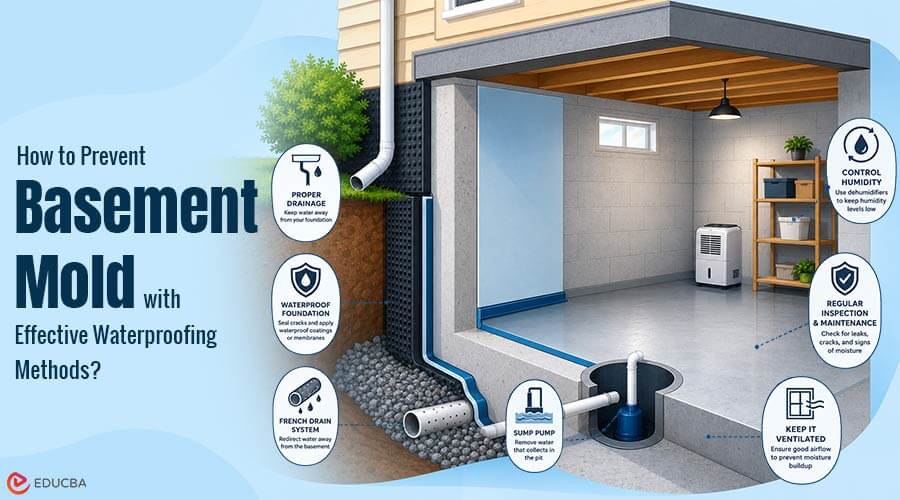
Basement mold is one of the most common — and most underestimated — problems homeowners face. It develops quietly, often out of sight, and by the time it becomes visible, it has usually been growing for weeks or months. Understanding what causes it, why it matters for your family’s health, and how to stop it permanently puts you in control before the problem escalates into something far more costly.
What Causes Mold to Grow?
Mold grows when it has three essential conditions: moisture, a source of nutrients, and warm temperatures. Basements provide all three in abundance. Moisture enters through multiple pathways. Water seeps through foundation walls and floors under hydrostatic pressure — the force exerted by saturated soil pressing against your foundation from outside. It enters through hairline cracks that widen progressively with seasonal temperature changes. It also accumulates through condensation when warm, humid air contacts cool basement surfaces, or when a sump pump fails during a heavy storm and allows standing water to sit for hours.
The food source is everywhere in a typical basement — wood framing, drywall paper, insulation, stored cardboard, and the organic particles embedded in concrete dust all support active mold growth. Warmth is less of a barrier than most homeowners assume. Many mold species grow at temperatures as low as 2°C, which means a cold basement is not necessarily safe.
The result: mold can establish a visible colony within 24–48 hours of a moisture event. According to the team at Direct Waterproofing in Hamilton, the most persistent cases they encounter are homes where a slow, hidden moisture source has been active for months without the homeowner noticing — often because the mold is growing behind finished walls or under flooring rather than on a visible surface.
What Health Problems Can Basement Mold Cause?
The health consequences of basement mold extend well beyond the basement itself. Because air circulates throughout a home through the stack effect — rising naturally from lower floors to upper floors — mold spores produced in the basement are regularly drawn into the living areas where your family spends most of their time.
Common health effects associated with basement mold exposure include:
- Respiratory irritation: Persistent coughing, wheezing, and shortness of breath, even in people with no prior respiratory conditions
- Allergic reactions: Runny nose, itchy eyes, skin irritation, and worsening of seasonal allergies
- Asthma aggravation: Mold is one of the most well-documented asthma triggers, particularly for children
- Chronic fatigue and headaches: Prolonged low-level mold exposure is associated with persistent fatigue and cognitive difficulty
- Serious illness in vulnerable individuals: For people with compromised immune systems, infants, and the elderly, certain mold species can cause severe respiratory infections requiring medical treatment
The most dangerous species commonly found in basements — including Stachybotrys chartarum, widely known as black mold — produce mycotoxins that cause symptoms even with extended exposure in otherwise healthy adults.
Why Surface Cleaning Alone Does Not Solve the Problem?
A common mistake homeowners make is viewing mold as a cleaning issue instead of addressing the underlying moisture problem. Bleach and surface mold removers kill visible colonies — but they do nothing about the moisture source that caused the growth. Within weeks, the mold returns, typically in the same locations and often spreading further.
Effective mold prevention requires eliminating the root cause: water getting into the basement. This means waterproofing the foundation, not just cleaning the walls.
How Does Waterproofing Prevent Basement Mold?
Professional basement waterproofing eliminates the moisture conditions that mold requires to survive.
- Interior waterproofing systems: Install a perimeter drainage system along the basement floor to collect water entering through the foundation and channel it to a sump pump for removal. When combined with a vapor barrier on the walls, this system keeps relative humidity consistently below 50% — the threshold above which mold growth is likely. No sustained moisture means no mold.
- Exterior waterproofing: It addresses the problem at the source. A waterproof membrane applied directly to the exterior foundation wall during excavation prevents water from ever contacting the structure. Paired with new drainage tile and proper backfill, this approach eliminates hydrostatic pressure — removing the primary driver of water infiltration.
- Foundation crack repair: It closes the specific entry points that allow water to migrate through the foundation. High-pressure epoxy and polyurethane injection create a permanent, flexible seal that holds under seasonal soil movement and temperature fluctuation.
For homeowners dealing with existing mold alongside a moisture problem, the correct sequence is always: waterproof first, then remediate. Mold remediation before the moisture source is resolved is a temporary fix — the conditions that produced the mold remain, and growth resumes. A dry basement is not just more comfortable — it is a meaningful, long-term investment in your family’s health.
Recommended Articles
We hope this comprehensive guide on basement mold helps you understand its causes, risks, and prevention methods. Check out these recommended articles for more insights and strategies to protect your home from moisture damage and maintain a healthier living environment.

