


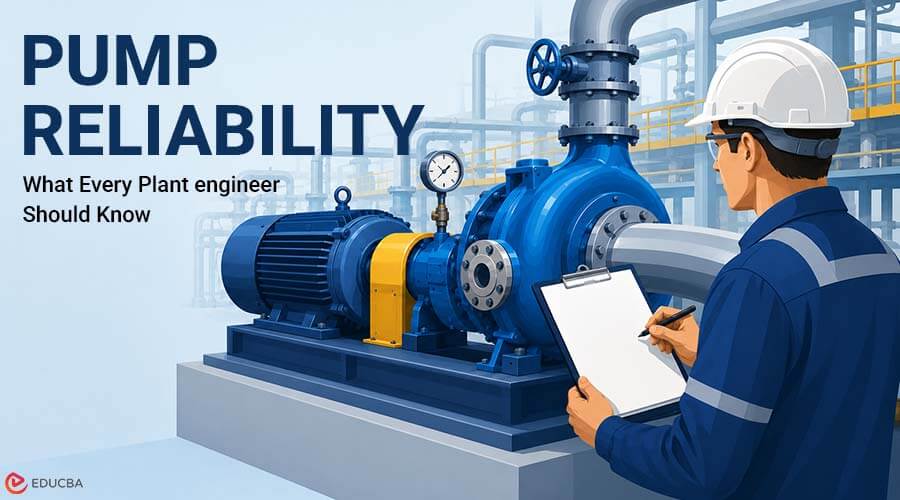
Pump specification used to be a one-and-done exercise. You picked a unit that met the flow and head numbers on the datasheet, installed it, and moved on. Reliability was maintenance’s problem. Energy was a utility line item nobody worked hard to challenge. That mindset no longer works. Increasing energy costs, stricter environmental regulations, and the increasing cost of unplanned downtime have shifted the focus toward industrial pump reliability throughout the equipment lifecycle. Today’s plant engineers must consider much more than initial performance—they need to evaluate long-term efficiency, maintenance requirements, lifecycle costs, and system reliability before approving a purchase.
Why Does Pump Reliability Get So Much Attention?
The short answer: pumps account for a large share of a plant’s electricity bill, and most people underestimate how large that share is. The U.S. Department of Energy reports that pumping systems use about 25% of the electricity consumed by industrial electric motors in the United States, with that figure exceeding 50% in pumping-intensive industries.
When one equipment category draws that much power, small reliability and efficiency gains land hard on the P&L. A pump running off its best-efficiency point, or one that trips out every few months, is not an annoyance. It is a recurring tax on the operation.
What Actually Drives the Cost of Owning a Pump?
The purchase price is the smallest number in the story. A life cycle cost study published through the Office of Scientific and Technical Information notes that pumping systems typically operate for 15 to 20 years. Over that horizon, energy and maintenance costs dominate the total. That reframes the buying decision. If you are only comparing quoted prices between two units, you are solving the wrong equation. The right one looks something like this:
- Energy draw: How much electricity will the pump pull across a realistic duty cycle, not just at the design point?
- Maintenance load: How often will seals, bearings, and wear parts need attention, and what does that cost in labor and downtime?
- Process fit: Is the pump matched to the fluid, temperature, and flow variability it will actually see, or is it a generic pick?
- Support access: Can you get parts and technical help quickly when something goes wrong, or does a small failure turn into a two-week outage?
Which Failure Modes Should You Plan For?
Two components fail more than the rest: mechanical seals and bearings. Nobody in a reliability group will argue with that. Seals live in a punishing environment, sandwiched between rotating and stationary parts. Bearings suffer whenever contamination, misalignment, or vibration goes unchecked.
The practical takeaway is that most reliability programs get more mileage from disciplined attention to a few failure modes than from chasing exotic upgrades. Track how long seals last. Log why bearings come out. Look for patterns before you look for products.
How Do You Choose the Right Partner?
Once you accept that life cycle cost matters more than sticker price, the question of who you buy from starts to look different. A distributor that ships boxes is not the same as a partner who will help you size a system, commission it correctly, and support it through its service life.
Working with industrial pump specialists who offer system design, condition monitoring, and field service usually pays for itself over the life of the equipment. The payoff shows up in fewer surprise outages, cleaner energy numbers, and a shorter path from a problem to a fix.
Where Should a Working Engineer Focus First?
Improving industrial pump reliability does not always require major capital investments. Start with the pumps that run the most hours and the ones that have historically caused the most trouble. Pull their run data if you have it. Ask how they are operating relative to their best efficiency point. Ask what has failed on them in the last three years, and why.
You do not need a full reliability overhaul to see progress. A short list of the worst offenders, honest data about how they have behaved, and a clear-eyed conversation about whether to repair, retrofit, or replace usually surfaces more savings than any single specification change. That is the work worth doing this year.
Recommended Articles
We hope this guide on pump reliability helps you improve equipment performance and reduce downtime. Check out these recommended articles for more insights and best practices.

