
What is a Sales Pitch?
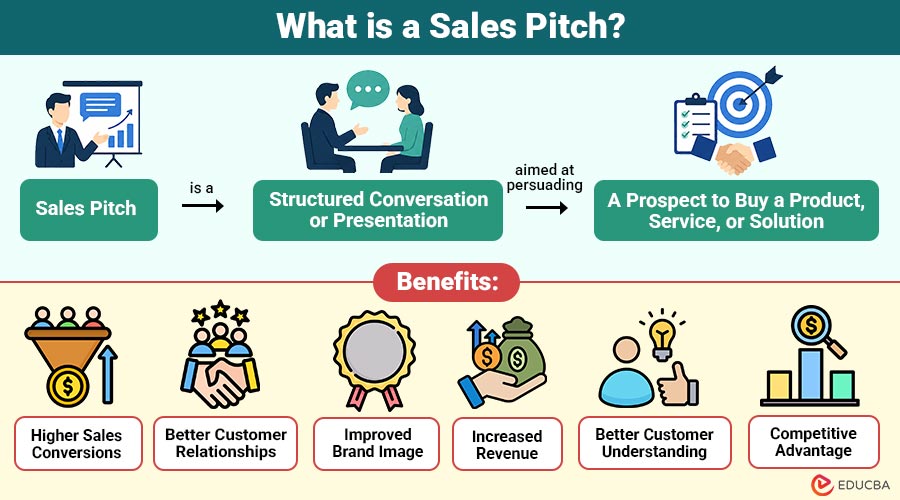
A sales pitch is a structured conversation or presentation aimed at persuading a prospect to buy a product, service, or solution. It explains the product’s benefits, addresses customer concerns, and encourages a purchasing decision.
A sales pitch focuses on solving customer problems rather than simply describing product features. It is tailored to the audience, making it more relevant and impactful.
Businesses use sales pitches across various communication channels, including:
- Face-to-face meetings
- Phone calls
- Video conferences
- Emails
- Sales presentations
- Social media messaging
- Product demonstrations
The most effective sales pitches are concise, customer-focused, and solution-oriented.
Table of Contents:
- Meaning
- Importance
- Key Elements
- Types
- How to Create an Effective Sales Pitch?
- Common Mistakes
- Benefits
- Challenges
- Examples
Key Takeaways:
- A sales pitch effectively communicates customer-focused solutions that build trust, demonstrate value, and encourage confident purchasing decisions.
- Successful sales pitches combine preparation, personalization, clear communication, and compelling value propositions for higher conversions.
- Understanding customer challenges and addressing objections improves engagement, strengthens relationships, and increases overall sales success.
- Continuous practice, technology, and solution-oriented messaging help businesses achieve consistent sales growth and lasting customer loyalty.
Why is a Sales Pitch Important?
An effective sales pitch plays a crucial role in converting prospects into customers.
1. Builds Customer Interest
A compelling sales pitch captures attention, sparks curiosity, and motivates prospects to explore products or services further with confidence.
2. Demonstrates Value
An effective sales pitch explains how products solve customer challenges, deliver measurable benefits, and consistently create lasting value.
3. Increases Conversion Rates
A well-structured sales pitch improves engagement, addresses objections, and increases the likelihood of converting prospects into customers.
4. Builds Trust
Professional communication, relevant solutions, and honest messaging establish credibility, strengthen relationships, and build customer trust effectively.
5. Differentiates from Competitors
A unique sales pitch highlights competitive advantages, showcases distinct value, and helps businesses stand out from competitors successfully.
Key Elements of a Successful Sales Pitch
A strong sales pitch consists of several essential components.
1. Clear Introduction
Start with a confident introduction, establish rapport, and create a positive first impression that encourages meaningful customer conversations.
2. Customer Problem
Identify customer pain points, understand their challenges, and demonstrate genuine interest before presenting any product or solution.
3. Solution Presentation
Explain how your product or service solves identified challenges, delivers benefits, and meets customer needs effectively every time.
4. Unique Value Proposition
Clearly highlight the unique advantages, competitive strengths, and key differentiators that make your solution the preferred choice for customers.
5. Supporting Evidence
Strengthen credibility using customer testimonials, success stories, case studies, statistics, or measurable results that inspire buyer confidence.
6. Call to Action
End with a clear next step that encourages prospects to confidently schedule meetings, request demonstrations, or make purchases.
Types of Sales Pitch
Different situations require different pitching styles. Businesses use different sales pitches depending on their goals, audience, and sales approach.
1. Elevator Pitch
A concise, persuasive introduction that communicates your value proposition within 30–60 seconds to quickly capture prospect interest.
Best Used For:
- Networking Events: Quickly introduce yourself and create meaningful business connections with potential clients, partners, or industry professionals.
- Trade Shows: Engage visitors efficiently, highlight your offerings, and encourage further discussions about products or services.
2. Product Sales Pitch
A sales presentation emphasizing product features, benefits, and competitive advantages to convince prospects of its overall value.
Best Used For:
- Product Demonstrations: Showcase product capabilities, explain features, and demonstrate practical benefits through live or virtual presentations.
- Customer Presentations: Present tailored solutions highlighting product value, business impact, and advantages for prospective customers.
3. Solution-Based Sales Pitch
Focuses on addressing customer challenges by presenting tailored solutions instead of simply promoting product features or specifications.
Best Used For:
- B2B Sales: Address complex business challenges with customized solutions that improve efficiency, productivity, and organizational performance.
- Consulting: Recommend strategic solutions based on client needs, industry expertise, and measurable business outcomes.
4. Email Sales Pitch
A concise written message designed to generate interest, encourage responses, and schedule meetings with potential customers.
Best Used For:
- Lead Generation: Introduce your offering, spark curiosity, and encourage prospects to engage through clear, personalized email communication.
- Follow-up Communication: Reconnect with prospects, reinforce value, and maintain engagement after previous interactions or meetings.
5. Phone Sales Pitch
A structured conversation that engages prospects, builds rapport, and encourages meaningful discussions leading toward sales opportunities.
Best Used For:
- Cold Calling: Introduce your business confidently, generate interest, and identify qualified prospects through effective telephone conversations.
- Appointment Setting: Convince prospects to schedule meetings by communicating value clearly and addressing initial concerns professionally.
How to Create an Effective Sales Pitch?
Follow these proven strategies below to create a compelling sales pitch that engages prospects, builds trust, and increases conversion opportunities.
1. Research Your Audience
Study your prospect’s industry, business challenges, goals, decision-making process, and needs before preparing a relevant, persuasive sales pitch.
2. Focus on Benefits
Highlight how your solution increases productivity, reduces costs, solves challenges, and delivers measurable business value beyond product features.
3. Personalize the Message
Customize your sales pitch to each prospect’s unique business requirements, challenges, objectives, and preferences to drive better engagement.
4. Keep It Simple
Communicate your value proposition with assurance and clarity by using simple, uncomplicated language and avoiding needless technical jargon.
5. Address Objections
Prepare thoughtful, confident responses to common concerns about pricing, implementation, competition, timelines, and expected return on investment.
6. Practice Delivery
Rehearse your sales pitch consistently to significantly improve your confidence, communication skills, clarity, timing, and overall presentation effectiveness.
Common Sales Pitch Mistakes
Many sales opportunities are lost because of avoidable mistakes.
1. Talking Too Much
Speaking excessively limits customer participation, reduces meaningful conversations, and prevents effective understanding of prospects’ needs, concerns, and buying motivations.
2. Ignoring Customer Pain Points
Using generic presentations instead of addressing specific challenges reduces relevance, customer interest, trust, and overall sales conversion opportunities.
3. Overloading with Features
Presenting excessive product features overwhelms prospects, creating confusion instead of clearly demonstrating practical business value and measurable benefits.
4. Lack of Preparation
Insufficient research about prospects leads to irrelevant discussions, missed opportunities, weaker relationships, and lower chances of successful sales.
5. Weak Closing
Failing to confidently request the next step reduces momentum, delays decisions, and decreases the likelihood of closing successful deals.
6. Sounding Scripted
Delivering rehearsed presentations without natural conversation reduces authenticity, customer trust, engagement, and meaningful relationship-building during sales interactions.
Benefits of a Strong Sales Pitch
A well-crafted sales pitch offers several business benefits.
1. Higher Sales Conversions
Relevant, customer-focused sales pitches build confidence, address buyer needs effectively, and significantly increase purchasing decisions and conversion rates.
2. Better Customer Relationships
Consultative selling builds trust, strengthens long-term relationships, encourages customer loyalty, and improves overall satisfaction through meaningful business interactions.
3. Improved Brand Image
Professional, consistent communication enhances brand credibility, reinforces expertise, and creates positive impressions among prospects and existing customers alike.
4. Increased Revenue
Higher conversion rates, stronger customer retention, and successful sales opportunities directly contribute to sustainable business growth and profitability.
5. Better Customer Understanding
Meaningful sales conversations uncover customer challenges, preferences, and expectations, yielding valuable insights to deliver personalized solutions and experiences.
6. Competitive Advantage
Compelling sales pitches differentiate businesses from competitors, attract more prospects, strengthen market positioning, and increase overall customer preference.
Challenges in Sales Pitching
Despite careful preparation, sales professionals often face challenges.
1. Intense Competition
Customers often compare multiple vendors, making it essential to clearly communicate unique value and competitive advantages effectively.
2. Customer Objections
Prospects may hesitate because of budget limitations, timing concerns, implementation challenges, or perceived risks, requiring thoughtful responses.
3. Limited Attention Span
Busy decision-makers expect concise, relevant, and engaging conversations that quickly demonstrate value without unnecessary details or lengthy explanations.
4. Changing Customer Expectations
Modern buyers research products independently, expecting personalized discussions that offer insights beyond what’s readily available online.
5. Building Trust Quickly
Sales professionals must establish credibility, demonstrate expertise, and create confidence within the first few minutes of every interaction.
Examples of Sales Pitch
Below are some practical sales pitch examples that demonstrate how different businesses communicate their value, solve customer problems, and encourage purchase decisions.
1. Software Company
Our project management software reduces manual work by 40%, helping your team complete projects faster while improving collaboration.
2. Marketing Agency
Through data-driven digital marketing methods that provide quantifiable leads, we assist companies in increasing quality website visitors.
3. Financial Services
Our clients can create diverse portfolios that support their long-term financial objectives with the aid of our investment advisory services.
4. Manufacturing Company
Our predictive maintenance solution reduces equipment downtime, lowers maintenance costs, and improves production efficiency.
Final Thoughts
A sales pitch drives business growth by addressing customer challenges, presenting personalized solutions, and building trust. Combining research, clear communication, confidence, and technology helps improve conversions, strengthen customer relationships, overcome objections, and achieve long-term sales success through consistent, customer-focused engagement and continuous refinement.
Frequently Asked Questions (FAQs)
Q1. How long should a sales pitch be?
Answer: A sales pitch should be as short as possible while communicating value clearly. An elevator pitch may take 30–60 seconds, while detailed sales presentations can last several minutes depending on customer requirements.
Q2. What skills are required to deliver a successful sales pitch?
Answer: Strong communication, active listening, product knowledge, confidence, empathy, problem-solving, negotiation, and presentation skills all contribute to delivering an effective sales pitch.
Q2. How can technology improve a sales pitch?
Answer: CRM platforms, AI-powered sales assistants, customer analytics, video conferencing tools, and presentation software help sales professionals personalize conversations, track customer interactions, and improve engagement.
Recommended Articles
We hope that this EDUCBA information on “Sales Pitch” was beneficial to you. You can view EDUCBA’s recommended articles for more information.

