
What is Deal Velocity?
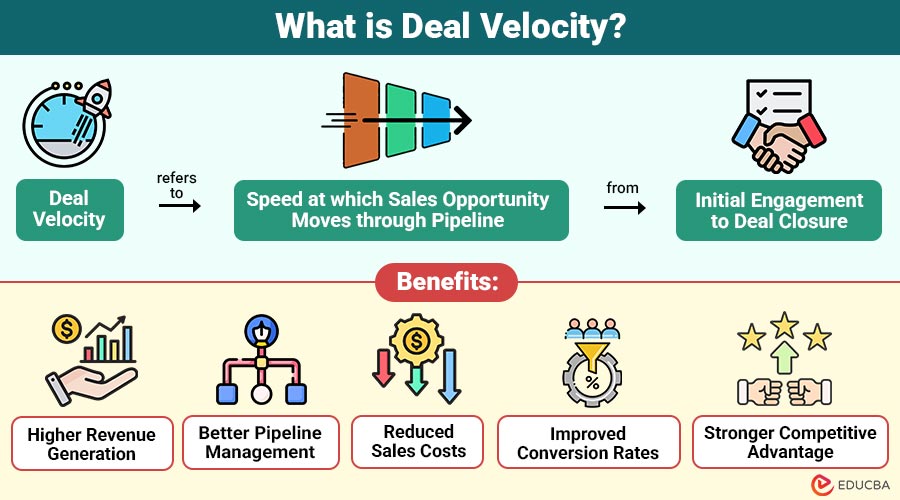
Deal velocity refers to speed at which a sales opportunity moves through the pipeline, from initial engagement to deal closure. It measures how efficiently businesses convert prospects into customers. High deal velocity enables faster revenue growth, while slow velocity may result from process delays, poor lead qualification, or sales inefficiencies.
Table of Contents:
- Meaning
- Importance
- How is Deal Velocity Calculated?
- Key Factors
- Strategies to Improve Deal Velocity
- Benefits
- Challenges
- How Can Businesses Monitor Deal Velocity?
Key Takeaways:
- Deal velocity measures how quickly sales opportunities move through pipelines to generate revenue efficiently and consistently.
- Improving lead qualification, automation, and workflows helps businesses accelerate deal closures and enhance sales performance.
- Technology solutions like CRM, AI, and analytics improve pipeline visibility and optimize sales processes.
- Monitoring deal velocity enables accurate forecasting, better productivity, and stronger competitive advantages in markets.
Why is Deal Velocity Important?
Understanding deal velocity helps businesses improve sales performance, accelerate revenue growth, and optimize customer acquisition processes.
1. Accelerates Revenue Growth
Faster deal movement allows organizations to convert opportunities into revenue more quickly. By reducing delays in the sales process, companies can increase their number of closed deals and improve overall financial performance.
2. Improves Sales Efficiency
Deal velocity helps sales teams identify unnecessary steps, remove bottlenecks, and optimize workflows. This enables sales representatives to spend more time engaging customers and less time handling administrative tasks.
3. Enhances Customer Experience
Customers prefer smooth and efficient buying experiences. A streamlined sales process reduces waiting times, improves communication, and helps customers make purchasing decisions faster.
4. Increases Sales Productivity
When sales teams understand where deals slow down, they can focus their efforts on high-value opportunities. Improved productivity leads to better conversion rates and stronger sales outcomes.
5. Supports Accurate Forecasting
Tracking deal velocity provides valuable insights into sales cycle duration and pipeline performance. Businesses can create more reliable revenue forecasts and make better strategic decisions.
How is Deal Velocity Calculated?
Deal velocity is commonly measured using a formula that considers the number of qualified opportunities, average deal value, win rate, and the sales cycle length.
Formula:
This calculation helps organizations understand how efficiently their sales pipeline generates revenue.
For example, if a company increases its win rate, improves deal value, or reduces the time required to close deals, its overall deal velocity improves.
Key Factors Affecting Deal Velocity
Several internal and external factors influence how quickly deals progress through the sales pipeline.
1. Lead Quality
High-quality leads are more likely to convert quickly because they already have a strong need for the product or service. Poorly qualified leads often create delays and consume sales resources.
2. Sales Process Efficiency
Complex workflows, unnecessary approvals, and manual processes can slow down deal progression. A simple and structured sales process improves movement between pipeline stages.
3. Pricing and Negotiation
Unclear pricing models, delayed proposals, and lengthy negotiations can reduce deal velocity. Transparent pricing and flexible negotiation strategies help accelerate decision-making.
4. Customer Decision-Making Process
The number of stakeholders involved, budget approvals, and organizational priorities can affect how quickly customers finalize their purchase decisions.
5. Sales Team Performance
Experienced sales representatives who understand customer needs, handle objections effectively, and communicate value clearly can move deals faster.
Strategies to Improve Deal Velocity
Organizations can implement several strategies to increase deal velocity and shorten sales cycles.
1. Improve Lead Qualification
Effective lead qualification ensures sales teams focus on prospects with genuine buying potential. Frameworks such as BANT (Budget, Authority, Need, Timeline) help identify valuable opportunities early.
2. Automate Sales Processes
Sales automation tools reduce manual activities such as data entry, follow-ups, reporting, and proposal creation. Automation enables sales teams to respond faster and manage more opportunities.
3. Use Customer Relationship Management Systems
CRM platforms provide centralized visibility into customer interactions, deal stages, and sales activities. They help teams track progress and identify opportunities requiring immediate attention.
4. Create Standardized Sales Workflows
A consistent sales process ensures every opportunity follows a defined path. Standardized workflows reduce confusion, improve collaboration, and minimize unnecessary delays.
5. Provide Sales Enablement Resources
Sales representatives need access to product information, case studies, pricing details, and competitive insights. These resources help them answer customer questions and close deals faster.
6. Reduce Approval Delays
Businesses should simplify internal approval processes for pricing, contracts, and discounts. Faster approvals help sales teams maintain momentum during negotiations.
7. Prioritize High-Value Opportunities
Not all deals have equal potential. Prioritizing opportunities based on customer needs, purchase intent, and revenue potential improves resource allocation.
Role of Technology in Improving Deal Velocity
Modern technologies play an important role in accelerating sales processes and improving pipeline performance.
1. Customer Relationship Management
CRM systems help businesses manage customer information, track interactions, monitor opportunities, and automate sales activities.
2. Artificial Intelligence
AI-powered sales solutions analyze customer behavior, predict buying patterns, recommend next actions, and identify deals that require attention.
3. Sales Automation Platforms
Automation platforms streamline repetitive tasks such as email communication, scheduling, reporting, and follow-ups.
4. Analytics and Reporting Tools
Analytics provide insights into sales performance, conversion rates, bottlenecks, and opportunities for improvement.
5. Configure Price Quote Solutions
CPQ tools help sales teams create accurate quotes quickly by automating product configuration, pricing calculations, and proposal generation.
Benefits of Increasing Deal Velocity
Improving deal velocity provides several benefits for businesses across industries.
1. Higher Revenue Generation
Faster deal closure allows companies to generate revenue sooner and increase sales volume.
2. Better Pipeline Management
Improved deal velocity provides greater visibility into sales performance and helps teams manage opportunities effectively.
3. Reduced Sales Costs
Shorter sales cycles require fewer resources, reducing operational costs associated with customer acquisition.
4. Improved Conversion Rates
A faster, more efficient sales process reduces the likelihood of losing prospects to competitors.
5. Stronger Competitive Advantage
Organizations that close deals faster can respond quickly to market opportunities and customer demands.
Challenges that Reduce Deal Velocity
Despite its importance, businesses often face challenges that slow down sales momentum.
1. Poor Communication
Lack of coordination between sales, marketing, finance, and legal teams can delay decision-making.
2. Manual Processes
Traditional manual workflows create errors, increase workload, and slow down customer interactions.
3. Incomplete Customer Understanding
Without clear knowledge of customer requirements, sales teams may struggle to present relevant solutions.
4. Complex Contract Processes
Lengthy contract reviews and approval procedures can significantly extend sales cycles.
5. Lack of Data Visibility
Without accurate pipeline data, businesses cannot identify problems or take corrective actions quickly.
How Can Businesses Monitor Deal Velocity?
Businesses can monitor deal velocity by tracking key sales metrics that reveal pipeline performance, identify bottlenecks, and improve deal movement efficiency.
1. Average Sales Cycle Length
Measures the time required to move opportunities from initial contact to successful deal completion.
2. Opportunity Conversion Rate
Tracks the percentage of prospects converted into customers through effective sales processes and strategies.
3. Time Spent in Each Sales Stage
Identifies delays by analyzing how long opportunities remain within different pipeline stages.
4. Number of Deals Closed
Evaluates sales productivity by tracking the total deals successfully completed within a specific period.
5. Average Deal Size
Measures average revenue generated from each closed deal to assess sales value.
6. Customer Response Time
Tracks how quickly sales teams respond to customer inquiries, requests, and opportunities.
7. Win-Loss Ratio
Compares successful deals against lost opportunities to evaluate sales effectiveness and performance.
Final Thoughts
Deal velocity measures how quickly businesses convert sales opportunities into revenue. By optimizing processes, automating workflows, and improving lead management, organizations can accelerate deal closure, enhance customer satisfaction, increase sales productivity, and achieve sustainable revenue growth in competitive markets.
Frequently Asked Questions (FAQs)
Q1. What is a good deal velocity for a business?
Answer: A good deal velocity depends on industry, sales cycle length, deal size, and customer behavior. Businesses should focus on continuously improving their current velocity rather than targeting a fixed benchmark.
Q2. How does deal velocity impact sales team performance?
Answer: Higher deal velocity helps sales teams manage opportunities more effectively, reduce wasted efforts, prioritize important prospects, and achieve sales targets with improved efficiency.
Q3. Can deal velocity be improved without increasing the number of leads?
Answer: Yes, businesses can improve deal velocity by optimizing existing processes, improving lead qualification, reducing approval delays, and helping sales teams close current opportunities faster.
Q4. How does customer engagement influence deal velocity?
Answer: Strong customer engagement improves deal velocity by building trust, addressing concerns quickly, maintaining communication, and helping prospects move confidently through the buying process.
Recommended Articles
We hope that this EDUCBA information on “Deal Velocity” was beneficial to you. You can view EDUCBA’s recommended articles for more information.

