
What is Sales Acceleration?
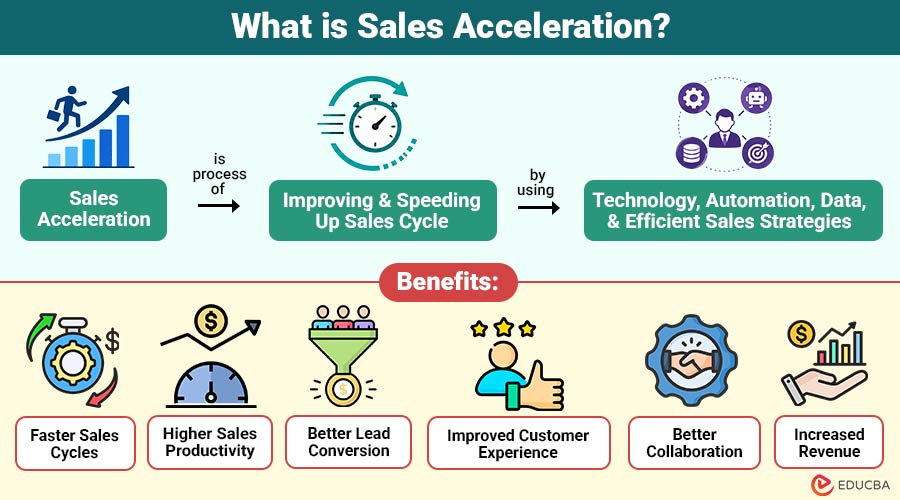
Sales acceleration is the process of improving and speeding up sales cycle by using technology, automation, data, and efficient sales strategies. Its primary aim is to help sales teams identify potential customers faster, engage them effectively, and close deals in less time.
Rather than replacing sales professionals, sales acceleration provides them with better tools and information. This allows representatives to spend more time selling and less time performing repetitive administrative work.
Table of Contents:
- Meaning
- Importance
- Key Components
- Benefits
- Common Challenges
- Industries that Benefit from Sales Acceleration
- Best Practices
Key Takeaways:
- Sales acceleration uses automation, data, and AI to streamline sales processes and improve overall productivity.
- Faster lead qualification and personalized engagement help increase conversions and significantly shorten sales cycles.
- CRM, analytics, and sales enablement tools support better decision-making, collaboration, and effective customer relationship management.
- Successful implementation requires quality data, continuous training, strategic technology adoption, and customer-focused sales practices.
Why is Sales Acceleration Important?
Below are the key reasons why sales acceleration is important.
1. Increase Sales Productivity
Sales acceleration automates repetitive tasks, enabling sales teams to focus on selling and closing more deals efficiently.
2. Reduce the Sales Cycle
Streamlined processes and faster communication help shorten sales cycles, enabling quicker deal closures and improved business performance.
3. Improve Lead Conversion Rates
Better lead qualification and timely engagement increase conversion opportunities, helping businesses turn prospects into loyal customers.
4. Enhance Customer Experience
Personalized interactions and faster responses improve customer satisfaction, build stronger relationships, and encourage long-term business loyalty.
5. Increase Revenue Growth
Optimized sales processes maximize opportunities, improve win rates, and generate consistent revenue growth across business operations effectively.
6. Support Better Decision-Making
Real-time sales insights and analytics enable informed decisions, improving forecasting, strategy planning, and overall business performance consistently.
7. Improve Collaboration Between Teams
Connected sales, marketing, and customer support teams share information efficiently, improving coordination and delivering seamless customer experiences.
Key Components of Sales Acceleration
Below are the key components of sales acceleration.
1. Lead Management
Lead management captures, qualifies, and prioritizes prospects, helping sales teams focus on high-potential conversion opportunities efficiently.
2. Sales Automation
Sales automation eliminates repetitive tasks, improves efficiency, saves time, and allows representatives to focus on selling activities.
3. Customer Relationship Management
CRM centralizes customer data, interactions, and sales history, enabling consistent, personalized engagement and stronger customer relationships.
4. Data Analytics
Data analytics provides actionable sales insights, tracks performance, improves forecasting, and supports informed business decision-making processes.
5. Artificial Intelligence
Artificial intelligence effectively automates lead scoring, predicts customer behavior, personalizes interactions, and improves the accuracy of sales decision-making.
6. Sales Enablement
Sales enablement equips representatives with training, content, and resources to confidently engage customers and close deals successfully. Platforms such as Mindtickle centralize this training, content, and coaching in one system so reps can access what they need without switching tools.
Benefits of Sales Acceleration
Below are the key benefits of sales acceleration.
1. Faster Sales Cycles
Automation and streamlined workflows reduce delays, helping sales teams close deals faster and improve overall business efficiency.
2. Higher Sales Productivity
Sales representatives spend less time on administrative tasks, consistently increasing customer engagement, efficiency, and overall sales performance.
3. Better Lead Conversion
Effective lead qualification and timely follow-ups increase conversion rates, turning more qualified prospects into loyal paying customers.
4. Improved Customer Experience
Personalized communication, faster responses, and consistent support enhance customer satisfaction, trust, and long-term business relationships significantly.
5. Better Collaboration
Shared customer information improves coordination between teams, reducing communication gaps and ensuring seamless sales process execution effectively.
6. Increased Revenue
Higher productivity, improved conversions, and faster deal closures contribute to sustainable revenue growth and stronger business profitability.
Common Challenges in Sales Acceleration
Although sales acceleration offers many benefits, businesses may face several challenges during implementation.
1. Resistance to Change
Employees may resist adopting new technologies, requiring effective training, communication, and change management for successful implementation.
2. Poor Data Quality
Inaccurate customer data reduces the effectiveness of automation, weakens analytics, and negatively impacts sales decisions and customer engagement.
3. Technology Integration
Integrating multiple sales systems requires careful planning to ensure seamless data sharing and efficient business process management.
4. High Initial Investment
Implementing advanced sales technologies requires upfront investment in software, integration, training, and ongoing system maintenance.
5. Training Requirements
Employees need continuous training to effectively use sales technologies, maximize productivity, and consistently achieve better business outcomes.
Industries that Benefit from Sales Acceleration
Sales acceleration is useful across many industries, including the following:
1. Information Technology
Information technology companies accelerate lead management, improve customer engagement, and efficiently shorten complex enterprise sales cycles.
2. Software and SaaS
Software and SaaS businesses automate sales processes, increase conversions, and improve rates of recurring customer acquisition and retention.
3. Manufacturing
Manufacturing companies streamline sales operations, manage distributor relationships, and accelerate order processing for improved business efficiency.
4. Healthcare
Healthcare organizations improve customer engagement, manage provider relationships, and accelerate sales of medical products and services.
5. Banking and Financial Services
Financial institutions enhance customer acquisition, automate sales workflows, and deliver personalized financial solutions more efficiently.
6. Insurance
Insurance companies accelerate policy sales, improve customer communication, and streamline lead management and follow-up.
7. Telecommunications
Telecommunication providers improve customer onboarding, manage sales pipelines, and increase conversions through efficient automated sales processes.
Best Practices for Successful Sales Acceleration
Follow these best practices to accelerate sales.
1. Focus on Customer Needs
Understand customer challenges, personalize every interaction, deliver relevant solutions, build trust, improve engagement, and consistently increase conversion rates.
2. Use Reliable CRM Software
Maintain accurate customer data in a centralized CRM system to improve communication, follow-ups, collaboration, and relationship management effectively.
3. Automate Routine Tasks
Automate repetitive tasks such as emails, scheduling, reminders, and reporting to consistently save time, reduce errors, and improve productivity.
4. Analyze Sales Performance
Track lead conversions, sales cycles, revenue, acquisition costs, and win rates to identify trends and improve future strategies.
5. Train Sales Teams
Provide regular training in products, communication, negotiation, and technology to consistently improve confidence, performance, and overall sales success.
6. Encourage Team Collaboration
Promote collaboration between sales, marketing, finance, and support teams to ensure smooth workflows and deliver better customer experiences.
7. Leverage Artificial Intelligence
Use AI for lead scoring, forecasting, customer insights, and personalized recommendations to improve efficiency and accelerate sales decisions.
Final Thoughts
Sales acceleration improves the entire sales process through automation, analytics, and intelligent technologies. It increases productivity, shortens sales cycles, enhances customer experiences, supports better decision-making, strengthens team collaboration, and drives sustainable revenue growth, helping businesses remain competitive in an evolving marketplace.
Frequently Asked Questions (FAQs)
Q1. How does sales acceleration improve sales forecasting?
Answer: By collecting real-time sales data and tracking pipeline activities, sales acceleration provides more accurate forecasts, helping businesses plan resources, budgets, and revenue expectations more effectively.
Q2. What metrics should businesses track to measure sales acceleration?
Answer: Key metrics include sales cycle length, lead response time, conversion rate, win rate, average deal size, customer acquisition cost (CAC), and revenue growth.
Q3. Is sales acceleration suitable for both B2B and B2C businesses?
Answer: Yes. Sales acceleration supports both B2B and B2C organizations by improving lead nurturing, customer engagement, sales efficiency, and overall conversion rates, regardless of the sales model.
Q4. How is sales acceleration different from traditional sales?
Answer: Traditional sales often rely on manual processes and individual efforts, while sales acceleration uses automation, data, and AI to improve efficiency, increase productivity, and close deals faster.
Recommended Articles
We hope that this EDUCBA information on “Sales Acceleration” was beneficial to you. You can view EDUCBA’s recommended articles for more information.

