


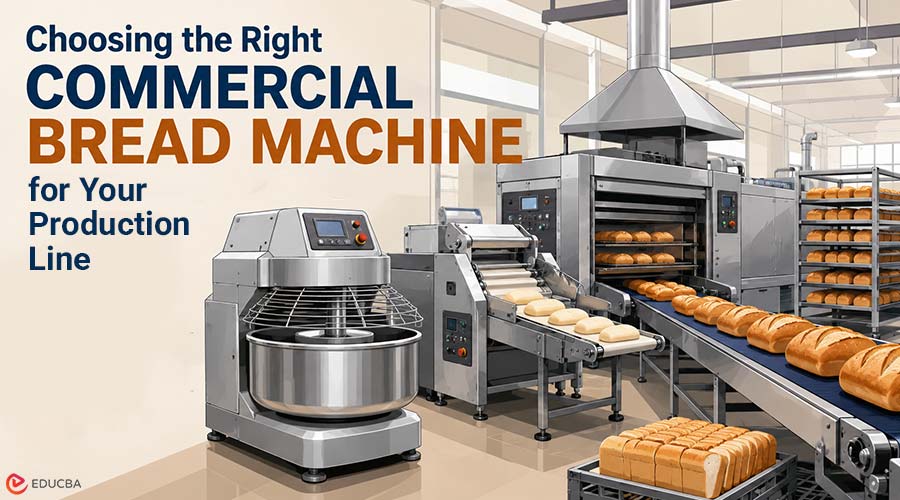
Bread is the backbone of most bakery operations, which means the commercial bread machine at the center of your production line has an outsized impact on everything downstream, from daily output to product consistency to labor costs. For industrial bakeries planning an expansion or building a new line from scratch, choosing the right bread-making equipment is one of the most consequential decisions on the entire project.
This guide walks through what a commercial bread machine actually includes on an industrial scale, the key factors to weigh before buying, how to match capacity to your production goals, and where to find equipment from sellers you can trust.
What Counts as a Commercial Bread Machine in an Industrial Bakery?
At an industrial scale, a commercial bread machine is rarely a single piece of equipment. It usually refers to a connected system spanning several stages of production: spiral or planetary mixers that develop the dough; dividers and rounders that portion it into uniform pieces; proofing chambers that control temperature and humidity during fermentation; and rack, deck, or tunnel ovens that bake the finished loaves. Larger operations often run complete bread plants that link these stages together with conveyors and automated controls.
Understanding which stages your bakery needs to invest in and which you can scale later is the first step in specifying the right commercial bread machine for your facility, rather than buying more (or less) than your production actually requires.
Factors to Consider Before Buying a Commercial Bread Machine
Specifying an industrial bread line involves more variables than most buyers expect. Before requesting quotes or comparing listings, work through the following factors.
- Define the specific bread products you plan to produce, as dough hydration, shape, and processing requirements vary significantly among products such as sandwich loaves, artisan bread, and rolls.
- Establish your current and near-future production volume so the equipment you choose meets demand without leaving expensive capacity sitting idle.
- Measure your available floor space carefully, since production line configurations vary widely and not every layout fits every facility.
- Compare operating costs across candidate equipment, including energy use, water consumption, and routine maintenance and replacement parts.
- Confirm what installation support, staff training, and ongoing service the seller or manufacturer provides once the equipment is on-site.
- Check whether the equipment can be customized or expanded later, so your investment can grow alongside your production needs.
Working through this list before committing to a purchase helps ensure your commercial bread machine investment matches your actual production goals rather than a generic specification sheet.
Matching Machine Capacity to Your Production Volume
One of the most common mistakes bakeries make is buying based solely on current demand, without factoring in growth. A commercial bread machine sized too small quickly becomes a bottleneck, forcing costly upgrades within a year or two, while equipment sized too large ties up capital and floor space that could be better used elsewhere.
The better approach is to map your output targets for the next several years against realistic equipment lifespans, then choose a configuration that can flex with reasonable modifications rather than requiring a full replacement. Many industrial bakeries handle this by choosing a mixer and oven capacity slightly above current needs, while keeping downstream equipment, such as packaging, modular enough to add a second line later without disrupting the first.
Semi-Automatic vs Fully Automatic Bread Lines
Bread production equipment spans a wide range of automation, from manually operated mixers and dividers to fully automated lines that carry dough from mixing through baking and slicing with minimal operator involvement. Semi-automated setups suit smaller bakeries or those producing a wide variety of specialty products that benefit from hands-on adjustment.
Fully automated commercial bread machine lines suit high-volume operations producing standardized products at scale, where consistency and labor efficiency matter more than flexibility. Neither approach is universally correct. The right level of automation depends on your product mix, labor availability, and the degree of variation you need to build into daily production runs.
Compliance and Hygiene Standards for Bread-Making Equipment
Any commercial bread machine used in a UK food production facility needs to meet CE or UKCA certification requirements under food machinery regulations, and align with BRCGS or IFS food safety standards. Look for equipment built from food-grade stainless steel with smooth, easy-to-clean surfaces and IP-rated electricals, since fast, thorough washdowns between production runs directly support both hygiene and uptime. Confirming this documentation upfront, whether you are buying new or used equipment, protects your bakery during audits and inspections down the line.
New, Used, or Refurbished: Choosing the Right Investment
Commercial bread machines are available new, used, and refurbished, and the right choice usually depends on how central the equipment is to your daily output. Many bakeries invest in new equipment for the stages that run longest or matter most to product consistency, while sourcing well-inspected used or refurbished machines for secondary lines or backup capacity. Whichever route you choose, insisting on service records, compliance documentation, and a clear warranty or return policy protects you from the risks of buying industrial equipment sight unseen.
Where to Find Verified Commercial Bread Machines?
Sourcing reliable bread-making equipment starts with choosing a trustworthy seller. Machinery Masters connects bakeries with verified sellers of new and used commercial bread machines, from individual mixers, dividers, and ovens to complete bread production plants. Buyers can compare listings, confirm compliance and condition, and reach out to sellers directly, which removes much of the uncertainty that comes with sourcing industrial bakery equipment from scattered or unverified sources.
Advice from Machinery Masters
The right commercial bread machine setup is the one that matches your actual production goals, not just the biggest or most automated option on the market. Take the time to map your product mix and volume targets before you buy, insist on proper documentation, whether the equipment is new or used, and choose sellers who are transparent about what you are getting. A well-specified bread line pays for itself many times over in consistent output and fewer disruptions.
How Machinery Masters Can Help You?
Whether you are sourcing a single mixer or specifying an entire bread production line, Machinery Masters gives you a single place to compare new, used, and refurbished commercial bread machines from verified sellers. Check compliance details, compare capacity options, and connect directly with sellers before you buy.
Recommended Articles
We hope this guide helps you choose the right commercial bread machine for your bakery. Explore these recommended articles for more such topics.

