


Updated July 6, 2026
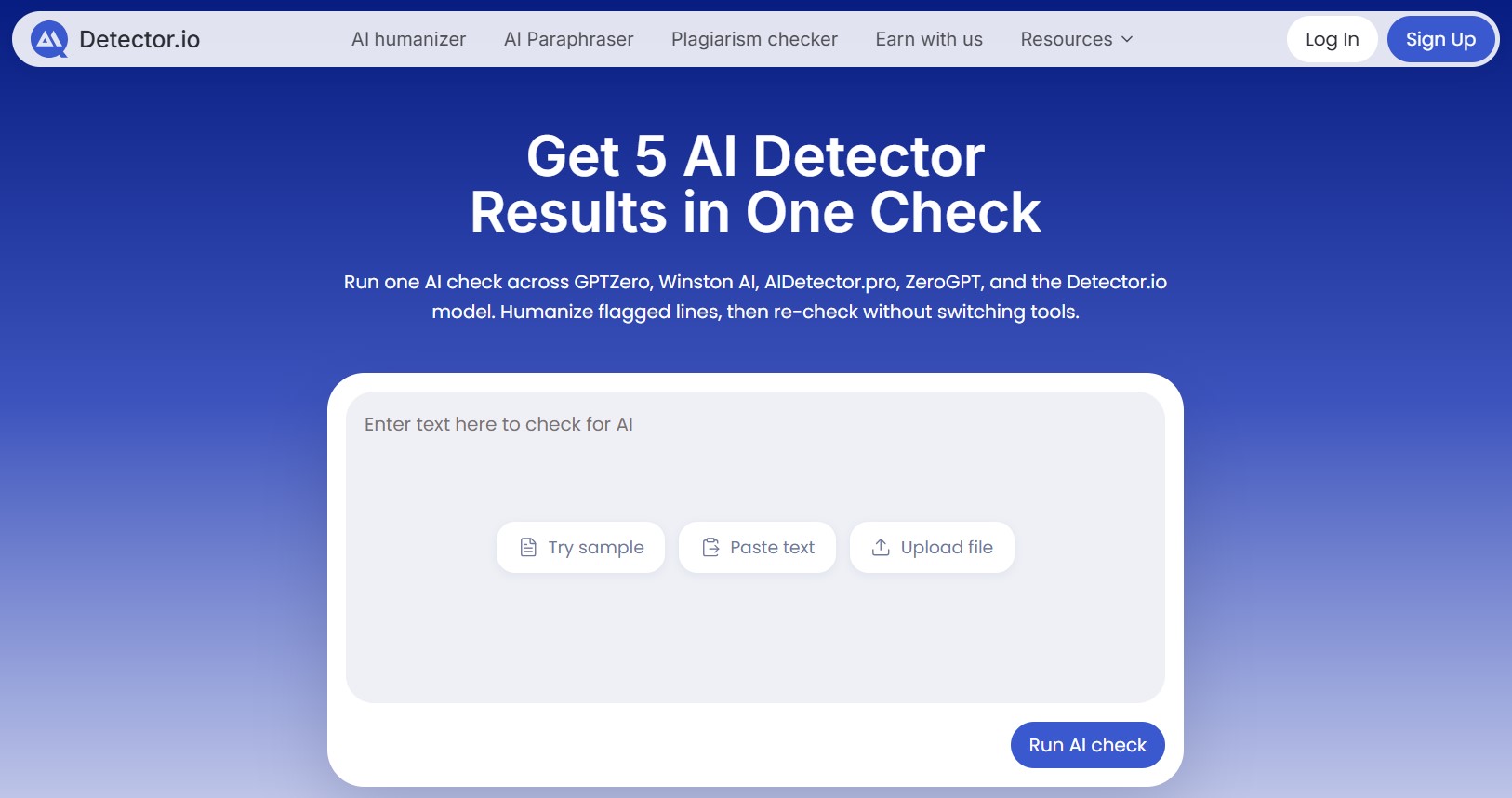
AI content verification is moving past the simple question of “Did AI write this?” All because the answer is rarely definite. A text can pass through several hands before review: AI drafting, human edits, grammar checks, and tone adjustments may all shape the final version. That is why a single score can feel shaky. When a teacher, editor, marketer, or business team needs an AI checker, Detector.io offers a more sensible way to review the text.
It compares results from several detection providers and then connects the scan with humanization and retesting options. The point is to give people more evidence before they decide what to do next.
(Image Source: Detector.io)
Detector.io and the Next Stage of AI Content Review
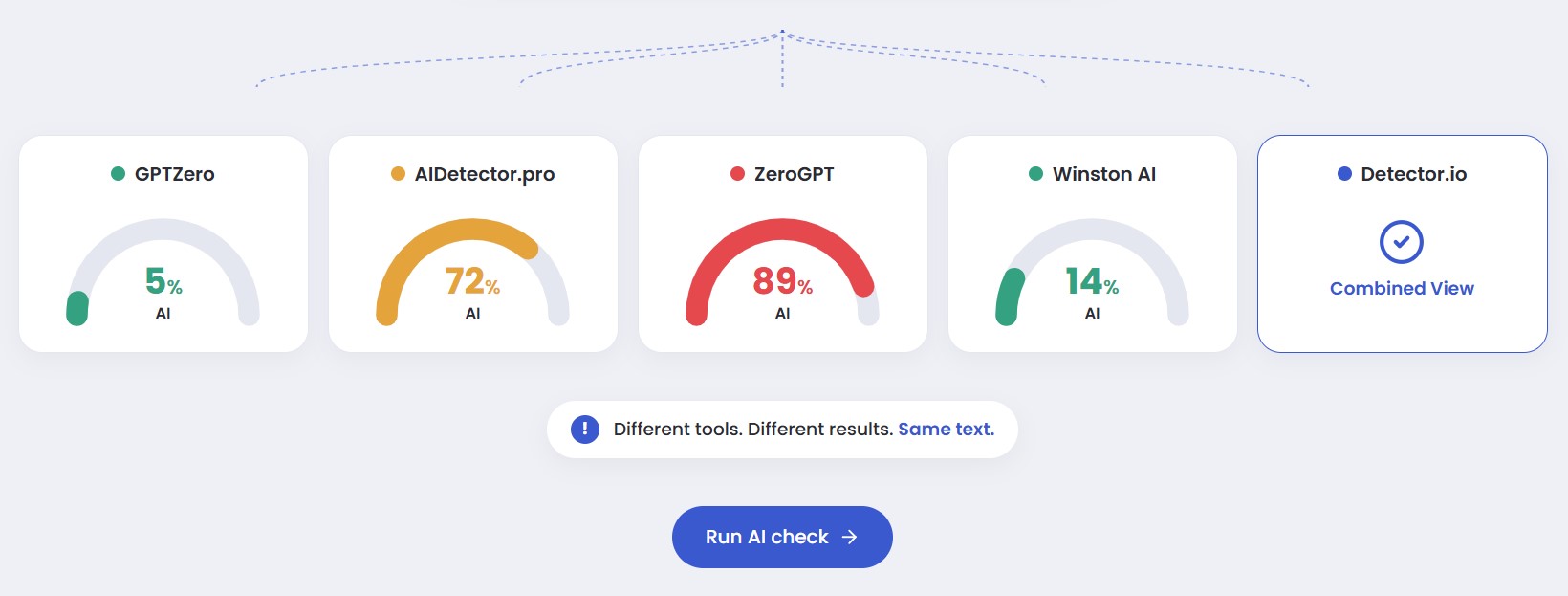
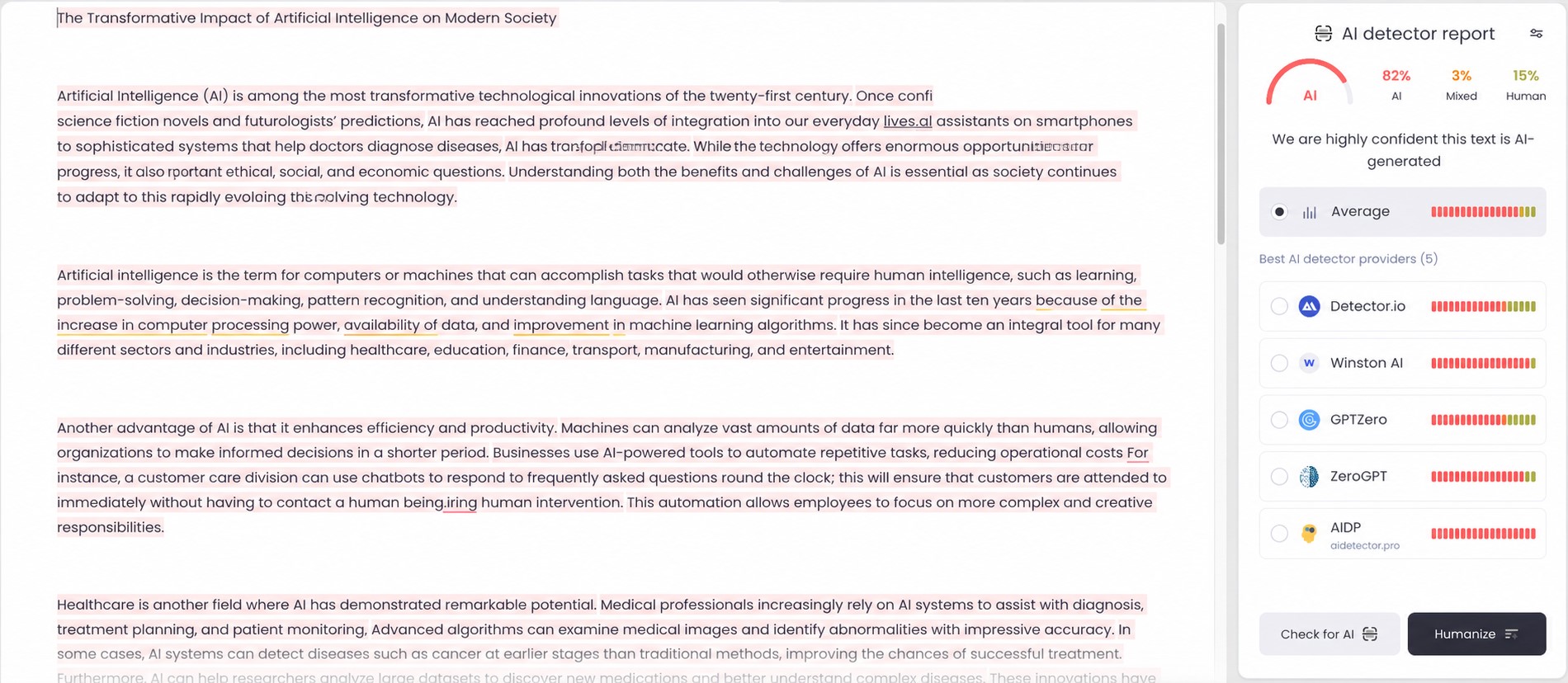
Detector.io is built for a more complicated writing world. AI-generated text is no longer easy to spot by tone alone, and human writing can still look suspicious sometimes. The platform helps you detect AI signals by comparing a single draft across multiple providers. A report can separate the result into AI, mixed, and human percentages, then show provider-level entries for Detector.io, Winston AI, GPTZero, ZeroGPT, and AIDP/aidetector.pro.
(Image Source: Detector.io)
That wider view matters because modern verification is about pattern reading. Where do detectors agree? Where do they split? Does the revised version improve the scores?
A More Complete AI Detection Suite
A standard checker usually gives one result and leaves the rest to you. Detector.io combines detection, score comparison, AI humanization, and another scan after edits. That makes it useful for school papers, editorial submissions, SEO drafts, agency content, reports, and public-facing business copy. The workflow is as simple as can be: check the original text, compare the results, revise flagged sections, then run the updated version again. For anyone trying to detect AI writing with more context, that closed loop is the tangible advantage.
Core Features Breakdown
Multi-detector Analysis
Detector.io checks the same draft across several systems, so a single result does not carry the entire decision. People often search for the most accurate AI detector, but AI detection is not that simple. Different detectors can respond to different signals, including repeated phrasing, sentence predictability, formal wording, or statistical patterns. A broader scan provides a more useful picture than a single isolated score.
Side-by-side Detection Comparison
Detector.io places detector results in the same report. The average score gives a quick starting point, while provider entries show how each detector interpreted the draft.
(Image Source: Detector.io)
This helps when results conflict. If most providers lean human, that says something, if several flag the text as AI-heavy, that says something, too. If scores scatter, the draft needs closer reading before anyone treats the result as final.
AI Humanizer
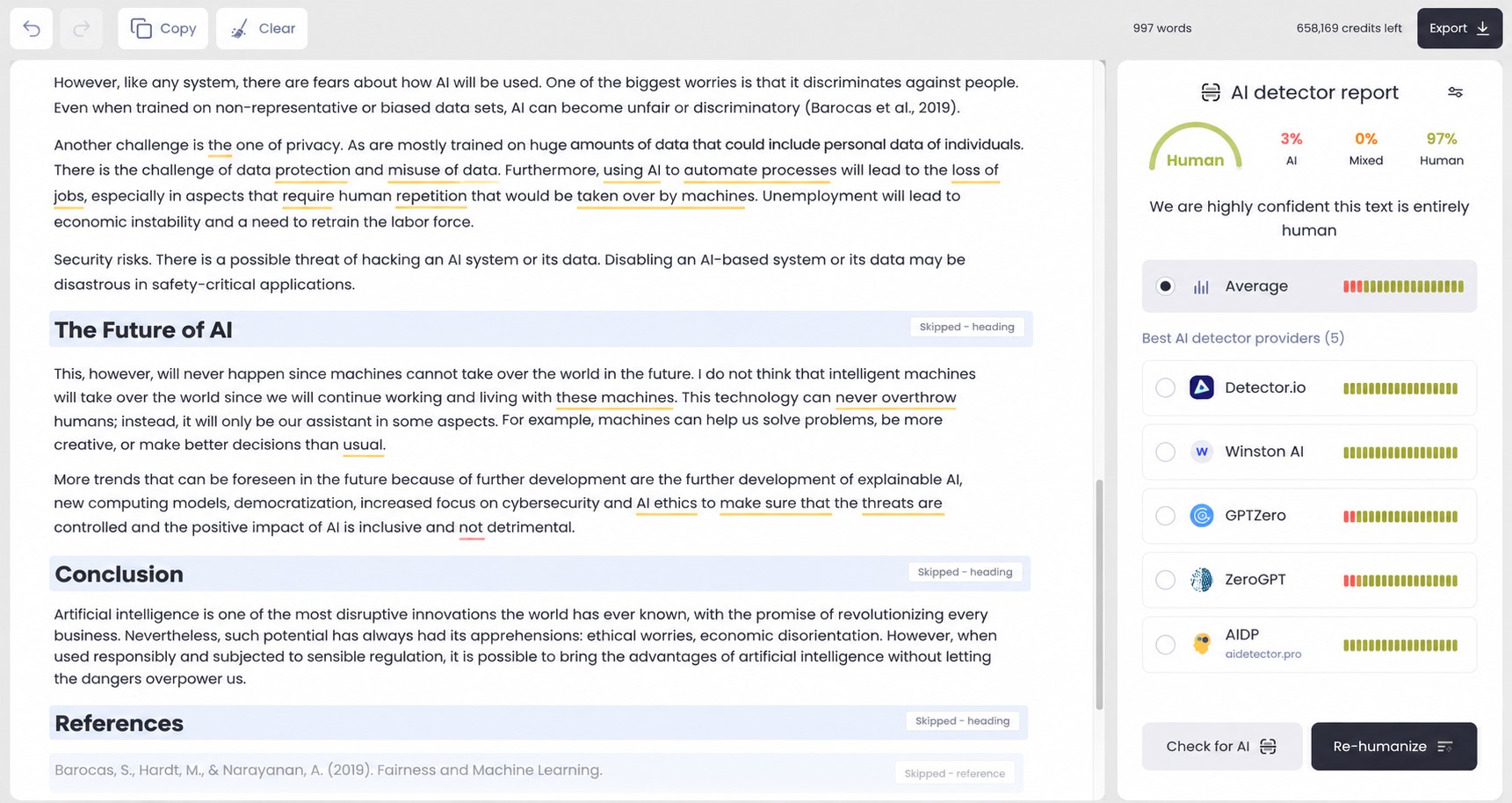
Detector.io also includes an AI humanizer for text that reads as rigid, flat, repetitive, or machine-like. The editing layer is built around control rather than one-click rewriting.
(Image Source: Detector.io)
Sentence-level suggestions show what may change before you accept anything. Edits can be accepted, refreshed, deleted, or rejected. Everything you expect to stay untouched can be skipped or protected.
All Verification Steps Under One Roof
The unified workspace keeps the review from becoming a copy-paste marathon. Detection results, comparison data, humanization controls, word count, credits, and export options stay close together. That is useful when reviewing multiple drafts. A content batch can become confusing when each document moves through separate checkers, rewrite tools, and saved versions.
Instant Re-testing After Humanization
The re-test step is what makes the workflow feel finished. After a flagged sentence is revised, the updated draft can go back through detection. That turns the AI detection process into a cycle: scan, compare, edit, and scan again. You can check the new score and decide whether you need another pass.
Pricing and Value
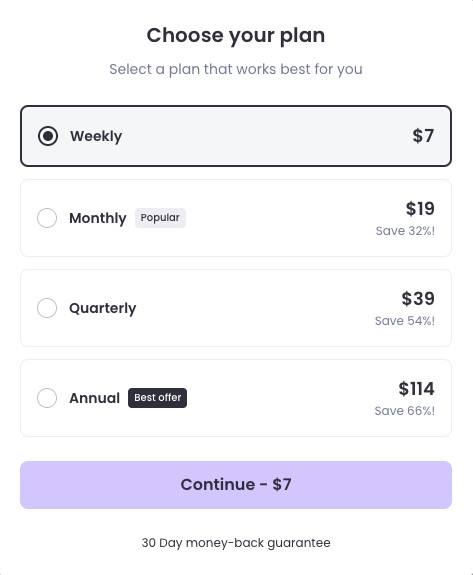
Detector.io has weekly, monthly, quarterly, and annual options. The weekly plan costs $7 and works for short review windows, deadline periods, or a one-time content batch. The monthly plan costs $19 for more regular checking. The quarterly option costs $39, and the $114 annual plan is better suited to steady review work across ongoing projects or larger content cycles. A 30-day money-back guarantee is included.
(Image Source: Detector.io)
Rather than managing multiple checkers, humanizers, and manual comparison notes, Detector.io consolidates the main review tasks.
Pros and Cons
Pros
- Several detector results can be reviewed in a single report.
- Side-by-side scores make disagreement easier to notice.
- Humanization is part of the same workflow.
- Retesting shows whether the edits helped you achieve the desired outcome.
- Locked sections can preserve citations, headings, and formatting.
- Fewer handoffs mean fewer chances to lose track of the right draft.
Cons
- A wider report can take longer to read.
- Detector disagreement may still appear.
User Experience
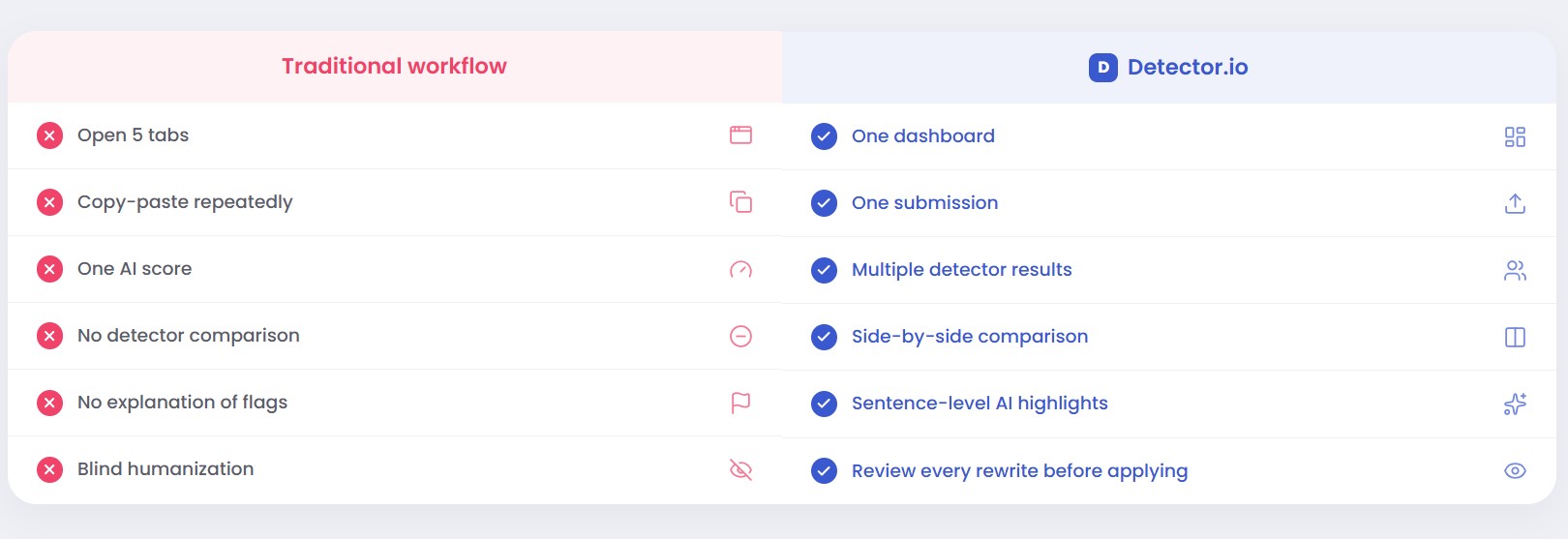
Detector.io’s interface follows a direct review path. You add text, start the scan, compare the results, and move into humanization if the draft needs work. The report starts with the big picture, then breaks down how each detector scored the same draft. The humanizer keeps edits manageable by showing suggestions sentence by sentence. For teams that handle repeated checks, that structure matters. The same review path is easy to repeat for the next draft.
(Image Source: Detector.io)
Final Thoughts
Detector.io is best for people who want more than a basic AI detector tool. Students can review papers before turning them in. Educators can review multiple detector results rather than settling on a single score. Editors and publishers can review contributed pieces with more context. SEO teams, agencies, and businesses can check AI-assisted writing before it moves into public or client-facing use. Multi-detector verification is becoming the preferred approach because AI writing is harder to judge, and single-detector results can conflict. Detector.io responds to that shift with comparison, controlled humanization, and retesting in a single flow. That is a stronger foundation than one lonely score.
Frequently Asked Questions (FAQs)
Q1. What does Detector.io do?
Answer: Detector.io checks writing across several AI detection providers, compares their scores, helps revise flagged passages, and supports another scan after editing.
Q2. Is Detector.io useful if I already use another checker?
Answer: Yes. Detector.io is useful when a single checker is not enough, and you want to compare multiple results without moving the same draft between tools.
Q3. Does Detector.io include humanization?
Answer: Yes. The platform includes an AI Humanizer with sentence-level controls, so you can review changes before accepting them.
Q4. Can Detector.io re-test the revised text?
Answer: Yes. After humanizing or editing a draft, you can rerun detection and compare the updated results.
Q5. Who benefits most from Detector.io?
Answer: Students, educators, editors, marketers, SEO teams, agencies, and businesses can benefit from a more complete AI content review process.
Recommended Articles
We hope this guide on Detector.io helps you understand why multi-detector AI verification is becoming essential for evaluating AI-assisted content with greater accuracy and confidence. Explore these recommended articles for more insights on AI detection tools, AI humanizers, content verification, and responsible AI writing.


