


Updated June 15, 2026
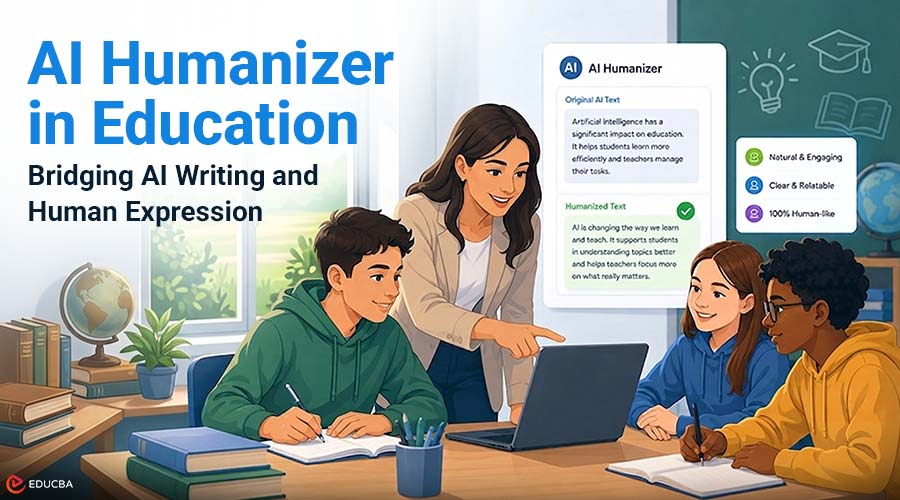
Educational technology has moved through several waves of integration over the past two decades, but few developments have entered classrooms and learning environments as quickly as generative artificial intelligence. The arrival of ChatGPT in late 2022 triggered widespread debates across institutions, leading to policy updates, faculty training sessions, and student discussions that continue to evolve today. A major focus within this shift is AI humanizer in education, where educators and students are trying to balance the benefits of AI-assisted writing with academic integrity and originality requirements.
What is AI Humanizer in Education?
AI humanizer in education refers to tools and techniques used to refine AI-generated text so it reads more naturally and closely resembles human writing patterns. These tools adjust tone, sentence structure, and rhythm to reduce the mechanical patterns often detected by AI detection systems. In educational contexts, this category has grown rapidly because students and professionals increasingly use AI as a support tool for drafting, brainstorming, and editing. However, even legitimate AI-assisted writing can sometimes be flagged incorrectly by detection systems. This is where humanization tools play an important role in improving readability and reducing false positives.
The Role of Humanization Tools
The category of humanization software has emerged as a response to this challenge. When AI generates content, it often follows predictable patterns. Humanizers rewrite this output to align more closely with natural human expression. However, in the middle of this evolution, one key issue remains: distinguishing quality writing from machine-generated output. This is where the concept of what separates the best AI humanizer tools 2026 from competent machine output becomes central to understanding how these tools function in practice.
Popular AI Humanizer Tools in Education
Here are some key points highlighting the most widely used tools and their features in the education sector.
Walter Writes Platform
Walter Writes is one of the platforms competing in this category. The tool offers humanization in more than fifty languages, supports a wide range of writing styles, and includes a built-in detector that scores output against major scanners before submission. The free 300-word trial gives prospective users enough space to evaluate the platform with real content. The data policy explicitly excludes user input from the training data, which is important in educational contexts where confidential student work may be processed.
Other AI Humanizer Tools
Other competitors emphasize different strengths. Some target specific languages or geographies, building specialized models for non-English markets. Others compete on price, offering generous free tiers and low monthly subscriptions for individual users. Some are designed for institutions, offering team management, audit logs, and compliance tools for department- or campus-wide use.
AI Detection vs Humanization in Education
The ecosystem surrounding AI humanizer in education tools is closely tied to AI detection systems. Platforms like Turnitin, GPTZero, Originality.ai, and Copyleaks have significantly improved their models in recent years. However, no detection system is perfect. False positives still occur, especially when writers use highly structured writing or write in non-native English. This is why many educators recommend using multiple evaluation methods instead of relying solely on detection scores. In the broader context of AI humanizer in education, human judgment remains essential.
Best Practices for AI Humanizer in Education Use
For educational institutions evaluating policy approaches, the practical recommendation is to combine multiple signals rather than relying on any single detector as a final arbiter. Detection scores function as one input among many in evaluating student work. The conversations that follow, with the student explaining process and the educator providing feedback, generate more value than any algorithmic verdict alone could deliver. This is consistent with how academic integrity has always worked in practice, even before AI entered the picture.
For individual students using these tools, the appropriate framing is straightforward. Use AI to help structure thinking, draft sections that you then revise substantially, or check work for clarity. Avoid submitting work that you have not engaged with substantively. When the underlying work is yours, and AI has only assisted at the margins, humanization simply restores the personal voice the writing would have had if you had typed every word yourself. That use case is defensible and increasingly common.
Final Thoughts
The rise of the AI humanizer in education category reflects a broader shift in how students and educators interact with artificial intelligence. Instead of viewing AI as either fully acceptable or fully prohibited, institutions are moving toward more nuanced approaches that focus on transparency, learning outcomes, and writing quality. As tools continue to evolve, flexibility will remain important. The landscape of the best AI humanizer tools in 2026 will likely continue to change, but the core goal will remain the same: helping users produce clearer, more natural, and more effective writing in an AI-assisted world.
Recommended Articles
We hope this guide on AI humanizer in education helps you better understand its role in modern learning. Check out these recommended articles for more insights and updates.


