


Updated July 17, 2026
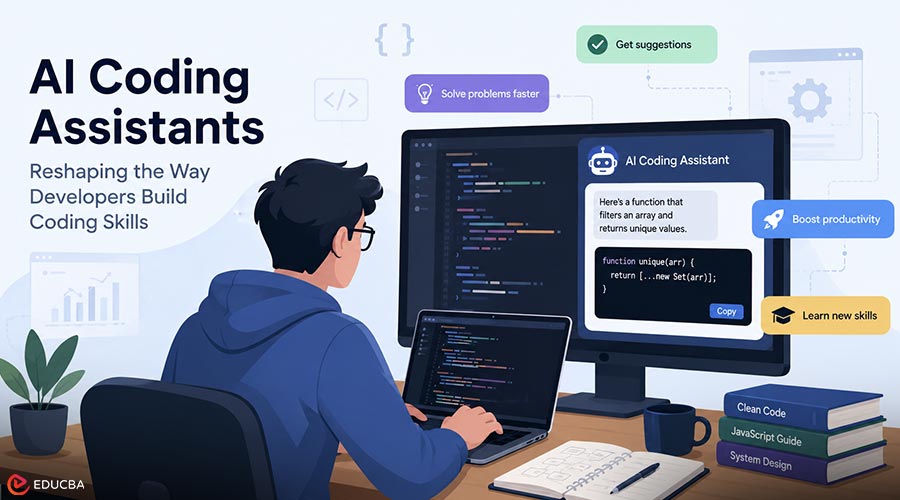
There was a time when learning to code meant sitting with a broken program for an hour, working through the error line by line, and slowly building an internal map of how the language actually behaved. That process was slow and often frustrating, but it left something behind. The struggle was the lesson. That picture has changed. Today, a developer can type a few words describing what they want, and AI coding assistants can generate entire functions within seconds. The question worth asking is not whether this is convenient. It obviously is. The real question is what it does to the way coding skills actually form in a person’s mind.
The Old Learning Loop, and Why It Worked
Traditional skill-building in programming followed a fairly predictable loop. You wrote some code, it failed, you read the error, you searched for an explanation, and you tried again. Each pass through that loop forced you to engage with the underlying logic of the language, even when the lesson was tedious.
That repetition is what built real skill. A developer who fought through a bug by hand was not just fixing that one bug. They were building a mental model of how the language and the system behaved, one that would help them recognize similar problems the next time without having to start from scratch. The friction was not a flaw in the process. It was the process.
A Field That Was Already Moving Fast
Before AI assistance entered the picture, the old learning loop was already under pressure from another direction: the sheer pace at which the tools, platforms, and best practices in software development keep changing. Anyone who has tried to keep up with the development world over the past several years has felt this. The frameworks a junior developer learns today often look nothing like what someone learned five years earlier, and the ecosystem of platforms, extensions, and tooling around them keeps expanding. Sites that follow the development and e-commerce tooling space closely, such as Landofcoder, have tracked how much the landscape has shifted in the last decade alone, with new platforms and integration patterns regularly replacing those that came before.
This matters for skill formation because it changes what a developer is being asked to learn in the first place. The old model assumed a relatively stable target, a language or a framework that stayed put long enough for slow, repeated struggle to pay off. When the target itself keeps moving, a slower learning loop has to compete with the fact that some of what is being learned will already be out of date by the time it is mastered. That is the backdrop against which AI assistance is now arriving: not a stable craft being disrupted, but one already in motion.
What AI Coding Assistants Actually Do to the Learning Loop?
Against that backdrop, AI coding assistants change the learning loop itself, and the effects run in both directions. On one side, the benefits are real. Beginners get unstuck faster, which means less early discouragement, when it is most likely to cause someone to quit. Suggestions from these tools are often idiomatic, exposing newer programmers to patterns and conventions they might otherwise not encounter for months. In a field that is moving as quickly as this one, a tool that helps someone orient themselves in unfamiliar territory is not a small convenience. It can determine whether you stay competitive or fall behind.
On the other side, there is a cost worth naming honestly. Cognitive scientists describe a phenomenon called desirable difficulty: the idea that struggling with a problem before seeing the solution builds a stronger, more flexible understanding than simply being handed the answer. When an AI assistant supplies a fix immediately, that struggle, and the mental model building that comes with it, can get skipped. The result shows up in small but recognizable ways: a developer who can ship a feature but cannot quite explain why a particular piece of code works, or someone who reaches for an assistant out of habit even on a problem they could likely solve alone with a bit more patience. Neither of these effects cancels out the other. They simply coexist, and the key is gaining the first without quietly accumulating too much of the second.
Finding Where the Balance Actually Sits
The clearest way through this is to separate the work that benefits from friction from the work that does not. You can reasonably use AI assistance for routine, repetitive tasks, boilerplate, well-understood patterns, and straightforward refactors with little real cost. Skipping a struggle with a problem that teaches you nothing new is simply efficient. The friction worth protecting is the kind that shows up when a developer is genuinely learning something for the first time, whether that is a new language, an unfamiliar part of a codebase, or a concept they have only seen in passing.
In those moments, a little deliberate slowness, working through an error before asking for the fix, explaining a suggested solution out loud before accepting it, occasionally rebuilding something familiar from memory, pays off later in ways that are hard to see in the moment but easy to notice in hindsight. This is not an argument against AI assistance. Use it deliberately, because it can either support learning or replace it, depending on how and when you use it.
Final Thoughts
AI coding assistants are not going to retreat from software development, and there is little reason for them to do so. It has already made beginners more confident and sped up routine work that used to take hours for no real learning benefit. But the deeper question this technology raises is not just about AI. It is about how skill formation has to adapt in a field that was already changing faster than most professions ever have. The developers who come out ahead are likely to be the ones who treat AI assistance as one more fast-moving part of an already fast-moving field, useful for keeping pace, but not a substitute for the slower work of actually building understanding when the moment calls for it.
Recommended Articles
We hope this guide on AI coding assistants helps you understand their impact on learning and development. Check out these recommended articles for more insights and practical strategies.


