


Updated June 22, 2026
Digital experts need tools that deliver fast, accurate data without friction. The best keyword research API cut through the noise by offering real-time data, scalable infrastructure, and actionable insights. Unlike generic keyword tools, API access means you control exactly how you work with data. You are not locked into someone else’s dashboard:
- Want to automate keyword checks across 50,000 URLs? Done.
- Need to pipe keyword suggestions into your internal systems? Possible.
- Looking to build a custom SEO keyword API integration? These platforms make it happen.
The 10 keyword research tool APIs reviewed here represent the most trusted solutions used by agencies, SaaS companies, and in-house SEO teams. The results range from top performers to solid alternatives depending on your specific needs.
Key Takeaways
- SE Ranking API offers the best balance of affordability and functionality for teams managing multiple client accounts.
- DataForSEO API excels at bulk keyword analysis through its powerful batch processing capabilities.
- Moz API remains the gold standard for link data combined with keyword insights.
- Ahrefs API delivers unmatched backlink data depth, but costs premium rates
- Semrush API provides the broadest feature set for enterprise SEO workflows
- SpyFu API specializes in competitive intelligence and paid search keyword data
- Keywordtool API shines for suggestion generation at scale using multiple search engines
- Keywords Everywhere API works best as a browser extension, with a lightweight API that needs
- Serpstat API balances technical SEO and keyword research in one keyword analysis API
- Semust API targets budget-conscious teams needing fundamental keyword suggestion tool API features
How Were the Best Keyword Research APIs Evaluated?
Selecting the best keyword research API requires more than comparing search volume data. Each platform was assessed using nine critical evaluation criteria.
1. Data Accuracy and Freshness
Keyword volume estimates, CPC metrics, keyword difficulty scores, and trend data were compared across multiple sources. Frequent updates are essential for maintaining reliable SEO campaigns.
2. API Documentation and Developer Support
Comprehensive documentation reduces implementation time and improves developer productivity. Evaluation factors included code samples, authentication processes, response structures, and support quality.
3. Pricing Transparency
Pricing models were analyzed for clarity, scalability, and predictability. Hidden fees, minimum commitments, and overage charges were considered.
4. Integration Experience
The setup process, authentication methods, sandbox availability, and onboarding requirements were reviewed to determine implementation complexity.
5. Feature Depth
Each keyword research API was evaluated based on available metrics, including search volume, keyword difficulty, CPC data, search intent, competitor keywords, related keywords, SERP features, and historical trends
6. Bulk Processing Capability
Handling thousands of keyword requests efficiently is critical for agencies and enterprises. Batch processing performance and scalability were assessed.
7. Reliability and Uptime
API availability directly impacts workflows. Public uptime records and user feedback were reviewed.
8. Developer Experience
Response speed, SDK availability, error handling, and API consistency contribute significantly to usability.
9. Best Use Cases
Every keyword research API serves different audiences. Specific strengths and ideal use cases were identified for each platform.
The 10 Best Keyword Research APIs
Here are the top 10 best keyword analysis APIs that you can start using right now.
1. SE Ranking API
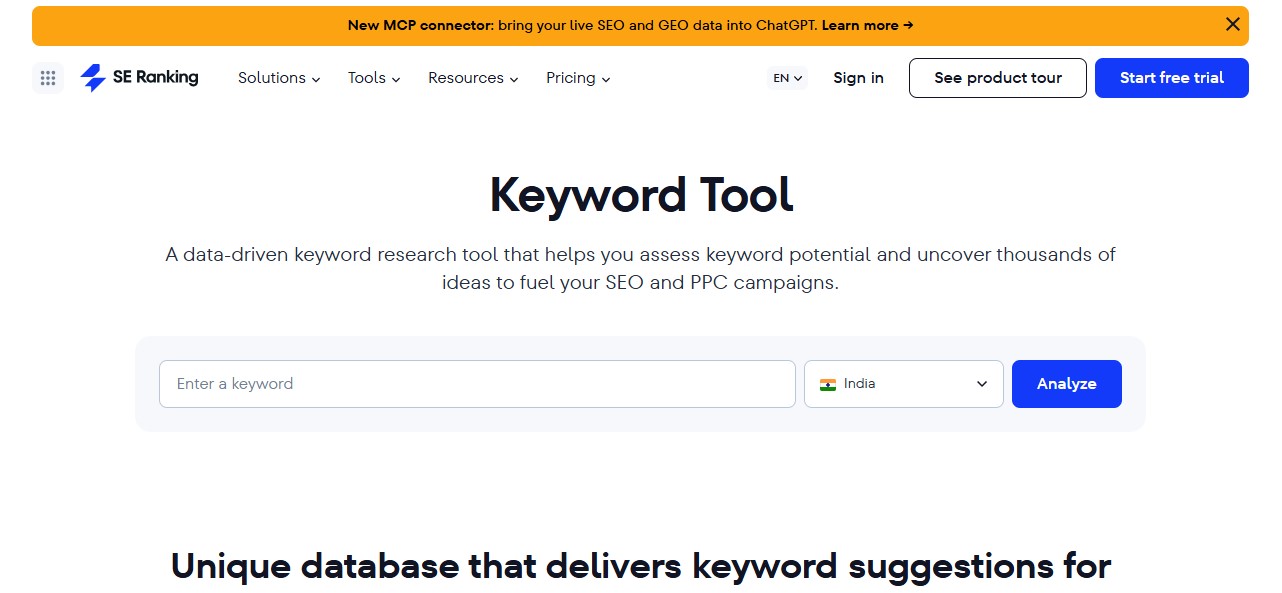
Image Source: SE Ranking API
SE Ranking API offers a keyword research tool API built for agencies and mid-market SEO teams. The platform integrates keyword research, competitor analysis, rank tracking, and technical audits into a single unified interface.
Key Features:
- Keyword volume and difficulty scores
- CPC and search intent classification
- Related keywords and long-tail suggestions
- Competitor keyword analysis
- Rank tracking integration
- SERP feature tracking
- Seasonal trend data
- URL-level keyword analysis
- Local search keyword data
- Multiple language support
You can start using their API with a $50 minimum deposit. That is awesome because they offer a pay-as-you-go pricing model! Custom enterprise plans accommodate unlimited requests. No setup fees. They offer a 14-day free trial with 100,000 credits.
Best For:
- Agencies managing 10-100 client accounts who need balanced pricing and solid keyword suggestion API capabilities
- Perfect for SEO keywords API needs without enterprise costs
- Teams building internal tools want reliable API keyword research endpoints
Pros:
- Exceptional value-to-feature ratio
- Fast onboarding and clear documentation
- Responsive support team responding within hours
- Low per-request costs at scale
- White-label options for agencies
- Real-time data updates
- Integrates with major CMS platforms
Cons:
- Smaller keyword database than Ahrefs or Semrush
- Limited historical data beyond 12 months
2. DataForSEO API
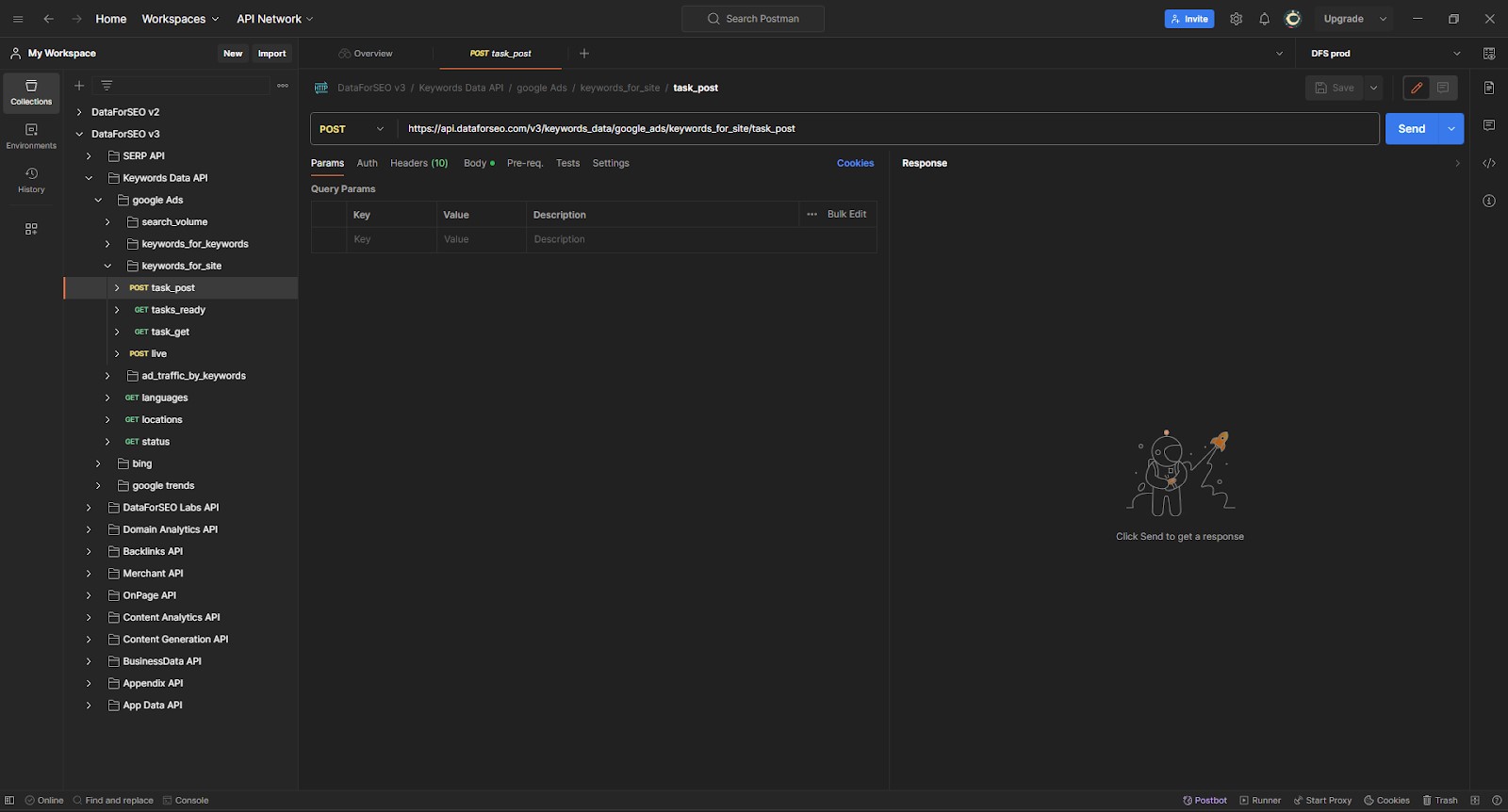
Image Source: DataForSEO API
DataForSEO built its reputation on handling massive keyword-analysis API workloads. This keyword tools API processes queries across 200+ locations and 100+ languages without breaking a sweat. The infrastructure scales to millions of requests monthly.
Key Features:
- Keyword volume, difficulty, and intent
- CPC and competition metrics
- Competitor SERP analysis
- Keyword trend forecasting
- Search suggestions (Google, Bing, Amazon, YouTube)
- Domain keywords extraction
- SERP feature identification
- Site audit data
- Rank tracking
- Duplicate keyword filtering
DataForSEO charges $0.01 per API call, making it transparent and scalable. A basic plan starts at $50/month. Enterprise accounts often negotiate volume discounts. The free tier offers 100 daily requests to test functionality. No contracts required.
Best For:
- High-volume operations needing to process 100,000+ keywords monthly
- Developers building custom SEO tools
- Companies running automated keyword research across massive databases
- SEO keyword API implementations at enterprise scale
Pros:
- Linear, transparent per-call pricing
- Handles massive batch requests effortlessly
- Exceptional uptime record (99.9% SLA)
- Fastest API response times in the industry
- Excellent developer documentation
- Custom data freshness options
- Sandbox environment for testing
Cons:
- Small per-call costs add up with experimental queries
- Minimal UI dashboard compared to competitors
- Learning curve for REST API integration
- No built-in competitor tracking dashboard
3. Moz API
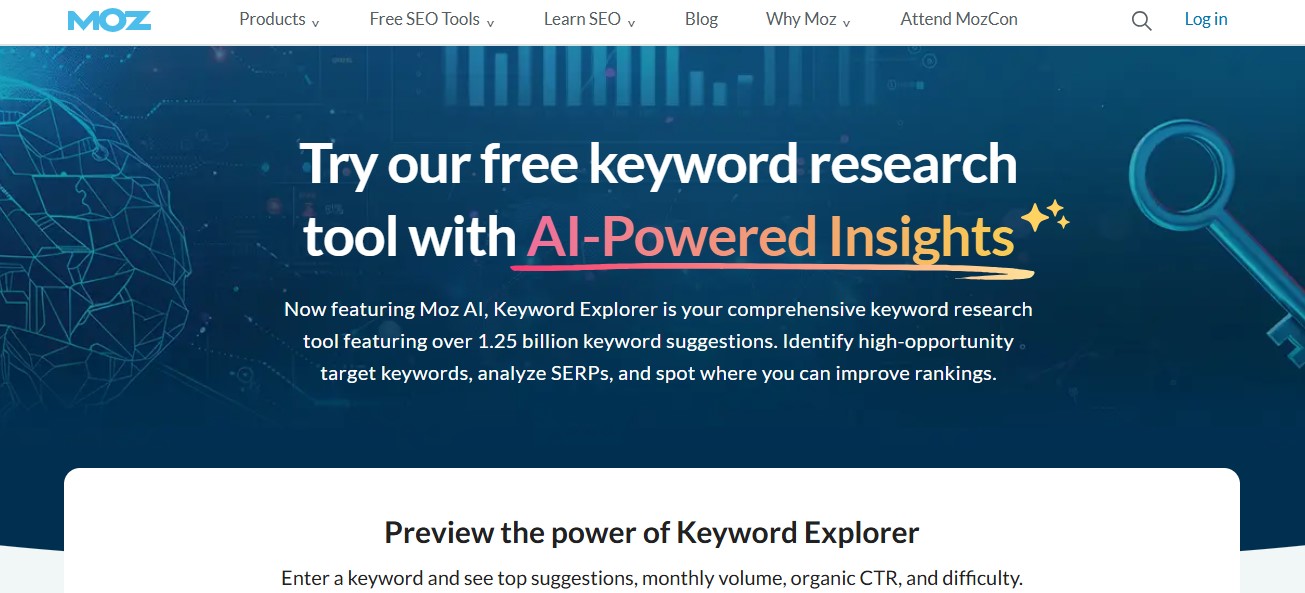
Image Source: Moz API
Moz API combines keyword research API access with industry-leading link and domain authority metrics. This is where keyword data API intersects with link intelligence.
Key Features:
- Keyword volume and difficulty
- Domain authority (DA) and page authority (PA)
- Link data and backlink analysis
- Keyword SERP features
- Spam score analysis
- Search volume trends
- Related keywords
- Keyword difficulty benchmarking
- Local search data
- Mobile SERP tracking
Enterprise pricing requires quotes. They offer a 30-day free trial. Overage charges apply at $0.15 per call beyond limits.
Best For:
- Teams valuing link data alongside keyword research
- Agencies needing the best keyword research API solutions that include authority metrics
- Anyone building a comprehensive competitive analysis using the SEO keywords API combined with backlink profiles
Pros:
- Authoritative link data unavailable elsewhere
- Respected domain authority metrics
- Strong historical data (10+ years)
- Solid integration with other SEO platforms
- Good technical documentation
- Reliable uptime
Cons:
- Expensive compared to alternatives
- The keyword database is smaller than DataForSEO
- Higher minimum commitment
- API response times slower than competitors
- Limited customization options
4. SpyFu API
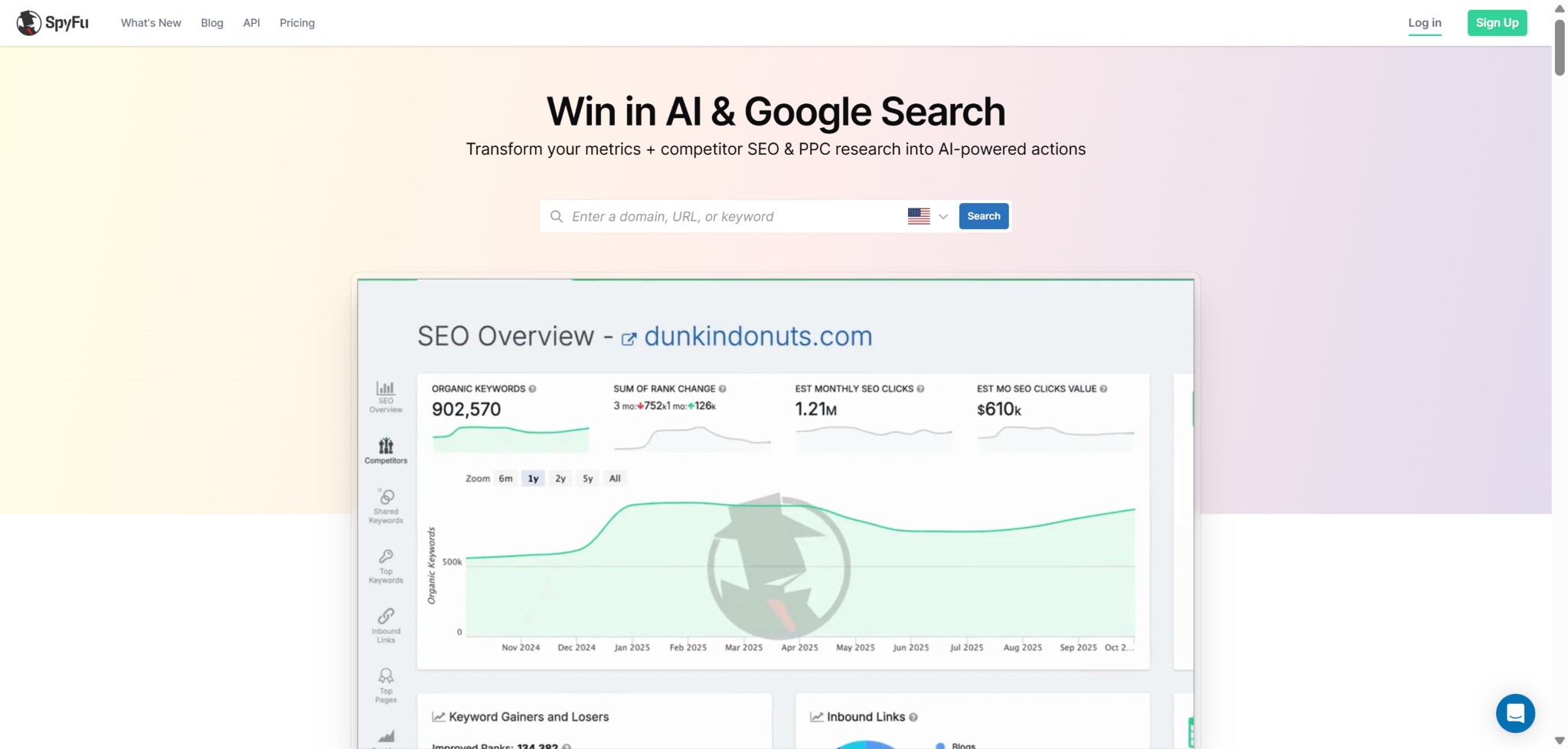
Image Source: SpyFu API
SpyFu specializes in keyword suggestion API data pulled from actual PPC campaigns. This keyword research tool API uniquely shows real advertiser spending and conversion data you would not find elsewhere.
Key Features:
- Paid search keywords with actual bids
- Organic keyword rankings for competitors
- Keyword profitability estimates
- Ad copy history and performance
- Landing page analysis
- Monthly search trend data
- Competitor budget estimates
- Related keywords from PPC data
- Keyword difficulty scores
- SERP positioning data
Enterprise contracts handle unlimited volume. API customers see per-request rates drop significantly at scale. The free tier provides a limited number of daily searches.
Best For:
- PPC managers and paid search specialists needing keyword analysis API that tracks actual campaign data
- Agencies doing competitive analysis on ad spend
- Marketing teams understand keyword profitability through real advertiser behavior
Pros:
- Unique PPC keyword spend data
- Accurate bid estimates from live campaigns
- Historical campaign tracking
- Excellent for paid search strategy
- Competitive intelligence focus
- Good value pricing
Cons:
- Smaller organic keyword database
- PPC data may not matter for content-only strategies
- Less technical SEO functionality
- Slower API response times than DataForSEO
- Limited international data
5. Keywordtool API
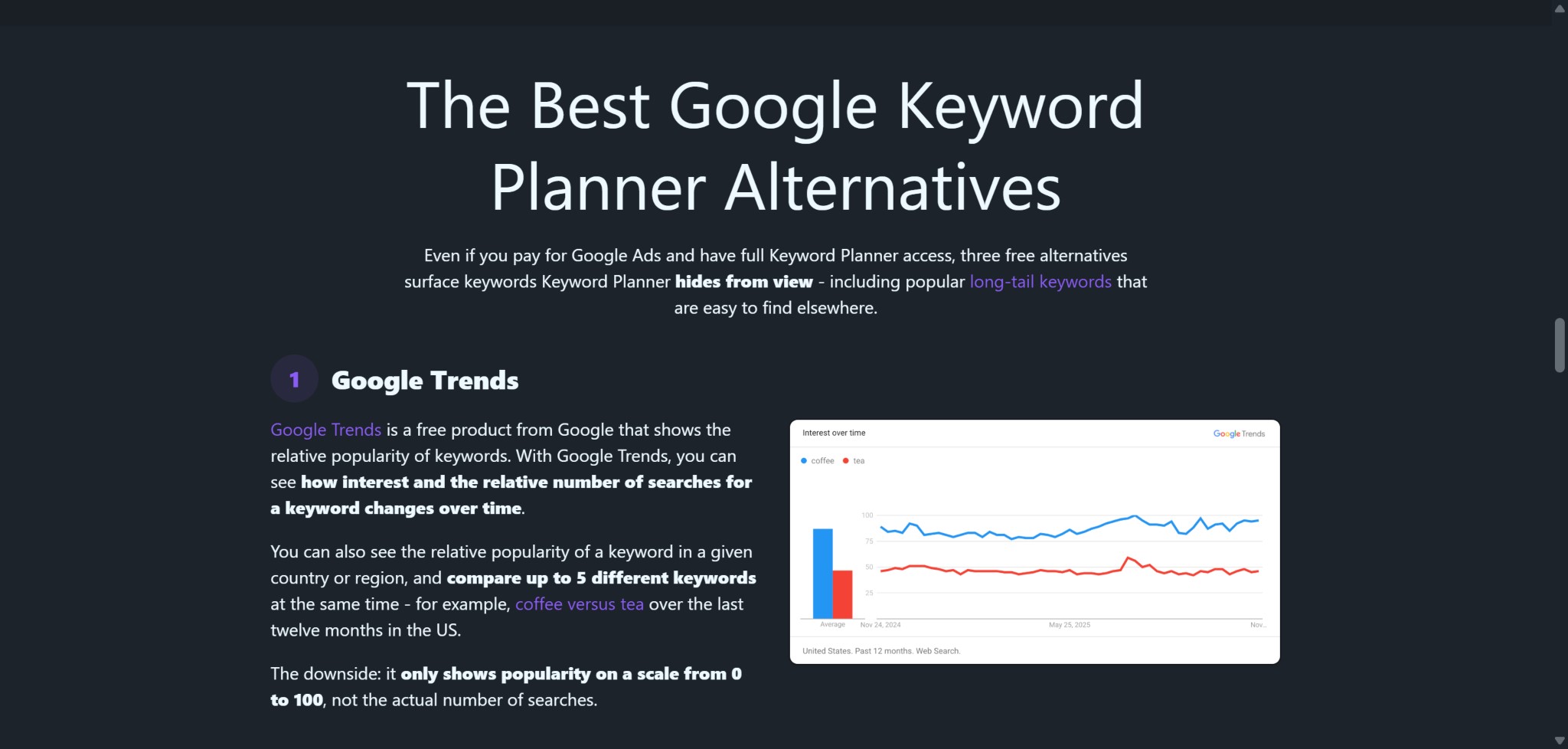
Image Source: Keywordtool API
Keywordtool API generates keyword suggestions from Google Autocomplete, Google Ads, and other search engines. This keyword suggestion tool API delivers long-tail variations and uncommon keywords most competitors miss.
Key Features:
- Keyword suggestions from Google, Bing, YouTube, and Amazon
- Search volume and CPC estimates
- Keyword difficulty scores
- Related and trending keywords
- Google Autocomplete scraping at scale
- Multi-language support (100+ languages)
- Keyword clustering
- Intent classification
- Long-tail keyword extraction
- SERP position tracking
Keywordtool operates on flexible credits. Enterprise plans offer unlimited credits and dedicated support. One credit = one keyword suggestion. The free tier allows 100 daily searches.
Best For:
- Content creators and writers needing long-tail keyword API suggestions
- Agencies serving international markets requiring keyword research tools API in 100+ languages
- Teams focused on content strategy over competitive metrics.
Pros:
- Cheapest option for basic keyword suggestions
- Exceptional long-tail keyword discovery
- Strong international language coverage
- Fast suggestion generation
- Good documentation
- Reliable uptime
- No setup or activation fees
Cons:
- No backlink or authority data
- Limited difficulty in scoring accuracy
- Smaller search volume database
- No competitor tracking
- Minimal SERP feature data
- Cheaper typically means fewer features
6. Keywords Everywhere API
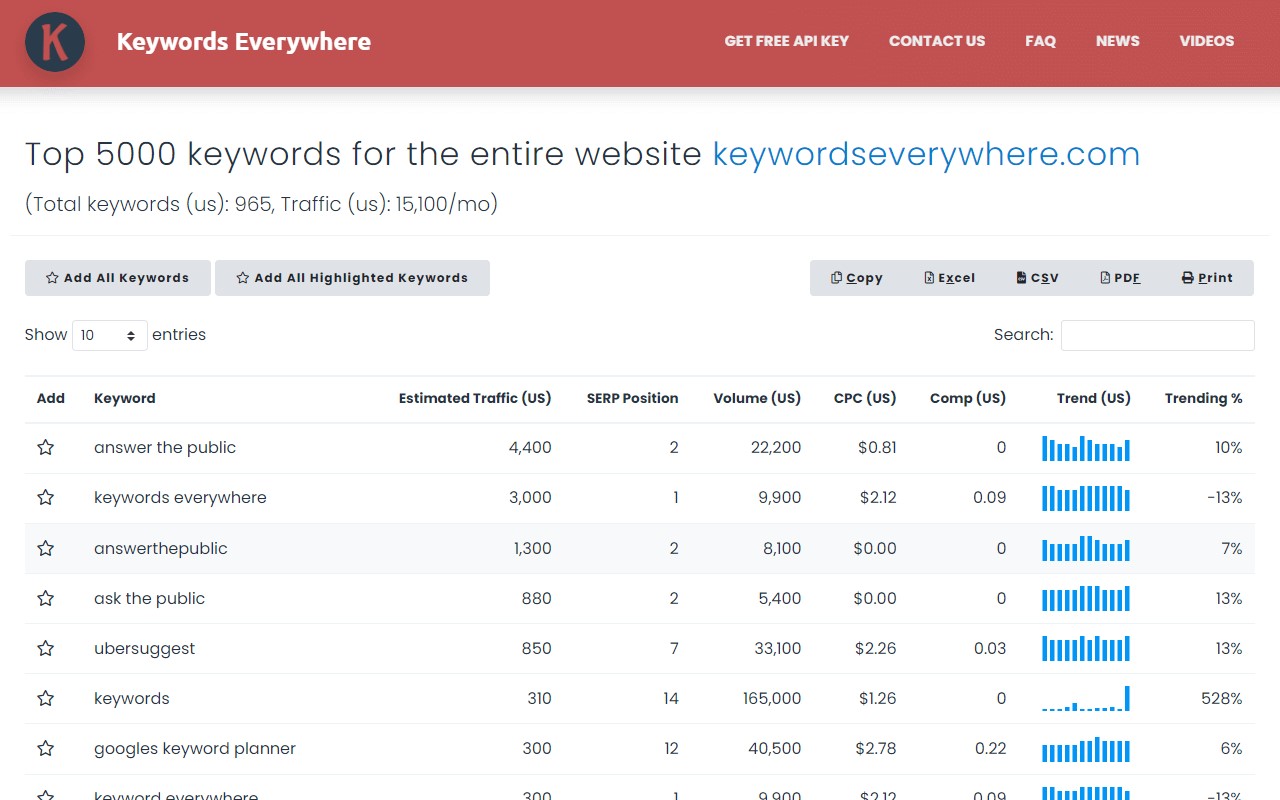
Image Source: Keywords Everywhere API
Keywords Everywhere combines a browser extension with access to an SEO keyword API backend. This lightweight keyword tools API fits best for individual consultants and small teams doing quick research.
Key Features:
- Keyword volume and CPC in search results
- Related keywords displayed in real-time
- Search trends and seasonality
- Competitor keyword analysis
- SERP feature tracking
- Browser-based keyword capture
- CSV export capabilities
- Integration with Google Sheets
- Multiple language support
- Historical data access
Keywords Everywhere operates on a credit system. No contracts. API access is available separately from the extension at different pricing.
Best For:
- Solo consultants and small agencies needing affordable best keyword research tool API solutions
- Browser-based researchers wanting quick lookups
- Teams wanting to integrate keyword data into Google Sheets workflows
- Budget-conscious startups.
Pros:
- Extremely affordable
- A browser extension makes daily research faster
- Google Sheets integration saves time
- Lightweight and fast
- Great for freelancers
- No commitment required
- Simple setup
Cons:
- Less comprehensive than enterprise platforms
- Lower accuracy on search volume
- Limited competitive analysis
- No bulk import features
- Smaller keyword database
- Basic API documentation
- Limited customer support
7. Serpstat API
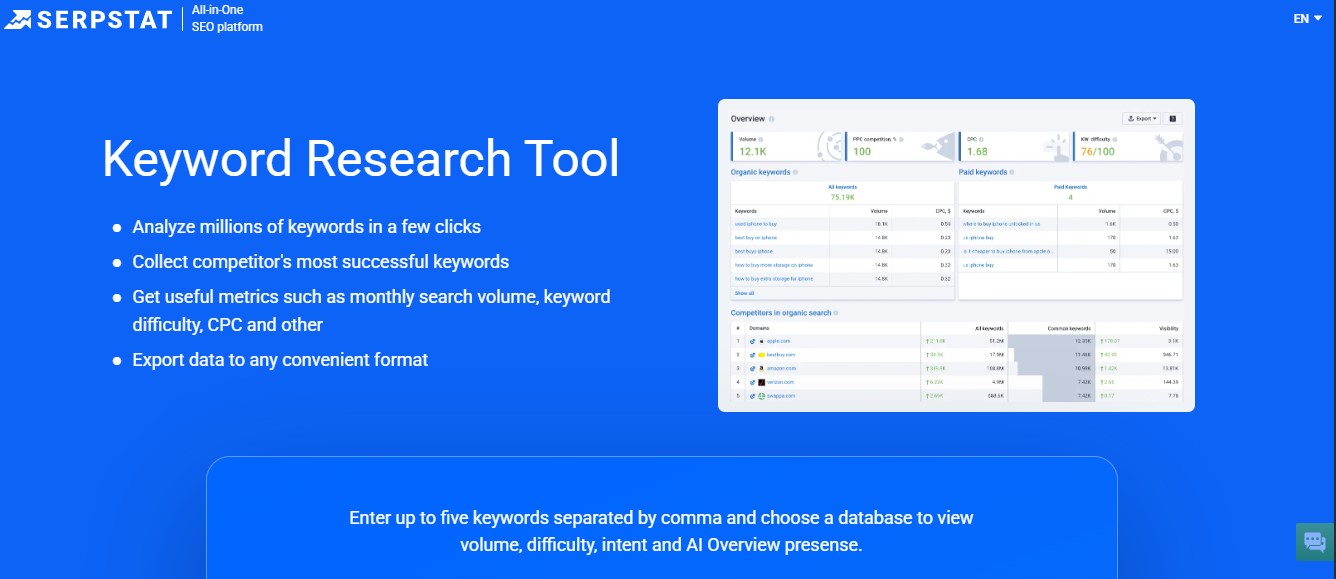
Image Source: Serpstat API
Serpstat combines keyword research with technical SEO audits and competitor analysis. This keyword research API platform focuses on giving complete site visibility rather than just keywords.
Key Features:
- Keyword research with difficulty and search volume
- Site audit and technical SEO checking
- Backlink analysis and link building
- Competitor site analysis
- Rank tracking
- SERP feature tracking
- Keyword intent classification
- Estimated traffic calculations
- Related and similar keywords
- Seasonal trend data
API access is available at all tiers. Enterprise pricing requires quotes but scales to unlimited usage. 14-day free trial included.
Best For:
- In-house SEO teams needing integrated site audits with SEO keyword research API capabilities
- Agencies wanting one platform covering technical and keyword research
- Teams prioritizing technical SEO and competitive analysis together.
Pros:
- Integrated technical audit with keyword data
- Very affordable compared to competitors
- Good backlink functionality
- Responsive support team
- Clean UI and documentation
- Reliable uptime
- White-label options
Cons:
- The keyword database is smaller than DataForSEO
- Less detailed SERP data
- Slower API response times
- Limited historical data
- Weaker competitor analysis vs. SpyFu
8. Ahrefs API
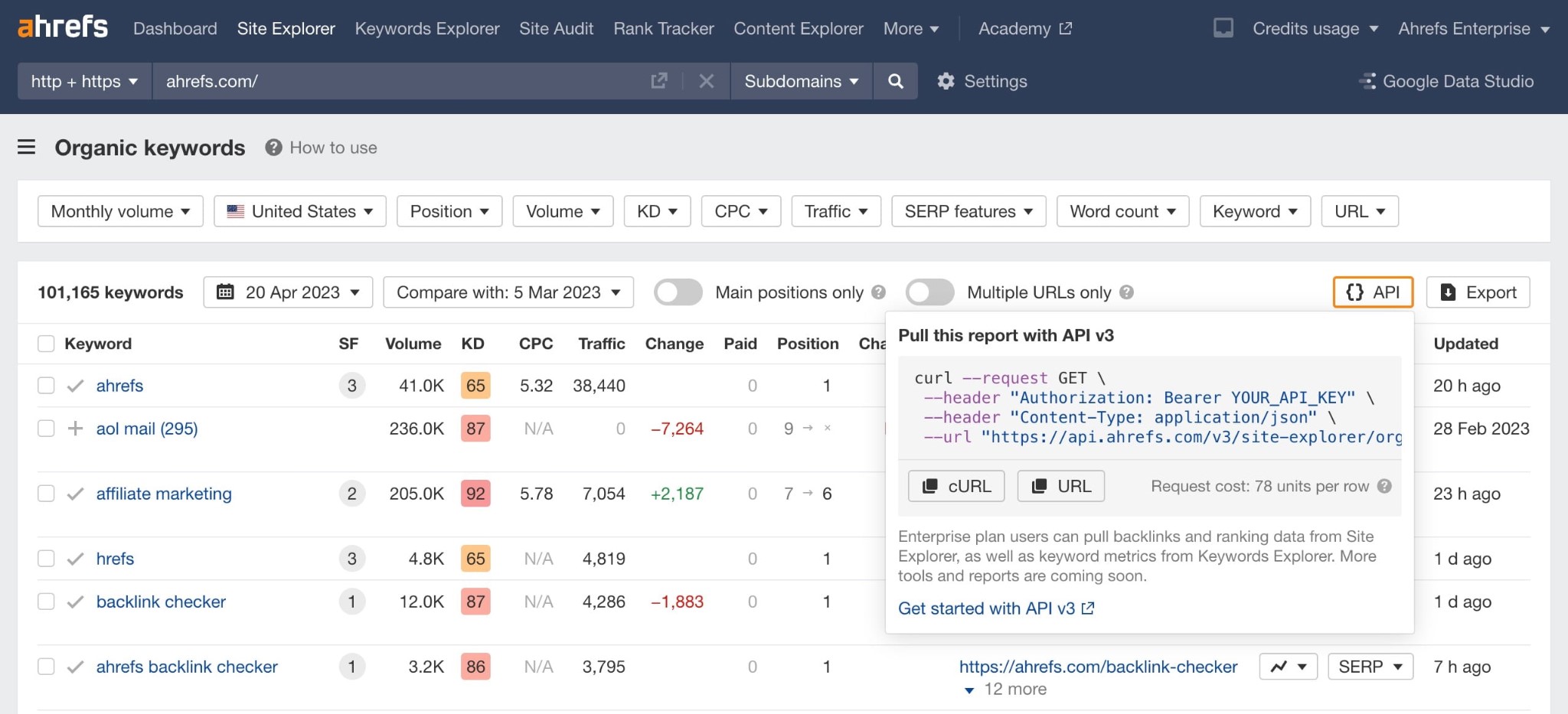
Image Source: Ahrefs API
Ahrefs API provides unmatched backlink data and includes keyword data as well. This is the choice when link intelligence matters most alongside keyword research.
Key Features:
- Comprehensive backlink and referring domain data
- Domain and URL authority metrics
- Anchor text analysis
- Outbound link mapping
- Keyword research and volume
- SERP feature tracking
- Keyword difficulty scores
- Organic traffic estimates
- Search intent classification
- Historical backlink changes
Enterprise accounts exceed 500,000 calls monthly. Per-call costs drop with higher tiers.
Best For:
- Link builders and technical SEO specialists who need a keyword analysis API alongside backlink data
- Enterprises budgeting premium for unmatched link intelligence
- Agencies building comprehensive competitive reports.
Pros:
- Superior backlink database
- Industry-leading crawl data
- Excellent historical tracking
- Robust API documentation
- Fast response times
- Reliable infrastructure
- Best-in-class site explorer
Cons:
- Most expensive option
- Premium pricing deters small teams
- API documentation requires expertise
- The keyword database is less comprehensive
- Steep learning curve
- High minimum commitments
9. Semrush API
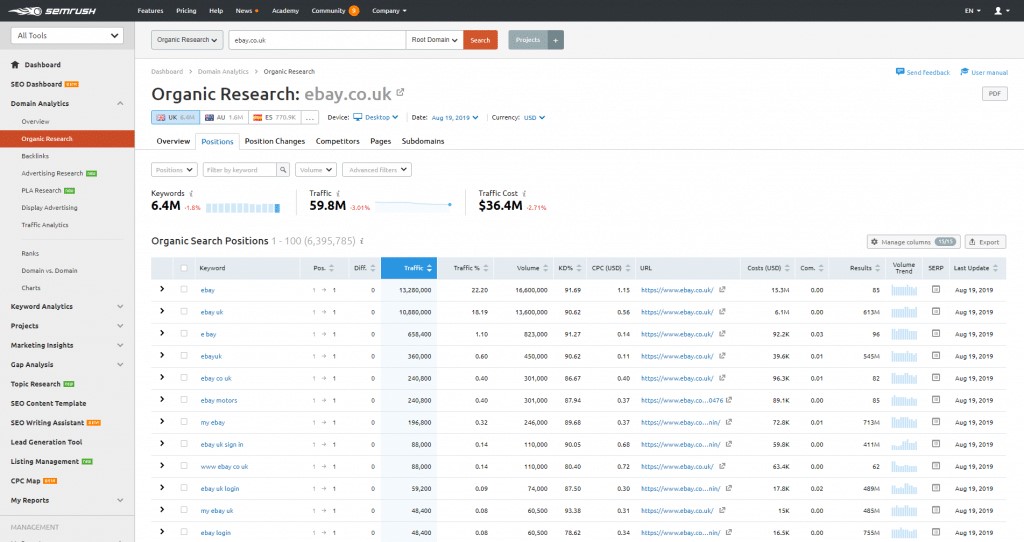
Image Source: Semrush API
The Semrush API offers the broadest feature set of any leading keyword research API platform. This is the do-everything keyword research tool API for enterprises.
Key Features:
- Keyword research with organic and paid data
- Competitive domain analysis
- Backlink data and link intelligence
- PPC keyword monitoring
- Content gap analysis
- Rank tracking
- SERP feature data
- Local search keywords
- Mobile search tracking
- Traffic estimation
Semrush API starts at $120/month and scales to custom enterprise pricing.
Best For:
- Large agencies and enterprises needing the broadest SEO keywords API feature set
- Teams running complex workflows combining multiple SEO functions
- Organizations comfortable with premium pricing for everything-in-one
Pros:
- Broadest feature coverage of any platform
- Excellent documentation and support
- Strong API infrastructure
- Competitive and PPC data combined
- Reliable historical data
- Good training resources
- Enterprise SLA options
Cons:
- Highest pricing for most use cases
- Feature overload for simple needs
- Steeper setup complexity
- API rate limits can hit quickly
- Requires expertise to use effectively
- Less transparent per-request pricing
10. Semust API
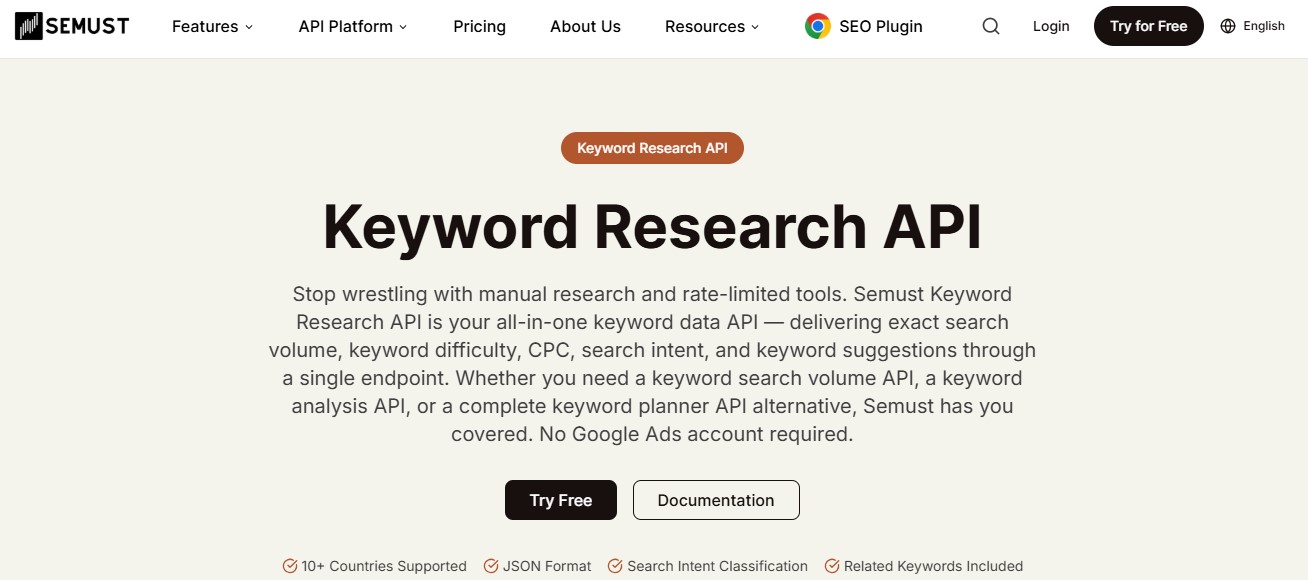
Image Source: Semust API
Semust provides a clean, straightforward keyword-suggestion API for smaller operations. This API keyword tool strips away enterprise complexity to focus on core keyword functionality.
Key Features:
- Keyword search volume and difficulty
- CPC and competition metrics
- Related and suggested keywords
- Seasonal trend analysis
- Mobile vs. desktop volume split
- Keyword intent classification
- SERP position tracking
- CSV export
- Multiple language support
- Basic competitor keyword analysis
Semust operates a simple monthly model starting at $29/month for 5,000 searches. The mid-tier ($69/month) plan offers 25,000 searches. The Premium plan ($129/month) includes 100,000 searches. No setup fees. The free tier allows 20 daily searches.
Best For:
- Freelancers and very small teams avoiding expensive platforms
- Budget-conscious startups needing solid best keyword data API fundamentals
- Solo consultants doing basic keyword research without enterprise complexity
Pros:
- Most affordable overall
- Simple, clean interface
- Fast setup and onboarding
- Solid for basic needs
- Good documentation
- Fair pricing transparency
- No hidden fees
Cons:
- Limited keyword database
- Weak competitor analysis
- No backlink or authority data
- Minimal technical SEO features
- Small database of SERP features
- Limited support resources
- Smaller user community
Final Thoughts
The best keyword research APIs for your team depend on three factors: your budget, your workflow complexity, and the specific data you need most. So:
- SE Ranking API takes the value crown for mid-market agencies.
- DataForSEO API wins for massive-scale operations processing 100,000+ keywords monthly.
- Ahrefs API delivers unmatched link data when backlinks matter.
- The Semrush API provides everything enterprises need under one roof.
- SpyFu API specializes in PPC keyword intelligence.
- Moz API remains solid for balanced link and keyword coverage.
- Keywords Everywhere or Semust keep costs low while delivering core functionality for content teams and freelancers.
- Keywordtool API excels at long-tail discovery across languages.
- Serpstat offers integrated technical SEO, keyword tools, and API access.
The ideal keyword research API should deliver accurate data, reliable performance, transparent pricing, and seamless integration. Testing multiple platforms through free trials or limited plans remains the most effective way to identify the right solution for specific SEO workflows and business objectives.
Frequently Asked Questions (FAQs)
Q1. Which keyword research API is best for beginners?
Answer: Keywords Everywhere API and Semust API both offer the friendliest onboarding. Keywords Everywhere’s browser extension means you start researching immediately without writing code. Semust API has simple documentation and lower costs. Both let you test functionality with free tiers before paying anything. For someone coding their first integration, DataForSEO wins because its documentation explains concepts alongside code examples.
Q2. Can I use multiple keyword research APIs together?
Answer: Absolutely. Many agencies combine SE Ranking data with DataForSEO for volume accuracy, then add Ahrefs for backlink context. A keyword API from one platform and a bulk keyword analysis API from another often complement workflows perfectly. The main consideration is consolidating data within your system, since each platform uses different formatting. Most modern tools can pipe multiple APIs into a central database, and then you own the merged dataset.
Q3. How often do these platforms update keyword data?
Answer: DataForSEO updates daily and offers hourly refresh options for a premium fee. SE Ranking and Moz update weekly for most metrics. Semrush updates its competitive data daily, but keyword volume refreshes weekly. SpyFu updates PPC data in near real time by scraping live ad data. For the most up-to-date SEO keyword research API data, ask your chosen platform about the refresh frequency of specific metrics before committing.
Recommended Articles
This guide to the best keyword research APIs highlights the leading tools for SEO automation, keyword analysis, and competitive research. Explore these recommended articles for more insights, strategies, and resources to help optimize your keyword research and digital marketing efforts.

