


What is Negative Gearing?
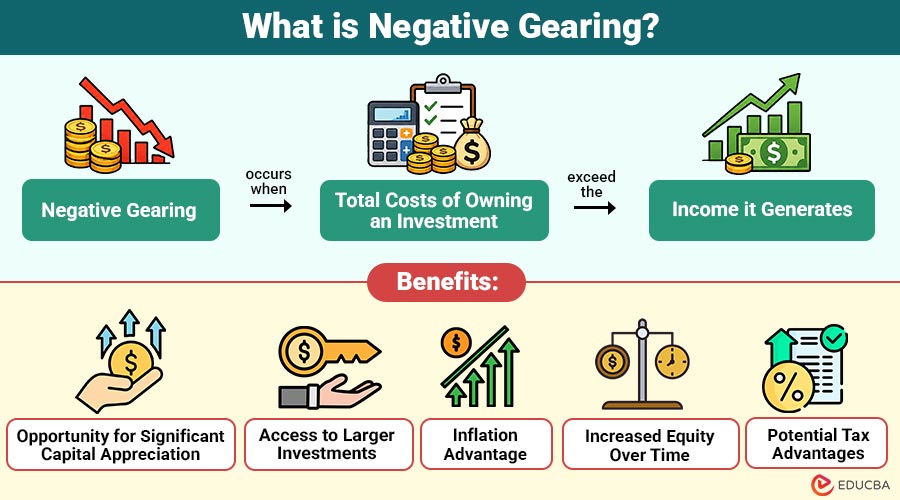
Negative gearing occurs when total costs of owning an investment exceed the income it generates.
In simple terms:
Investment Income < Investment Expenses
As a result, investor incurs a financial loss during the ownership period.
The expenses that may exceed income include:
- Interest payments on loans
- Property maintenance costs
- Insurance premiums
- Property management fees
- Repairs and upkeep expenses
- Depreciation allowances
- Other investment-related expenses
Investors willingly accept these short-term losses because they expect the investment to increase in value over time, allowing them to earn significant capital gains.
Table of Contents:
- Meaning
- Working
- Why do Investors Use Negative Gearing?
- Difference
- Benefits
- Risks
- Key Factors
- Example
Key Takeaways:
- Negative gearing occurs when investment expenses exceed income, creating ongoing short-term financial losses.
- Investors accept losses in the expectation of future capital appreciation, wealth accumulation, and higher returns.
- Borrowed funds enable larger investments but increase exposure to financial and market risks.
- Success depends on cash flow management, growth potential, risk tolerance, and timing.
How Does Negative Gearing Work?
Negative gearing generally follows a straightforward process:
Step 1: Borrow Funds
The investor obtains financing through a mortgage or investment loan.
Step 2: Purchase an Income-Producing Asset
The borrowed funds are used to acquire asset such as the following:
- Residential property
- Commercial property
- Dividend-paying shares
- Investment funds
Step 3: Generate Income
The asset produces income through:
- Rental payments
- Dividends
- Interest earnings
Step 4: Expenses Exceed Income
The ongoing ownership costs exceed the income received, creating a loss.
Step 5: Expect Long-Term Growth
The investor holds the asset, expecting the following:
- Capital appreciation
- Higher future income
- Potential tax benefits
If the asset’s value rises substantially, the eventual gain may outweigh the accumulated losses.
Why Do Investors Use Negative Gearing?
Many investors intentionally adopt negative gearing strategies because they believe the long-term benefits can exceed the short-term costs.
1. Potential Capital Growth
Investors accept temporary losses, expecting asset values to rise significantly over time and generate substantial future profits.
2. Leveraging Borrowed Money
Borrowing enables investors to acquire larger assets sooner, potentially increasing returns when investment values appreciate consistently.
3. Portfolio Expansion
Negative gearing helps investors build diversified portfolios by acquiring multiple assets and benefiting from long-term growth.
4. Long-Term Wealth Building
Investors focus on accumulating wealth through asset appreciation, debt repayment, and steadily increasing ownership equity.
Difference Between Negative Gearing and Positive Gearing
Understanding difference between negative and positive gearing helps investors evaluate investment opportunities.
| Factor | Negative Gearing | Positive Gearing |
| Income vs Expenses | Expenses exceed income | Income exceeds expenses |
| Cash Flow | Negative | Positive |
| Monthly Contribution | Investor adds funds | Investment generates surplus cash |
| Investment Focus | Capital growth | Income generation |
| Risk Level | Higher | Lower |
| Financial Pressure | Greater | Less |
Benefits of Negative Gearing
When implemented carefully, it can offer several benefits.
1. Opportunity for Significant Capital Appreciation
Asset value growth may generate gains that eventually exceed accumulated investment losses.
2. Access to Larger Investments
Borrowing enables investors to acquire higher-value assets that may otherwise remain financially inaccessible.
3. Inflation Advantage
Rising property values and income can improve profitability while loan balances remain relatively stable.
4. Increased Equity Over Time
Loan reduction and asset appreciation steadily increase ownership equity and future investment opportunities.
5. Potential Tax Advantages
Investment losses may reduce taxable income, depending on applicable tax laws and regulations.
Risks of Negative Gearing
While negative gearing can be profitable, it also involves substantial risks.
1. Ongoing Cash Flow Losses
Investors must fund ongoing shortfalls when investment income is insufficient to cover ownership and financing costs.
2. Interest Rate Risk
Rising interest rates increase the cost of borrowing, which could reduce profits and increase financial strain.
3. Market Declines
Falling asset values can create capital losses, reduce equity, and limit profitable exit opportunities.
4. Vacancy Risk
Extended vacancy periods reduce rental income and significantly increase the investor’s out-of-pocket expenses.
5. Economic Uncertainty
Economic changes may weaken demand, lower asset values, and negatively affect investment performance.
Key Factors to Evaluate Before Using Negative Gearing
Before adopting a negative gearing strategy, investors should assess:
1. Cash Flow Capacity
Ensure you can comfortably cover ongoing investment losses without creating significant financial strain.
2. Growth Potential
Assess whether the asset has strong prospects for long-term value appreciation and growth.
3. Loan Structure
Review interest rates, repayment terms, and borrowing conditions to ensure affordability over time.
4. Risk Tolerance
Determine whether you can effectively handle market fluctuations, temporary losses, and investment uncertainty.
5. Investment Horizon
Allow sufficient time for asset appreciation and the strategy’s benefits to potentially materialize.
6. Exit Strategy
To properly realize prospective gains, plan how and when to sell the investment.
Example of Negative Gearing
Suppose an investor purchases rental property worth ₹50 lakh using a loan.
- Annual rental income = ₹2,40,000
- Annual loan interest = ₹3,00,000
- Maintenance, insurance, and other expenses = ₹60,000
Total Annual Expenses = ₹3,60,000
Annual Rental Income = ₹2,40,000
Net Loss = ₹1,20,000
Since the property’s expenses exceed the income it generates, the investment is negatively geared. The investor accepts the ₹1,20,000 annual loss because they expect the property’s value to increase significantly over time, potentially generating a larger capital gain when sold.
Final Thoughts
Negative gearing occurs when investment expenses exceed the income generated, resulting in short-term losses. Investors accept these losses, expecting future capital growth and potential tax benefits. While the strategy can build long-term wealth, it carries risks such as cash-flow pressure, interest-rate increases, and market declines, requiring careful financial planning.
Frequently Asked Questions (FAQs)
Q1. Why do investors choose negative gearing?
Answer: Investors use negative gearing because they expect future capital gains and long-term asset appreciation to outweigh current losses.
Q2. Is negative gearing only used for property investments?
Answer: No. While commonly associated with real estate, negative gearing can also apply to shares, managed funds, and other income-producing investments.
Q3. How does negative gearing affect cash flow?
Answer: It creates negative cash flow because investors must contribute additional funds to cover shortfall between income and expenses.
Q4. How can investors evaluate whether negative gearing is worthwhile?
Answer: They should assess cash flow capacity, growth prospects, financing costs, risk tolerance, and expected holding period.
Recommended Articles
We hope that this EDUCBA information on “Negative Gearing” was beneficial to you. You can view EDUCBA’s recommended articles for more information.


