


What is an Exculpatory Clause?
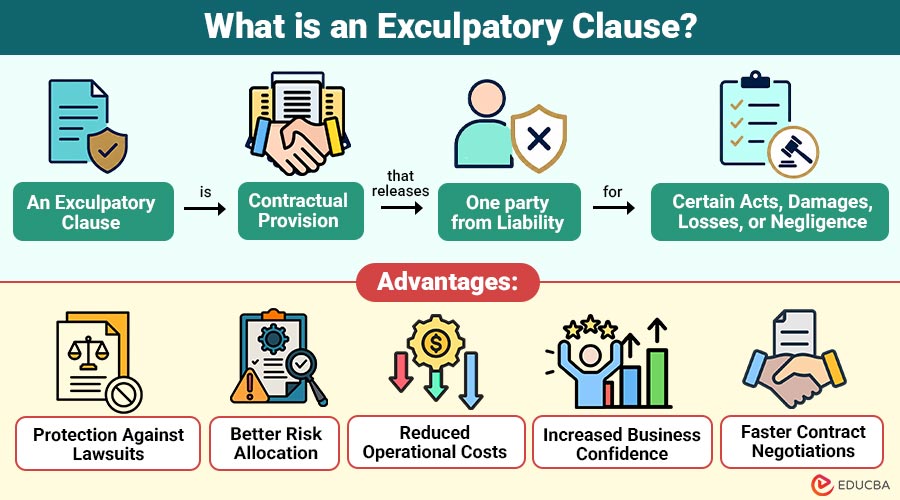
An exculpatory clause is contractual provision that releases one party from liability for certain acts, damages, losses, or negligence. It limits or eliminates a party’s legal liability when specific events cause harm or financial loss.
In simple terms, an exculpatory clause states that one party agrees not to hold the other party legally responsible for particular risks associated with the agreement.
For example, when joining a gym, participating in adventure sports, or renting equipment, individuals are often required to sign agreements containing exculpatory clauses. These clauses acknowledge the risks involved and limit the provider’s liability for injuries or damages arising from ordinary negligence.
Table of Contents:
- Meaning
- Purpose
- Working
- Common Elements
- Advantages
- Disadvantages
- Legal Enforceability
- Examples
- Difference
- Best Practices
Key Takeaways:
- Exculpatory clauses limit liability by allocating specific contractual risks between the parties involved.
- Courts enforce clauses when language remains clear, fair, voluntary, and lawful.
- Businesses use exculpatory clauses to reduce lawsuits, costs, and liability exposure.
- Clauses generally cannot protect against fraud, reckless conduct, or intentional misconduct.
Purpose of an Exculpatory Clause
The primary purpose of an exculpatory clause is to allocate risk between parties involved in a contract.
1. Limiting Legal Liability
Businesses and service providers use exculpatory clauses to reduce exposure to lawsuits and legal claims resulting from accidents or unforeseen events.
2. Risk Management
The clause clearly identifies which party assumes responsibility for specific risks, reducing uncertainty and potential disputes.
3. Cost Reduction
By limiting liability, organizations may lower legal expenses, insurance costs, and potential compensation claims.
4. Encouraging Business Activities
Many industries involve inherent risks. Exculpatory clauses enable businesses to offer services without facing excessive legal exposure.
5. Clarifying Responsibilities
These clauses help parties understand the extent of their obligations and liabilities before entering into an agreement.
How Does an Exculpatory Clause Work?
An exculpatory clause functions as a contractual agreement in which one party voluntarily accepts certain risks and agrees not to hold the other party liable for specified damages or injuries.
The process typically works as follows:
- The clause is included in a contract or agreement.
- The parties review and accept the terms.
- One party acknowledges the potential risks involved.
- If a covered incident occurs, the protected party may be shielded from liability.
- Courts evaluate the clause to determine whether it is valid and enforceable.
The effectiveness of an exculpatory clause depends on its wording, fairness, and compliance with applicable laws.
Common Elements of an Exculpatory Clause
A well-drafted exculpatory clause generally contains several common elements:
1. Clear Language
The clause should use simple, straightforward wording so all parties easily understand their rights and obligations.
2. Identification of Risks
It should clearly explain specific risks, losses, or liabilities that the party agrees to waive.
3. Voluntary Consent
All parties must accept the clause willingly, without pressure, coercion, misrepresentation, or unfair influence.
4. Scope of Liability Limitation
The clause should clearly define which liabilities are limited and the extent of protection provided.
5. Compliance with Law
The provision must comply with applicable laws and public policy to remain legally valid and enforceable.
Advantages of Exculpatory Clauses
The following are some key advantages of exculpatory clauses that contribute to effective risk management and contractual clarity.
1. Protection Against Lawsuits
Exculpatory clauses help reduce legal claims arising from ordinary negligence and routine business activities.
2. Better Risk Allocation
They clearly assign responsibility for known risks to the appropriate party involved in agreements.
3. Reduced Operational Costs
Businesses can lower litigation expenses, legal fees, and insurance costs through liability limitations.
4. Increased Business Confidence
Organizations operate with greater confidence by reducing uncertainty related to potential legal liabilities.
5. Faster Contract Negotiations
Clear liability terms simplify discussions and help parties reach agreements more efficiently and quickly.
Disadvantages of Exculpatory Clauses
While exculpatory clauses can provide valuable liability protection, they also present certain legal, ethical, and practical challenges. Below are some of the key disadvantages:
1. Limited Consumer Protection
Customers may have fewer options to seek compensation when losses, damages, or injuries occur.
2. Potential Unfairness
Some clauses may favor one party excessively while transferring most risks to another party.
3. Legal Challenges
Courts may reject clauses that are unclear, unreasonable, or against established public policy.
4. Reputation Concerns
Excessive reliance on waivers may make businesses appear less responsible and customer-focused.
5. Jurisdictional Differences
The validity and enforceability of these clauses vary across different laws and jurisdictions.
Legal Enforceability
Not all exculpatory clauses are legally enforceable. Courts generally examine several factors before deciding whether a clause is valid.
1. Clarity of Language
The clause must clearly explain the waived rights and responsibilities and the extent of liability protection provided.
2. Voluntary Agreement
The party must willingly accept the clause after having an adequate opportunity to review it.
3. Equal Bargaining Power
Courts often examine whether both parties had reasonably balanced negotiating power during the formation of the agreement.
4. Public Policy Considerations
Clauses conflicting with public interests or legal duties may be considered invalid and unenforceable.
5. Intentional Misconduct
Most jurisdictions do not permit liability waivers for deliberate wrongful acts that cause harm to others.
6. Fraud
Exculpatory clauses generally cannot protect parties from liability arising from fraudulent acts or misrepresentation.
7. Reckless Behavior
Courts rarely enforce clauses that shield parties from liability arising from reckless or dangerous conduct.
Examples of Exculpatory Clauses
Below are some common examples of exculpatory clauses used in various agreements and activities to limit liability and allocate risk between parties.
1. Gym Membership Agreement
A fitness center may include a clause stating that members accept the risks associated with exercise and agree not to hold gym liable for injuries caused by ordinary negligence.
2. Adventure Sports Waiver
Participants in activities such as skydiving, rock climbing, or rafting may sign agreements releasing organizers from liability for certain accidents.
3. Equipment Rental Contract
A bicycle rental company may include a clause limiting responsibility for injuries sustained while using rented equipment.
4. Parking Facility Agreement
A parking operator may specify that it is not responsible for theft, damage, or loss of personal property left in vehicles.
Difference Between Exculpatory Clause and Indemnification Clause
The table below highlights the key differences between an exculpatory clause and an indemnification clause.
| Feature | Exculpatory Clause | Indemnification Clause |
| Purpose | Limits liability | Transfers financial responsibility |
| Focus | Prevents legal claims | Covers losses after claims occur |
| Protection | Shields a party from liability | Requires reimbursement for damages |
| Usage | Risk waiver | Compensation mechanism |
Best Practices for Drafting an Exculpatory Clause
To improve enforceability and fairness, organizations should follow several best practices.
1. Use Clear and Simple Language
Use straightforward wording that readers can easily understand without confusion or legal interpretation difficulties.
2. Be Specific
Clearly describe the risks, liabilities, and situations covered by the exculpatory clause.
3. Ensure Visibility
Place the clause prominently so parties can easily find, read, and understand it.
4. Avoid Overly Broad Language
Excessive liability waivers may appear unreasonable and increase the risk of court rejection.
5. Comply with Applicable Laws
Ensure the clause complies with applicable legal requirements and regulations in the relevant jurisdiction.
6. Obtain Legal Review
Professional legal review helps improve validity, enforceability, and compliance with applicable laws.
Final Thoughts
An exculpatory clause is contract provision that limits or removes liability for specific risks, damages, or injuries. Commonly used in business, rental, and service agreements, it helps allocate risk and reduce legal exposure. Its enforceability depends on factors such as clarity, fairness, legal compliance, and public policy considerations.
Frequently Asked Questions (FAQs)
Q1. Can an exculpatory clause protect against negligence?
Answer: In many jurisdictions, an exculpatory clause may protect a party from liability for ordinary negligence, but it generally cannot shield liability for gross negligence or intentional misconduct.
Q2. What types of contracts commonly include exculpatory clauses?
Answer: Exculpatory clauses are commonly found in gym memberships, recreational activity waivers, equipment rental agreements, parking contracts, and various service agreements.
Q3. Can consumers negotiate an exculpatory clause?
Answer: In some cases, consumers may negotiate contract terms, but standard-form agreements often provide limited opportunities for modification.
Q4. Do exculpatory clauses apply to personal injury claims?
Answer: They may apply to certain personal injury claims arising from ordinary negligence, but courts often scrutinize such clauses carefully before enforcement.
Recommended Articles
We hope that this EDUCBA information on “Exculpatory Clause” was beneficial to you. You can view EDUCBA’s recommended articles for more information.


