
What is Defalcation?
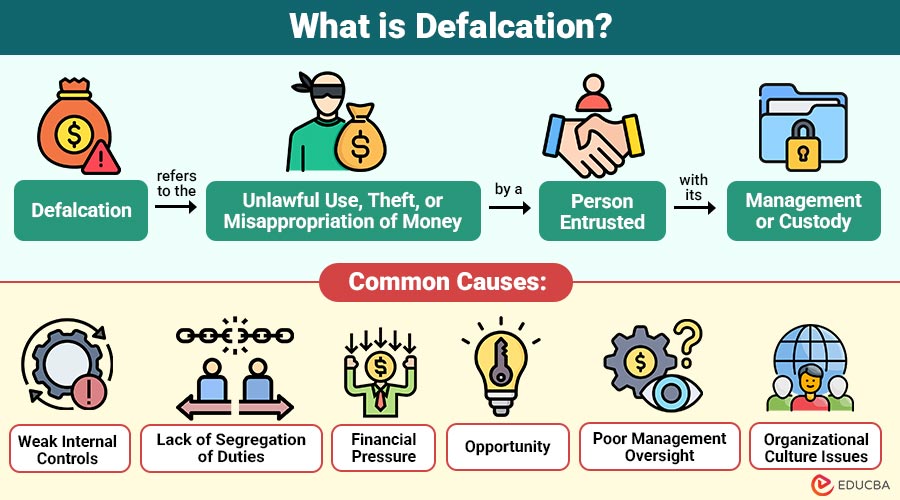
Defalcation refers to the unlawful use, theft, or misappropriation of money by a person entrusted with its management or custody. It typically occurs when an employee, accountant, cashier, financial manager, or other trusted individual diverts funds for personal gain.
Unlike simple theft, defalcation involves a breach of trust because the offender usually has authorized access to financial resources. The act often involves the manipulation of financial records to conceal wrongdoing.
For example, if an accounting employee transfers company funds into a personal bank account and alters financial statements to hide the transaction, it is considered defalcation.
Table of Contents:
- Meaning
- Importance
- Common Causes
- Types
- Signs
- Impact of Defalcation on Organizations
- Examples
- How to Prevent Defalcation?
Key Takeaways:
- Defalcation involves the misuse of entrusted funds, often through fraud, theft, or financial manipulation.
- Strong internal controls and regular audits help detect and prevent defalcation effectively.
- Warning signs include missing records, unusual transactions, financial discrepancies, and lifestyle changes.
- Preventing defalcation protects assets, maintains stakeholder trust, and supports long-term business stability.
Importance of Understanding Defalcation
Defalcation can have severe financial and operational consequences for businesses. Understanding the concept helps organizations:
1. Protect Financial Assets
Understanding defalcation helps organizations safeguard funds, prevent losses, and secure valuable financial resources.
2. Improve Internal Controls
Awareness of defalcation encourages stronger policies, monitoring systems, and effective financial control mechanisms.
3. Detect Fraudulent Activities Early
Recognizing warning signs enables businesses to identify suspicious transactions and prevent larger fraud.
4. Maintain Stakeholder Confidence
Preventing defalcation strengthens trust among investors, customers, employees, and other business stakeholders.
5. Ensure Regulatory Compliance
Proper understanding helps organizations follow financial regulations, reporting requirements, and legal standards.
6. Reduce Financial Risks
Knowledge of defalcation minimizes exposure to fraud-related losses and supports long-term financial stability.
Common Causes of Defalcation
Below are some of the most common causes of defalcation in businesses and organizations.
1. Weak Internal Controls
Poor financial oversight creates opportunities for fraud. When a single employee has complete control over financial transactions without supervision, the risk of defalcation increases significantly.
2. Lack of Segregation of Duties
When one person handles multiple financial responsibilities such as receiving payments, recording transactions, and reconciling accounts, it becomes easier to manipulate records and conceal fraud.
3. Financial Pressure
Employees facing personal financial difficulties may be tempted to misuse company funds to solve their problems.
4. Opportunity
Defalcation often occurs when individuals believe they can commit fraud undetected due to inadequate monitoring systems.
5. Poor Management Oversight
Insufficient supervision and irregular audits can allow fraudulent activities to continue unnoticed for extended periods.
6. Organizational Culture Issues
A workplace that lacks transparency, accountability, and ethical standards may unintentionally encourage fraudulent behavior.
Types of Defalcation
Defalcation can occur in various types depending on the methods used by the perpetrator.
1. Cash Theft
Involves stealing cash from registers, company accounts, or directly from incoming customer payments.
2. Payroll Fraud
Employees manipulate payroll records, create fake workers, or unlawfully inflate salaries.
3. Check Fraud
Fraudsters forge signatures, alter amounts, or issue unauthorized checks for personal gain.
4. Expense Reimbursement Fraud
Employees submit false expense reports, duplicate receipts, or inflated reimbursement claims.
5. Embezzlement
Trusted individuals systematically misappropriate company funds or assets for personal benefit.
6. Vendor Fraud
Fraudsters create fake vendors or collude with suppliers for unauthorized payments.
Signs of Defalcation
Recognizing warning signs can help organizations identify fraud before it causes substantial damage.
1. Unexplained Financial Discrepancies
Frequent accounting errors, missing funds, or inconsistent reports may signal ongoing fraudulent activities.
2. Missing Documentation
Invoices, receipts, and financial records disappearing unexpectedly can indicate attempts to conceal fraud.
3. Employee Reluctance to Take Leave
Fraudulent employees may avoid vacations, fearing others will uncover misconduct during their absence.
4. Lifestyle Changes
Sudden wealth, luxury purchases, or extravagant spending may suggest unauthorized financial gains.
5. Unusual Transactions
Repeated suspicious transactions involving specific accounts, vendors, or payments require careful investigation.
6. Resistance to Audits
Defensive behavior during audits or reviews may indicate efforts to hide misconduct.
Impact of Defalcation on Organizations
Defalcation can negatively affect various aspects of an organization, and the following are some of the most significant impacts organizations may experience.
1. Financial Losses
Organizations may suffer significant monetary losses, affecting profitability, cash flow, growth opportunities, and long-term business stability.
2. Damage to Reputation
Financial fraud can damage credibility, causing customers, investors, and partners to lose confidence in the organization.
3. Legal Consequences
Businesses may face lawsuits, regulatory fines, compliance violations, and costly legal proceedings following fraud incidents.
4. Reduced Employee Morale
Fraud cases create workplace distrust, significantly lowering employee motivation, productivity, engagement, and overall organizational culture.
5. Operational Disruptions
Investigations, audits, and corrective actions consume resources, delaying operations and affecting overall business efficiency.
6. Loss of Stakeholder Trust
Investors and shareholders may question management effectiveness, governance standards, and financial accountability within the organization.
Examples of Defalcation in Business
Defalcation can occur in organizations of all sizes.
1. Small Business
A bookkeeper diverts customer payments into personal accounts and manipulates records to conceal theft.
2. Corporate
A financial manager creates fictitious vendors and approves unauthorized payments to accounts personally controlled by them.
3. Nonprofit Organization
An employee handling donations redirects charitable funds for personal use while hiding financial discrepancies.
4. Government Sector
A public official misuses project funds and conceals transactions through falsified financial records and documentation.
How to Prevent Defalcation?
Organizations can significantly reduce the risk of defalcation by implementing strong financial controls.
1. Establish Internal Controls
Create clear financial procedures, approval requirements, and monitoring systems to reduce opportunities for fraudulent activities.
2. Segregate Duties
Assign authorization, record-keeping, and reconciliation responsibilities to different employees to strengthen financial accountability.
3. Conduct Regular Audits
Perform internal and external audits regularly to identify irregularities and detect fraud before escalation.
4. Use Financial Monitoring Software
Implement advanced accounting systems that detect unusual transactions and generate alerts for suspicious activities.
5. Perform Background Checks
Screen potential employees thoroughly, especially those handling finances, to reduce the risk of hiring-related fraud.
6. Implement Approval Workflows
Require multiple authorization levels for significant transactions to prevent unauthorized financial activities and misuse.
7. Encourage Ethical Behavior
Promote integrity through strong policies, ethical leadership, employee accountability, and transparent workplace practices.
8. Provide Fraud Awareness Training
Educate employees effectively about fraud risks, warning signs, prevention methods, and reporting procedures.
9. Create Whistleblower Programs
Offer anonymous reporting channels that enable employees to report suspicious activity without fear of retaliation.
Final Thoughts
Defalcation is a form of financial fraud involving the misuse of entrusted funds, resulting in losses, legal issues, and reputational damage. Organizations can reduce risks through strong controls, audits, employee training, ethical practices, and technology. Understanding warning signs and prevention strategies helps protect assets, maintain trust, ensure transparency, and support long-term success.
Frequently Asked Questions (FAQs)
Q1. Who can commit defalcation within an organization?
Answer: Any individual with authorized access to financial resources, such as accountants, cashiers, bookkeepers, financial managers, or executives, can potentially commit defalcation.
Q2. Is defalcation considered a criminal offense?
Answer: Yes, defalcation is generally considered a criminal offense and may result in fines, restitution orders, civil liability, and imprisonment, depending on the jurisdiction and the severity of the fraud.
Q3. Can small businesses be affected by defalcation?
Answer: Yes, businesses of all sizes can be affected by defalcation. Small businesses are often more vulnerable because they may have fewer financial controls and limited oversight.
Recommended Articles
We hope that this EDUCBA information on “Defalcation” was beneficial to you. You can view EDUCBA’s recommended articles for more information.


