


Updated June 4, 2026
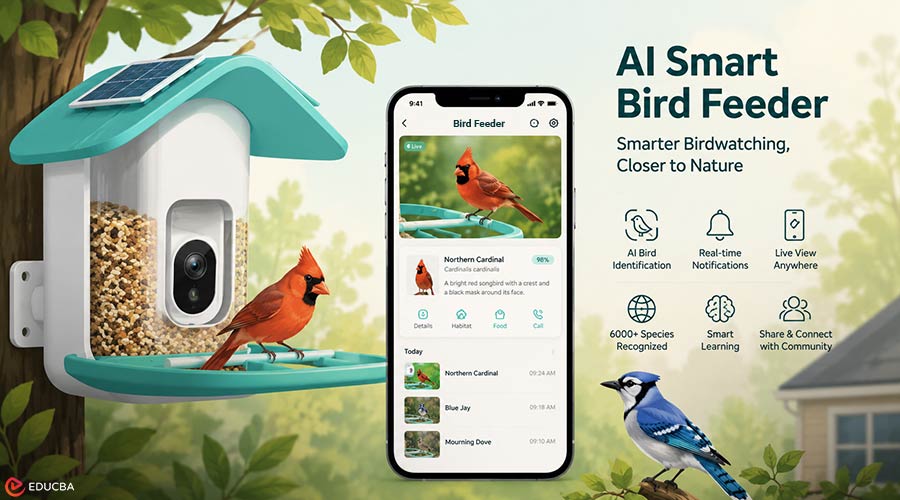
The dominance of artificial intelligence has extended far beyond traditional spheres such as business, research laboratories, and high-technology industries. Today, AI is becoming smoothly integrated into our everyday lives, enabling individuals to nurture skills, embark on journeys of observation, and forge a much more direct bond with the universe around us. The Birdfy AI Smart Bird Feeder, therefore, stands as an astounding example of this trend. It flawlessly unites the long-held hobby of birdwatching with the latest advances in artificial intelligence, paving the way for more exciting practices and profound knowledge. As AI steadily takes control over the domains of personal development and hobbies, the phenomenon of birdwatching shows how the lack of specialist expertise can be nullified, infused with insights, and deliver admirers with much more value.
The Growing Prevalence of AI in Personal Interests
Hobbying, as an activity pursued for personal growth, mastery, or simply a strong recognition of specific interests, has long adapted to the latest technology. Right now, whether the chosen activity is photography, gardening, physical exercise, or, perhaps most traditionally, gazing at the birds, the process of sharpening it through technological innovation has been going somewhat well—yet it still has plenty of room to run. With the emergence of AI, things are likely to undergo a much more drastic evolution, providing tailor-made tips, automated missions, and the instant dissemination of all necessary knowledge.
No more time-draining research projects, no more waiting painstaking minutes to identify a bird, no more taking a long route to find out about the various attributes of the subjects of investigation! These are what a modern hobbyist needs to spend a genuinely long time on, and are now remediated by AI applications that report prompt advice. Subsequently, time can be spent gaining new perspectives, and the former can go to learn about the lovely buddies of the environment. The application of bird study to AI capabilities provides strong evidence.
Why Birdwatching Benefits from an AI Smart Bird Feeder?
Birdwatching has long been a hobby for nature-devoted individuals who value patience, perceptiveness, and high regard for ecological systems. However, the intricate process of species identification has posed a great difficulty for many who have attempted to proceed without technological support. Traditional identification of bird species involved navigating extensive en vogue manuals or seeking the knowledge of the experienced few. Less experienced observers often face uncertainty in identifying subtle differences in appearance, size, and behavioral patterns among birds.
Although many individuals might be beginners, the AI can help reduce this burden by providing instant composition and accurate details. The Birdfy AI smart bird feeder is at the crux of this future paradigm. By combining intelligent smart home camera solutions with goal-cognition algorithms for identifying bird species, users of the smart gadget can instantly identify the subject birds and watch them in real time on their devices.
AI Recognition of 6,000+ Bird Species
The magnitude of Birdfy’s AI technology to identify a comprehensive set of more than 6,000 bird species would be one of the most fascinating. It (functionally) turns a bird feeder into a natural photo-taking unit for intruder photos. Whenever a bird comes into view at a sophisticated inch-to-inch pixel resolution, the system captures clear shots and cinematic videos. The AI then compares the footage with the internally archived collection of bird pictures to distinguish the bird in front of the lens. Users then received instant identification results whenever they checked their apps.
5,000+ avian species identification with the abilities of AI is all but a blessing for those who entered the hobby world later in life, or those who much prefer or are much more often experiencing bird watching under adverse weather conditions. By removing guesswork and reducing reliance on field guides, this function delivers knowledge more reliably, efficiently, and intuitively.
Real-Time Notifications Create Instant Engagement
Many busy people’s impediments to bird watching are time-related. They simply cannot stare at an empty bird feeder all day without having to work, take a quick shower, or attend to other life commitments. However, highly developed technology can help alleviate those constraints through instant notifications. As soon as birds enter the feeder, the app instantly sends push notifications to the user’s mobile device.
Consequently, busy professionals and students who are easily engaged with the external world can still stay updated on every fine detail of their activities, even when they are not at home or engaged in other primary priorities. High-tech notifications make birdwatching a more integrated part of daily life rather than an occasional weekend activity. This takes the static activity into an ongoing conversation with the world of birds.
Supporting Continuous Learning Through AI
A dynamic individual is strongly associated with a never-ending drive to learn. Therefore, the influence of the aforementioned hobbies on one’s own advancement is obvious. Artificial intelligence could also be considered one of the best ways to provide individual learners with an endless supply of life-related education, tailored to their hobbies, in a way that could be even more potent and convenient than an organized, systematic body of formal study and research, as once imagined.
With each sighting, the avian enthusiast can learn about the profile of every brand-new resident of the environment and use specific information about its shape, migratory direction, dietary preferences, and contributions to the ecosystem. After every match, a smooth flow of the species’ details can help curious learners accordingly.
Strengthening the Connection Between Humans and Nature
Rarely can one argue that technology continually cultivates a harmonious relationship with nature. As a matter of fact, by making hobbies more accessible and informative, users tend to become considerably more perceptive of their surroundings, even with the naked eye alone. They can actually appreciate the rising variety of local flora much more intricately.
Participants can observe their surroundings more keenly, spotting a greater range of aviculines with stronger signals, attesting to the invaluable leap made by the direct application of computer vision technology, combined with the incredible richness of the avifauna. Participants can observe diverse local wildlife, often inspiring stronger habitat conservation efforts. In this context, AI can function as the counterpart, not the factor, standing between the man and the environment.
Final Thoughts
The rise of AI-powered hobbies is changing how people pursue their interests. Among these innovations, the AI smart bird feeder stands out as a great mix of technology and nature. This technology helps users identify birds more accurately, sends instant notifications, and provides useful learning information beyond what a regular bird feeder can offer. However, this is just the beginning. Advanced technology still offers significant future potential for nature lovers and hobbyists.
Recommended Articles
We hope this guide on the AI smart bird feeder helps you explore the future of birdwatching. Check out these recommended articles for more insights and ideas to enhance your experience.


