
What is Digital Minimalism?
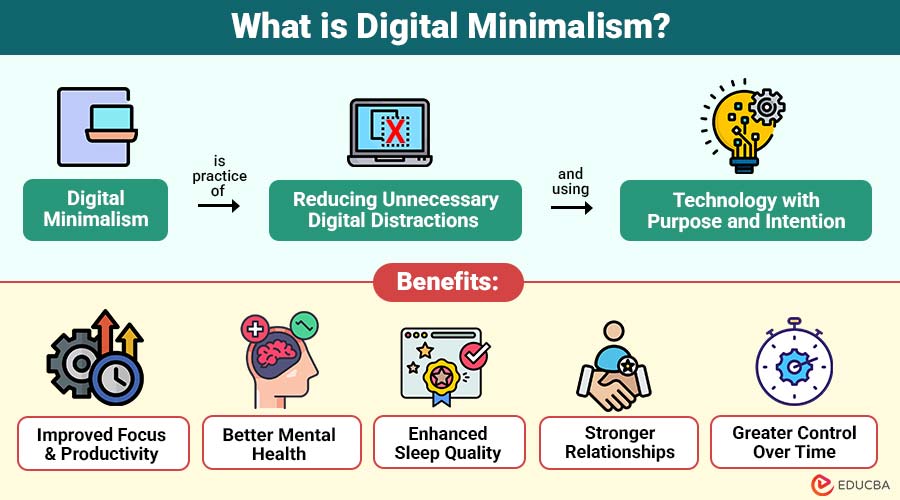
Digital minimalism is the practice of reducing unnecessary digital distractions and using technology with purpose and intention. The concept emphasizes quality over quantity when interacting with digital devices and online platforms.
Rather than completely avoiding technology, digital minimalism encourages people to:
- Use only essential digital tools
- Limit time spent on social media
- Reduce screen addiction
- Prioritize meaningful activities
- Create healthier online habits
The idea gained popularity through the work of Cal Newport, who described digital minimalism as a philosophy of technology use focused on maximizing value while minimizing distractions.
Table of Contents:
- Meaning
- Why Digital Minimalism Matters?
- Signs you Need Digital Minimalism
- Core Principles
- Benefits
- How to Practice Digital Minimalism?
- Real-World Example
- Challenges
Key Takeaways:
- Digital minimalism reduces distractions and promotes intentional, focused, and meaningful use of technology daily.
- It effectively limits notifications, multitasking, and unnecessary digital interruptions, improving productivity.
- Practicing it supports better mental health, reducing stress, anxiety, and digital fatigue.
- It encourages balanced living by prioritizing real-world activities over excessive screen time.
Why Digital Minimalism Matters?
Here are the key reasons why reducing digital overload is important in daily life.
1. Information Overload
Constant digital content floods the mind, making decision-making, focus, and mental clarity increasingly difficult daily.
2. Reduced Concentration
Frequent notifications and multitasking habits shorten attention spans, significantly reducing productivity and deep thinking abilities.
3. Sleep Disturbances
Excessive screen exposure before bedtime disrupts sleep patterns, lowering rest quality and overall daily energy.
4. Anxiety and Stress
Continuous online engagement and constant connectivity increase mental pressure, emotional exhaustion, and everyday stress levels.
5. Lower productivity
Spending excessive time on distracting apps and platforms reduces efficiency, task completion, and professional performance outcomes.
6. Social Comparison
Social media exposure encourages unhealthy comparisons with others, negatively affecting confidence, self-worth, and emotional well-being.
7. Digital fatigue
Prolonged screen use causes mental fatigue, eye strain, reduced motivation, and decreased overall cognitive performance.
Signs you Need Digital Minimalism
Here are the key signs that your digital habits may be affecting your daily life.
1. Constant Phone Checking
You frequently unlock and check your phone unnecessarily, even without notifications, messages, updates, or important reasons, daily.
2. Difficulty Concentrating
Continuous notifications, app switching, and multitasking reduce focus, making deep work and concentration increasingly difficult.
3. Excessive Social Media Usage
Spending several hours scrolling social media leaves you feeling distracted, unproductive, mentally drained, and emotionally unsatisfied afterward.
4. Digital Fatigue
Excessive daily screen exposure leads to mental exhaustion, reduced motivation, eye strain, and difficulty maintaining consistent productivity.
5. Reduced Real-Life Interaction
Online communication gradually replaces meaningful face-to-face conversations, reducing emotional connections and quality personal relationships over time.
6. Poor Work-Life Balance
Constant digital connectivity makes it difficult to separate personal life from work responsibilities, significantly increasing stress and emotional exhaustion.
Core Principles of Digital Minimalism
Here are the core principles that guide a more intentional and focused use of technology.
1. Intentional Technology Use
Digital minimalists intentionally select apps and technologies that support productivity, communication, and personal goals while avoiding unnecessary digital distractions daily.
2. Focus on Value
They focus on valuable digital tools that improve efficiency, support meaningful activities, and contribute positively to personal and professional growth.
3. Reduce Digital Noise
Reducing digital noise means limiting notifications, subscriptions, emails, and endless scrolling to improve concentration, mental clarity, and overall well-being.
4. Prioritize Real-Life Activities
Digital minimalism promotes spending more time on reading, exercise, hobbies, mindfulness, family interactions, and fulfilling real-world experiences daily.
Benefits of Digital Minimalism
Here are the benefits of adopting digital minimalism in daily life that can help improve productivity, health, and overall well-being:
1. Improved Focus and Productivity
Reducing digital distractions helps individuals maintain concentration longer, complete tasks efficiently, enhance creativity, and improve productivity daily.
2. Better Mental Health
Digital minimalism lowers stress, reduces anxiety, improves emotional stability, encourages mindfulness, and supports overall mental well-being.
3. Enhanced Sleep Quality
Limiting screen exposure before bedtime improves sleep cycles, increases energy levels, reduces fatigue, and supports healthier nightly routines.
4. Stronger Relationships
Spending less time online encourages meaningful conversations, strengthens family bonds, improves friendships, and increases real-life social engagement.
5. Greater Control Over Time
Digital minimalism helps reclaim wasted hours, allowing more time for learning, fitness, career growth, and personal development activities.
How to Practice Digital Minimalism?
Here are practical steps to help you reduce digital clutter and build healthier, more intentional technology habits:
1. Audit Your Digital Habits
Start by evaluating how you currently use technology.
Ask yourself:
- Which apps consume most of my time?
- Which digital activities add value?
- Which platforms create stress or distraction?
Screen-time tracking tools can help identify unhealthy usage patterns.
2. Remove Unnecessary Apps
Delete apps that:
- Waste time
- Encourage compulsive behavior
- Provides little long-term value
Many people discover they do not miss several apps after removing them.
3. Disable Non-Essential Notifications
Notifications constantly interrupt focus and increase stress.
Keep only essential alerts, such as:
- Calls
- Important work emails
- Banking notifications
- Calendar reminders
Silencing unnecessary notifications dramatically improves concentration.
4. Create Screen-Free Zones
Establish boundaries around technology use.
Examples include:
- No phones during meals
- No devices in the bedroom
- Screen-free mornings
- Offline weekends
These boundaries help reduce dependency on digital devices.
5. Limit Social Media Usage
Social media is one of the biggest sources of digital distraction.
Practical strategies include:
- Setting daily time limits
- Removing addictive apps
- Logging out after use
- Following only meaningful accounts
Intentional usage reduces mindless scrolling.
6. Practice Single-Tasking
Multitasking reduces productivity and mental clarity. Focus on one task at a time, without constantly switching between apps or tabs.
Techniques such as:
- Time blocking
- Deep work sessions
- Pomodoro method
can improve concentration significantly.
7. Schedule Offline Activities
Replace unnecessary screen time with meaningful offline experiences such as:
- Reading
- Journaling
- Walking
- Sports
- Cooking
- Art and music
The goal is not simply to reduce technology but to improve the quality of life.
Real-World Example
Here is a practical example showing how digital minimalism can transform daily technology use:
Consider a typical smartphone user who spends 4–6 hours daily on social media and entertainment apps. After adopting digital minimalism, they:
- Reduce app usage to 1–2 hours per day
- Remove unnecessary apps
- Disable notifications
- Use social media only at specific times
As a result, they gain more free time, improved focus, better sleep quality, and reduced stress levels.
Challenges of Digital Minimalism
Here are some of the most common challenges people face when trying to adopt a more intentional and minimal digital lifestyle:
1. Fear of Missing Out
Many people worry about missing news, updates, or social interactions. However, most digital information is not urgent or necessary.
2. Habitual Phone Usage
Phone checking often becomes automatic behavior. Breaking these habits requires conscious effort and consistency.
3. Work Dependency on Technology
Modern jobs heavily depend on digital communication. The solution is not avoiding technology but using it more intentionally.
4. Social Pressure and Expectations
Friends, family, and colleagues often expect quick replies and constant availability. This pressure can make it difficult to reduce screen time or disconnect from devices.
5. Lack of Discipline and Relapse into Old Habits
Even after starting digital minimalism, many people fall back into old patterns like excessive scrolling or app usage. Maintaining consistency requires strong self-discipline and regular tracking of habits.
Final Thoughts
Digital minimalism helps individuals reduce digital overload by using technology intentionally and eliminating unnecessary distractions. It improves focus, mental well-being, relationships, and time management. Simple habits like limiting social media, disabling notifications, and creating screen-free routines promote better productivity and clarity. The goal is balanced, purposeful use of technology for a healthier lifestyle.
Frequently Asked Questions (FAQs)
Q1. Is digital minimalism about quitting technology completely?
Answer: No. Digital minimalism does not quit technology. It encourages people to use digital tools purposefully rather than excessively.
Q2. Does digital minimalism improve productivity?
Answer: Yes. Reducing interruptions and multitasking helps improve concentration, task completion, creativity, and overall efficiency.
Q3. Can digital minimalism help children and teenagers?
Answer: Yes. Healthy digital habits can improve attention span, sleep quality, academic performance, emotional well-being, and real-life social interaction among young users.
Q4. What apps should be removed for digital minimalism?
Answer: Apps that promote endless scrolling, unnecessary notifications, or time-wasting behavior—such as addictive social media or low-value entertainment apps—are often reduced or removed.
Recommended Articles
We hope that this EDUCBA information on “Digital Minimalism” was beneficial to you. You can view EDUCBA’s recommended articles for more information.


