


What is Content Licensing?
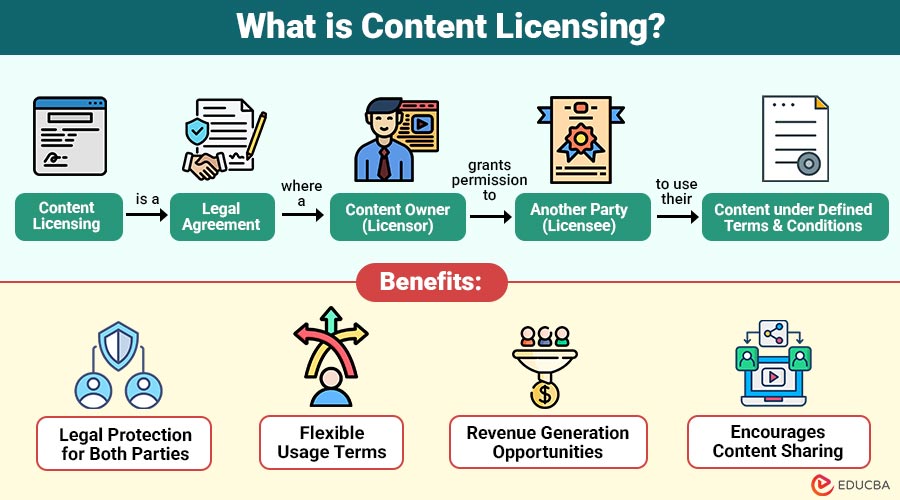
Content licensing is a legal agreement where a content owner (licensor) grants permission to another party (licensee) to use their content under defined terms and conditions.
Instead of transferring ownership, licensing allows controlled access to content. The original creator still owns the work, but others can use it legally within the agreed limits.
Table of Contents:
- Meaning
- Key Elements
- Types
- Difference
- Working
- Use Cases
- Benefits
- Limitations
- Real-World Examples
- Common Mistakes to Avoid
Key Takeaway:
- Content licensing allows creators to retain ownership while granting usage rights under defined terms.
- Clear licensing terms help prevent legal issues and ensure ethical use of digital content.
- Different license types offer flexibility for commercial, non-commercial, exclusive, and shared use of content.
- Understanding license conditions, attribution, duration, and territory is essential for compliant and content usage.
Key Elements of Content Licensing
The following are the essential key elements that define how content can be legally used and shared:
1. Ownership
Ownership refers to the creator or organization holding intellectual property rights over the original content they have produced, respectively, clearly
2. License Type
License type specifies how the content can be used, such as commercial, non-commercial, exclusive, or shared licensing arrangements models
3. Usage Rights
Usage rights define what the licensee can do with content, including copy, modify, distribute, or display.
4. Duration
Duration specifies how long the license remains valid, outlining start and end periods of permitted content usage rights.
5. Territory
Territory defines geographic regions where the licensed content may be used, such as global, national, or regional limits applied.
6. Attribution
Attribution states whether the original creator must be credited when the licensed content is used, shared, or published publicly
Types of Content Licensing
The following are the main types of content licensing that define how digital content can be used and distributed:
1. Exclusive License
In an exclusive license, only one licensee is entitled to use the content. Even the creator cannot license it to others during the agreement period.
2. Non-Exclusive License
The content owner can license the same content to multiple users at the same time without restricting distribution or additional licensing opportunities
3. Royalty-Free License
Users pay a one-time fee and may use the content repeatedly without ongoing payments or additional charges for each use allowed
4. Rights-Managed License
Usage is restricted based on duration, location, and purpose, with pricing adjusted according to specific usage conditions required strictly controlled
5. Creative Commons License
A licensing system enabling creators to share content with predefined permissions, allowing others to use it under specified conditions, easily and freely
Difference Between Content Licensing and Copyright
The following table highlights the key differences between content licensing and copyright:
| Aspect | Content Licensing | Copyright |
| Definition | Permission to use content | Legal ownership of content |
| Ownership | Remains with the creator | Belongs to the creator |
| Usage | Controlled by license terms | Fully controlled by the owner |
| Flexibility | Can be customized | Fixed legal protection |
| Transfer | Does not transfer ownership | Ownership can be transferred |
How Content Licensing Works?
The following steps explain how content licensing functions from creation to compliance:
1. Content Creation
The creator produces original content in various formats, such as text, images, audio or video, depending on project requirements and goals
2. Ownership Establishment
When creative content is created, the creator is automatically granted copyright, creating legal ownership rights without the need for further registration.
3. License Agreement Creation
Terms and conditions are defined in a license agreement specifying how content may be used, shared, modified, or distributed legally.
4. Granting Permission
The license is given to a user or organization, allowing legal permission to use content under agreed-upon terms and conditions
5. Usage Monitoring
Use Cases of Content Licensing
Here are the use cases where content licensing is widely used across industries:
1. Digital Marketing
Businesses use licensed images, videos, and music in advertising campaigns to promote brands legally and effectively across multiple digital platforms
2. Blogging and Publishing
Writers use licensed images, articles, or media content to support blogs and publications while ensuring legal compliance and proper attribution
3. Software Development
Developers integrate licensed libraries, frameworks, and APIs into applications to speed development, improve functionality, and ensure legal usage compliance standards
4. Media and Entertainment
Films, music, and television productions rely on licensed content, including scripts, soundtracks, and visuals, to avoid copyright infringement issues legally.
5. E-Learning Platforms
Online learning platforms use licensed videos, graphics, and educational materials to create structured courses and provide high-quality learning experiences.
Benefits of Content Licensing
Here are the key benefits of using content licensing for creators and businesses:
1. Legal Protection for Both Parties
Content licensing provides legal protection, ensuring both creators and users are safeguarded under clear, agreed-upon contractual terms and conditions.
2. Flexible Usage Terms
Licensing provides flexible usage terms that allow users to adapt, use, or distribute content based on specific agreed requirements.
3. Revenue Generation Opportunities
Content licensing enables creators to earn revenue through selling usage rights multiple times to different users or organizations globally.
4. Encourages Content Sharing
Licensing encourages responsible content sharing by allowing creators to distribute work widely while maintaining ownership and control rights.
Limitations of Content Licensing
Here are the key limitations associated with content licensing:
1. Complex Legal Terms
Content licensing often involves complex legal terms that can be difficult for users to understand without professional legal assistance.
2. Licensing Fees can be High
Some licenses require expensive fees, making it costly for individuals or small businesses to access high-quality content.
3. Misunderstanding Terms May Lead to Violations
Incorrect interpretation of license conditions can result in accidental misuse or legal violations of copyrighted content and agreements
4. Monitoring Usage can be Difficult
Creators often find it challenging to track how licensed content is used across platforms, making it difficult to enforce terms sometimes.
Real-World Examples
Here are some practical examples of how content licensing is used in real-world scenarios:
1. Stock Photography
A blogger purchases a royalty-free image and uses it across multiple blog posts without paying additional fees for each use.
2. Music Licensing
A YouTuber licenses background music to avoid copyright strikes and safely monetize videos while complying with platform copyright policies.
3. Software Licensing
A company uses open-source software under specific licensing conditions, adhering to rules for legal use, modification, and redistribution.
Common Mistakes to Avoid
Here are the most common mistakes to watch out for when using licensed content:
1. Using Content Without Checking the License
Using content without checking its license can lead to legal issues, copyright infringement, and unexpected penalties or removal of content.
2. Ignoring Attribution Requirements
Ignoring attribution requirements violates license terms and fails to credit creators properly, which may result in legal or ethical consequences.
3. Assuming “free” Content has no Restrictions
Assuming free content has no restrictions is risky because many free resources still require attribution or limit commercial use.
4. Violating Commercial Use Terms
Violating commercial use terms happens when content is used for profit without permission, leading to legal action or license termination.
5. Not Renewing Expired Licenses
Not renewing expired licenses can result in loss of usage rights, forcing the removal of content, or facing copyright violations.
Final Thoughts
Content licensing balances ownership and accessibility in the digital world, allowing creators to protect their work while enabling legal and responsible use by others. It helps marketers, businesses, and creators avoid legal risks and use digital assets effectively. Choosing the right license, defining clear terms, and following best practices ensure ethical, safe, and valuable use of content across industries and platforms.
Frequently Asked Questions (FAQs)
Q1. Is content licensing necessary?
Answer: Yes, it ensures legal use of content and protects both creators and users.
Q2. Can licensed content be modified?
Answer: It depends on the license terms. Some allow modifications, while others restrict it.
Q3. What happens if we violate a license?
Answer: You may face legal consequences, including fines or lawsuits.
Q4. Can I license my own content?
Answer: Yes, creators can license their content to earn revenue and control usage.
Recommended Articles
We hope that this EDUCBA information on “Content Licensing” was beneficial to you. You can view EDUCBA’s recommended articles for more information.

