


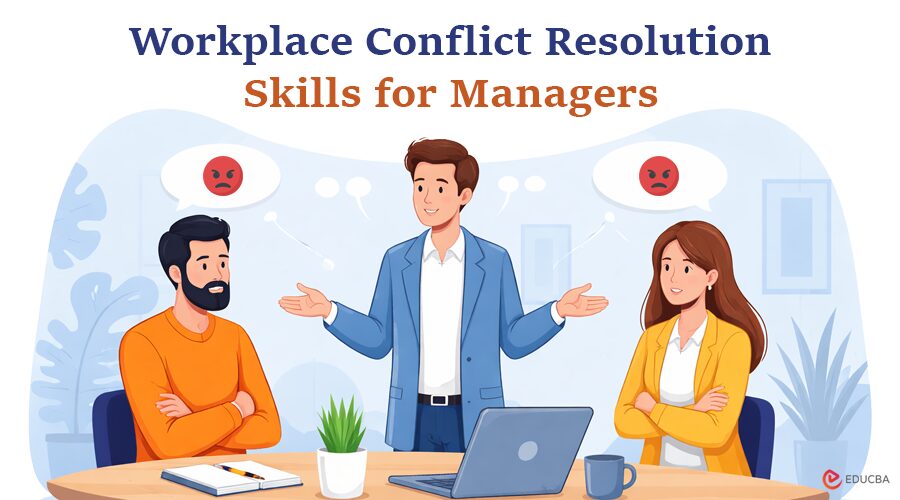
Workplace Conflict Resolution Skills Every Manager Needs
Conflict between people at work is not a management failure. It is a management reality. Teams with more than one person inevitably experience disagreements, misunderstandings, and tensions that managers must address. The real question is whether you have the skills to handle conflict effectively when it appears on your team. This is where workplace conflict resolution skills for managers become essential. Managers who develop these skills keep their teams productive, retain their best people, and maintain a healthier work environment. Managers who lack these abilities often unintentionally worsen conflicts, even when they are trying to help.
Most organizations promote managers because they perform well in their roles, not because they receive training in handling interpersonal disputes. A manager who avoids difficult conversations lets resentment build until it becomes a team-wide problem. A manager who intervenes too forcefully or too early can make employees feel micromanaged or distrusted. Developing strong workplace conflict resolution skills for managers requires deliberate learning, practice in real situations, and continuous refinement over time.
A significant portion of what managers deal with involves tension among two or more employees who must keep working together. Having a solid set of coworker conflict resolution strategies in your toolkit makes that kind of situation far more manageable. This article covers the core workplace conflict-resolution skills for managers, why each one matters, and what it actually looks like to apply them in a real workplace.
Understanding What Conflict is Actually About
One of the most important workplace conflict resolution skills for managers is the ability to look beyond the surface issue. The visible argument is often only a small part of the real problem. Two employees may argue about how a project should be structured, but the disagreement often reflects deeper issues. They may struggle with competing priorities, unclear role boundaries, or frustration from having their ideas dismissed in the past. Sometimes, an unresolved trust issue that began months earlier also causes the conflict.
Managers who only address the surface issue tend to find the same conflict resurfacing in a different form a few weeks later. The team resolves the argument over the project on paper, but the underlying dynamic that created it remains. Real resolution requires understanding what is actually driving the conflict, not just what it appears to be from the outside.
This does not mean turning every workplace dispute into a deep psychological excavation. It means asking enough questions and listening carefully enough to understand the real situation before proposing a solution. A few well-placed questions early in a conflict conversation can save a lot of time and effort later.
Useful questions to ask before jumping to a resolution include: How long has this been going on? Has anything like this happened between these people before? Is there a specific incident that triggered this, or is it a pattern? What does each person say they need for the situation to improve? The answers to these questions shape everything that comes after.
Active Listening: The Foundation of Every Conflict Conversation
Every effective conflict conversation begins with active listening. Among all workplace conflict resolution skills for managers, this is arguably the most fundamental.
Active listening means giving each person involved your full attention without mentally rehearsing your response while they are still talking. It means noticing what people are not saying as much as what they are. It means asking follow-up questions that show you understood, rather than redirecting the conversation toward where you want it to go.
When employees feel genuinely heard by their manager during a conflict conversation, several things happen. Their emotional intensity usually decreases because being understood reduces the felt need to escalate. They become more open to hearing other perspectives because they no longer feel the need to fight to be taken seriously. Moreover, they are more likely to trust whatever process the manager uses to work toward a resolution because they experienced it as fair.
Habits that strengthen active listening in conflict situations:
- Put all devices away and give the conversation your undivided attention.
- Reflect what you heard before responding: “What I am hearing is that you felt your input was ignored in that meeting. Is that right?”
- Resist the urge to fill silences. Sometimes people need a moment to find the words for what they are really trying to say.
- Ask one question at a time and let the answer fully land before moving on.
Staying Neutral Without Staying Passive
Another critical component of workplace conflict resolution skills for managers is maintaining neutrality. You may like one person more than the other. You may have seen the situation unfold and already formed a view. You may feel pulled to take the side of whoever came to you first, or whoever presents their case more convincingly.
Neutrality matters not because there is never a right or wrong in a workplace conflict, but because taking visible sides before you fully understand a situation destroys your credibility as a mediator and tells the other person that coming to you is pointless. Once employees believe their manager has favorites, they stop bringing problems to their manager early. That is when small issues become big ones.
Staying neutral does not mean being passive or refusing to make judgments. It means withholding judgment until you have heard everyone involved, examined the facts, and considered what outcome best serves the team and the work. Then, when you do make a call, you can explain your reasoning in a way that both parties can follow, even if one of them does not love the outcome.
A practical test: before you say or do anything in response to a conflict, ask yourself whether both parties would describe your approach as fair if they were watching it. That question will catch a lot of bias before it causes damage.
Having the Conversation Early: Why Timing Matters More Than You Think
The most common mistake managers make with workplace conflict is waiting too long to address it. The reasons for waiting are understandable. You hope the situation will resolve itself. You do not want to make it a bigger deal than it needs to be. You are busy with other priorities. The conversation feels uncomfortable.
However, conflicts that are left alone rarely improve. It festers. The people involved become more entrenched in their positions. Other team members start taking sides or avoiding both people. The original issue gets buried under layers of accumulated resentment and history, making it much harder to untangle.
A conflict addressed within the first few days of becoming visible is a very different situation from the same conflict that has been running for three months. Early intervention is almost always faster, easier, and less disruptive to the team than late intervention. It also signals to your team that you pay attention and that issues do not go unaddressed just because they are awkward.
You do not need to wait for a situation to become serious before saying something. A simple, low-key check-in with the people involved, framed as genuine curiosity rather than an accusation, can surface tension early and prevent it from escalating. “I noticed things felt a little tense in that meeting. Is everything okay between you two?” is a conversation starter, not an interrogation.
Facilitating a Direct Conversation Between the Parties Involved
In many workplace conflicts, the most effective resolution comes when the people involved can talk directly to each other with a manager present to keep the conversation productive. This is not the right approach for every situation. Significant power imbalances, harassment situations, or cases where emotions are still too raw require different handling. However, for many common interpersonal conflicts, a well-facilitated direct conversation is both faster and more durable than a manager making decisions based on two separate accounts.
The manager’s role in this kind of conversation is not to adjudicate. It is to create the conditions for a productive exchange. That means setting ground rules at the start. Each person will have uninterrupted time to speak, the conversation will focus on the work situation rather than personal attacks, and the goal is to find a way forward that both people can commit to.
During the conversation, the manager redirects the discussion when it goes off track, summarizes key points to ensure everyone understands, and guides the group toward identifying specific agreements rather than vague intentions. “We will try to get along better” is not an agreement. “When we disagree about a project approach, we will discuss it directly before bringing it to the manager” is an agreement.
Following up after the conversation is important. A brief check-in with each person a week or two later confirms whether the agreements are holding and gives you a chance to address any new issues before they compound.
Managing Your Own Emotional Response During Difficult Conversations
Conflict conversations are stressful for managers, too. You may be dealing with employees you care about. You may have a stake in the outcome because the team’s performance affects your own. You may feel frustrated that you are spending time on this when there is other work to do. All of that is normal, and none of it disappears just because you are the one in the manager’s seat.
The problem is that unmanaged emotional reactions in a conflict conversation can do real damage. A manager who gets visibly frustrated derails the conversation and makes the employees feel less safe being honest. When employees question earlier decisions, a defensive manager loses the neutral position needed to handle the situation effectively. A manager who shuts down emotionally and starts going through the motions produces a resolution that no one believes in.
Self-awareness is the starting skill here. Knowing your own triggers, the kinds of situations or comments that tend to pull you off balance, gives you the chance to prepare for them rather than react to them. If you know that one of the employees involved tends to blame others and that this pattern frustrates you, you can decide in advance how you will respond when it happens rather than improvising in the moment.
It is also completely acceptable to pause a conflict conversation if it is not going well. Saying “I think we all need a few minutes” is not a failure. It is judgment. Resuming a conversation when everyone, including you, is in a better state produces better outcomes than pushing through when the temperature is too high.
Focusing on Behavior and Impact, Not Personality
Another practical element of workplace conflict resolution skills for managers is focusing on behavior rather than personality.
“You are dismissive and make your colleagues feel like their ideas do not matter” is a character assessment. It puts the person on the defensive immediately and makes the conversation about who they are rather than what they are doing. “When you cut people off in meetings before they finish making their point, it signals that you are not interested in what they are saying, and it is affecting how willing people are to share ideas” is a behavioral observation. It is specific, about actions, and points toward something that can actually change.
This distinction matters enormously in conflict resolution because people can change their behavior. They cannot change who they are. Conversations that stay on the behavioral level give employees something actionable to work with. Conversations that slide into personality territory tend to end in defensiveness, hurt feelings, and no actual change.
The same principle applies when you are listening to employees describe the conflict. Helping them move from “She is impossible to work with” to “Can you tell me specifically what she did that was difficult?” shifts the conversation onto ground where something productive can happen.
Moving From the Problem to the Solution
Conflict conversations often focus heavily on the past. While understanding past events is necessary, effective workplace conflict resolution skills for managers involve shifting the discussion toward future solutions.
The manager’s job is to make that shift at the right moment. Too early, and people feel unheard and unresolved. Too late, and the conversation circles the same ground until everyone is exhausted. When the key issues are on the table, and each person has had a real chance to speak, that is usually the time to redirect toward what a better situation would look like.
Questions that move a conflict conversation toward resolution:
- “What would need to be different for this working relationship to function well?”
- “What is one thing each of you is willing to do differently starting this week?”
- “If we looked back on this situation in three months and things had improved, what would that look like?”
- “What do you need from me as your manager to make this easier?”
Do not aim for a perfect resolution in which everyone feels happy, and the conflict disappears completely. The goal is a realistic, specific path forward that both parties can commit to and that the manager can hold them accountable to over time.
Knowing When to Bring in Outside Support
Not every conflict falls within a manager’s capacity to resolve, and recognizing the limits of your role is itself a conflict-resolution skill. There are situations where the right answer is to escalate to HR, bring in a professional mediator, or involve senior leadership.
Situations that typically warrant outside involvement include anything that involves potential harassment or discrimination, conflicts where there is a significant power imbalance between the parties, situations that have become so entrenched that the people involved are no longer willing to engage in good faith, and cases where the conflict has crossed into formal grievance or legal territory.
Bringing in support is not a sign that you failed as a manager. It is a sign that you understand your role clearly enough to know when the situation needs more than you can provide. Trying to manage something beyond your scope, whether due to the complexity of the issues or the organizational dynamics involved, usually makes things worse and can create legal risk for you and the organization.
The key is to document what you observed and what steps you took before escalating. That documentation protects you, gives the person taking over the clearest possible picture of the situation, and demonstrates that the organization responded appropriately to the problem.
Building a Team Culture Where Conflict Gets Addressed Early
The best conflict resolution is the kind that happens before a manager has to step in. When team members address tension directly with each other, treat honest feedback as a normal part of work rather than something threatening, and raise small issues before they grow into bigger problems, the team requires much less formal conflict intervention.
Managers build that kind of culture through what they model, reward, and allow. If you consistently demonstrate direct, respectful communication in your own interactions, you normalize that behavior for your team. If you acknowledge when a conversation was hard but important, you signal that difficult conversations are worth having. If you respond to people who raise concerns by taking them seriously rather than minimizing them, you encourage early disclosure.
On the other hand, if you avoid conflict yourself, look irritated when someone raises an interpersonal issue, or consistently fail to follow through on things you said you would address, you teach your team that the cost of speaking up is not worth the potential benefit. That culture produces the opposite of early intervention. It produces silence, then an explosion.
One-on-one meetings are one of the most practical tools for building a culture of early conflict disclosure. When employees have regular, private access to you and experience those conversations as safe and productive, they are far more likely to bring something up when it is still small rather than wait until it becomes a formal complaint.
Final Thoughts
Conflict resolution is not a soft skill in the dismissive sense of that phrase. Managers face conflict resolution as one of their most demanding responsibilities, and it directly affects team performance, employee retention, and organizational health. Managers who are good at it are genuinely more effective leaders. Teams that work for them have fewer chronic interpersonal problems, more psychological safety, and better outcomes.
The skills covered in this article are not personality traits that some people are born with. They are learnable competencies. Active listening, emotional self-regulation, neutrality, behavioral feedback, and facilitation all improve with deliberate practice and honest reflection on what is and is not working.
If you are a manager who finds conflict difficult, the answer is not to wait until you feel ready. It is to develop the skills through use, seek out feedback, and invest in training that gives you frameworks to work from when a situation is harder than your instincts alone can handle. The managers who get the best at this are the ones who treat it as a real part of their professional development rather than something they are just supposed to figure out on their own.
Recommended Articles
We hope this guide on workplace conflict resolution skills for managers helps you handle team disagreements effectively and build a healthier, more productive work environment. Explore the recommended articles below for insights on leadership skills, team management strategies, and effective workplace communication.

