


Introduction
Sports journalism is a dynamic field situated at the intersection of media, communication, and sport. As the industry evolves in response to digital technologies and audience demands, aspiring journalists must acquire both traditional reporting competencies and modern multimedia skills. This article examines the educational pathways, leading institutions, relevant coursework, and core competencies required to become a sports journalist.
The Role of a Sports Journalist
Sports journalism involves reporting, analyzing, and disseminating sports-related information across print, broadcast, and digital media platforms. Professionals in this field cover events, profile athletes, and interpret the broader cultural and economic impact of sport. With the rise of digital media, the profession now demands adaptability, technical proficiency, and storytelling across multiple formats.
Educational Pathways
Undergraduate and Graduate Degrees
The most common entry point into sports journalism is a bachelor’s degree in journalism, communications, or a related field. Specialized sports journalism programs are also available at both the undergraduate and postgraduate levels. Graduate degrees, such as a Master’s in Sports Journalism, provide advanced training in areas like data journalism, broadcasting, and multimedia storytelling, often incorporating practical industry experience.
Leading Institutions for Sports Journalism
Several universities are widely recognized for their sports journalism offerings:
- Indiana University–Purdue University Indianapolis (IUPUI): Offers dedicated sports journalism programs and research centers.
- University of Texas at Austin: Provides undergraduate and graduate programs with strong industry connections.
- Boston University: Boston University integrates sports journalism into broader journalism degrees with specialization options.
Other notable programs globally include institutions offering degrees in sports media, broadcasting, and multimedia journalism, often emphasizing hands-on experience and internships.
Core Courses and Curriculum
Sports journalism programs typically combine theoretical instruction with practical training. Common course topics include:
- Sports writing and reporting
- Interviewing techniques
- Broadcast journalism
- Photojournalism
- Media ethics and law
- Digital media production
- Data and multimedia storytelling
Programs frequently include internships or placements with media organizations, enabling students to build professional portfolios and industry connections.
Essential Skills for a Sports Journalist
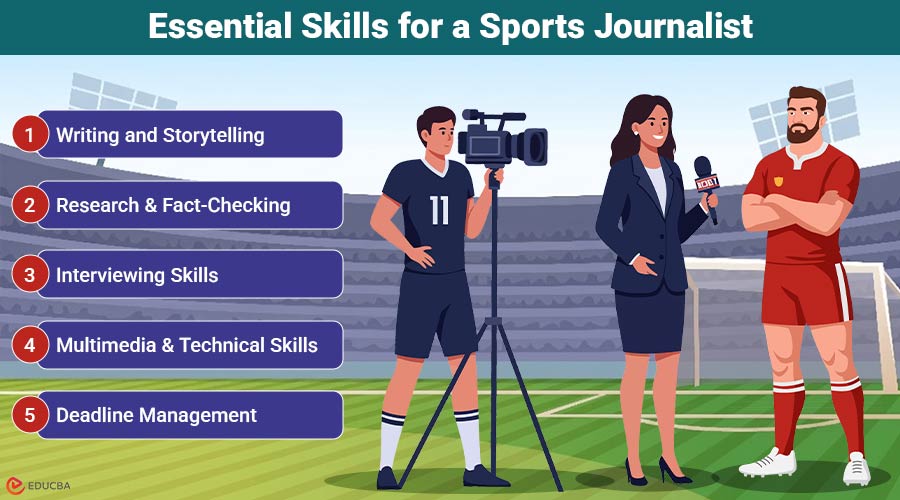
Below are the key skills every sports journalist needs to master for a successful career:
1. Writing and Storytelling
Strong writing remains the foundation of journalism. Sports journalists must craft clear, engaging narratives that convey both factual information and emotional context.
2. Research and Fact-Checking
Accurate reporting requires rigorous research, source verification, and attention to detail, particularly in fast-paced sports environments.
3. Interviewing Skills
Journalists must conduct effective interviews with athletes, coaches, and stakeholders, often under time constraints.
4. Multimedia and Technical Skills
Modern sports journalism requires proficiency in video editing, audio production, live streaming, and social media content creation.
5. Deadline Management
The ability to deliver high-quality work under tight deadlines is crucial, particularly during live events.
6. Photo Sourcing and Visual Literacy
An often-overlooked but essential skill is the ability to source or select appropriate images. This includes:
- Selecting high-quality, relevant photos that enhance storytelling
- Understanding editorial vs. commercial image usage
- Ensuring proper licensing and attribution
- Using visuals strategically to improve audience engagement
In sports reporting, familiarity with official image sources and visual standards from major leagues is especially important. For example, photos from leagues such as the National Hockey League, Major League Soccer, National Basketball Association, National Football League, and the English Premier League adhere to strict guidelines on image usage, distribution rights, and accreditation. Journalists must understand how to access images through licensed providers (e.g., wire services or official league media portals) and ensure compliance with each league’s media policies.
7. Ethical Judgment
Journalists must adhere to ethical standards, including fairness, accuracy, and respect for privacy.
Practical Experience and Portfolio Development
Academic training alone is insufficient for success in sports journalism. Students are encouraged to:
- Contribute to campus publications
- Cover local or amateur sports events
- Build personal blogs or multimedia portfolios
- Complete internships with sports media organizations
Practical experience is key to building credibility and enhancing employability in a competitive field.
Final Thoughts
Becoming a sports journalist requires a combination of formal education, practical experience, and a diverse skill set that spans writing, multimedia production, and visual storytelling. While leading institutions provide structured pathways into the profession, long-term success depends on continuous skill development and adaptability in an evolving media landscape. As sports consumption becomes increasingly digital and interactive, the modern sports journalist must be both a storyteller and a multimedia communicator.
Recommended Articles
We hope this guide helps you understand the path to becoming a successful sports journalist. Check out these recommended articles for more tips and insights.


