


Best GRIN Alternatives in 2026
Many DTC and e-commerce brands turn to GRIN when they are ready to move beyond spreadsheets and get serious about influencer marketing. It has built a reputation as a powerful, all-in-one platform for giveaways, affiliates, and large ambassador programs. However, as campaigns scale and the pressure to demonstrate ROI increases, many teams begin exploring GRIN Alternatives that better align with their budgets, workflows, or growth stage.
As we move into 2026, influencer marketing is not just about “likes”; it is about demonstrating ROI and tracking every dollar spent across multiple channels. This shift is driving brands to seek alternatives that offer more precise automation, more transparent pricing, or deeper data than they currently get.
In this guide, we take an honest look at the influencer marketing landscape. Whether you are trying to reduce overhead or improve performance tracking, these GRIN Alternatives could be a better fit for your brand’s marketing strategy in 2026.
Why Brands Are Looking For GRIN Alternatives?
While GRIN is a key tool for some influencer marketing campaigns, the dream of an “all-in-one” system can quickly turn into a major operational problem. What starts as a way to stay organized often becomes a rigid system that forces your team to work for the software, rather than the other way around.
As brands scale their creator partnerships, many begin looking for GRIN Alternatives that provide greater flexibility, automation, or better cost efficiency.
Another common reason brands explore GRIN Alternatives is pricing. GRIN typically requires a significant annual investment of about $25,000. Although monthly payments may be available, the long-term contract commitment can make it difficult for brands to allocate budgets toward creator payments, campaign experiments, or new marketing channels.
GRIN Overview
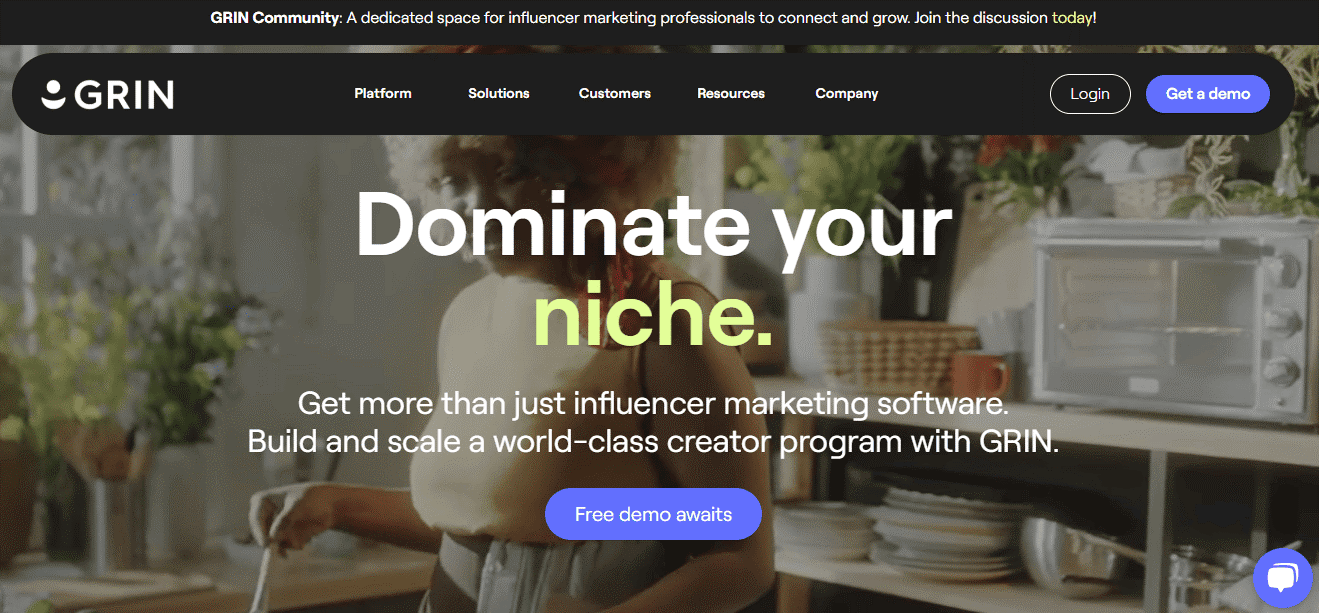
(Image Source: GRIN)
GRIN helps DTC and eCommerce brands centralize every moving part of their influencer marketing. By merging creator recruitment, product seeding, and payments into a single system, it transforms influencer campaigns from a brand-awareness experiment into a measurable revenue channel.
For brands managing high-volume ambassador programs, it acts as an operational engine that connects fulfillment, contracts, and reporting within a Shopify-heavy ecosystem.
Price
GRIN typically starts at $25,000 per year (approximately $2,085 per month)
Key Features at a Glance
- Scalable Creator Networks: GRIN imposes no limit on the number of partnerships, enabling businesses to run large-scale ambassador programs or product seeding campaigns across multiple ambassadors and channels.
- E-Commerce & Financial Integration: The native Shopify integration automatically processes gifting and discount codes. At the same time, the payout and tax documentation tools handle the administrative heavy lifting required to manage a large number of ambassadors.
- Discovery & Recruitment: The platform is designed with additional filters to enhance keyword search results and to help brands find new advocates among their loyal customers by identifying influencers.
- Structured Creator Portals: All creators will have access to a dedicated creator portal where they can receive their briefs, submit their content, and track their earnings.
- UGC and ROI Tracking: Archive every post in a searchable library, and use real-time dashboards to tie clicks and conversions directly to revenue outcomes.
Best GRIN Alternatives
Here are some of the best GRIN alternatives for brands in 2026:
1. Influencer Hero
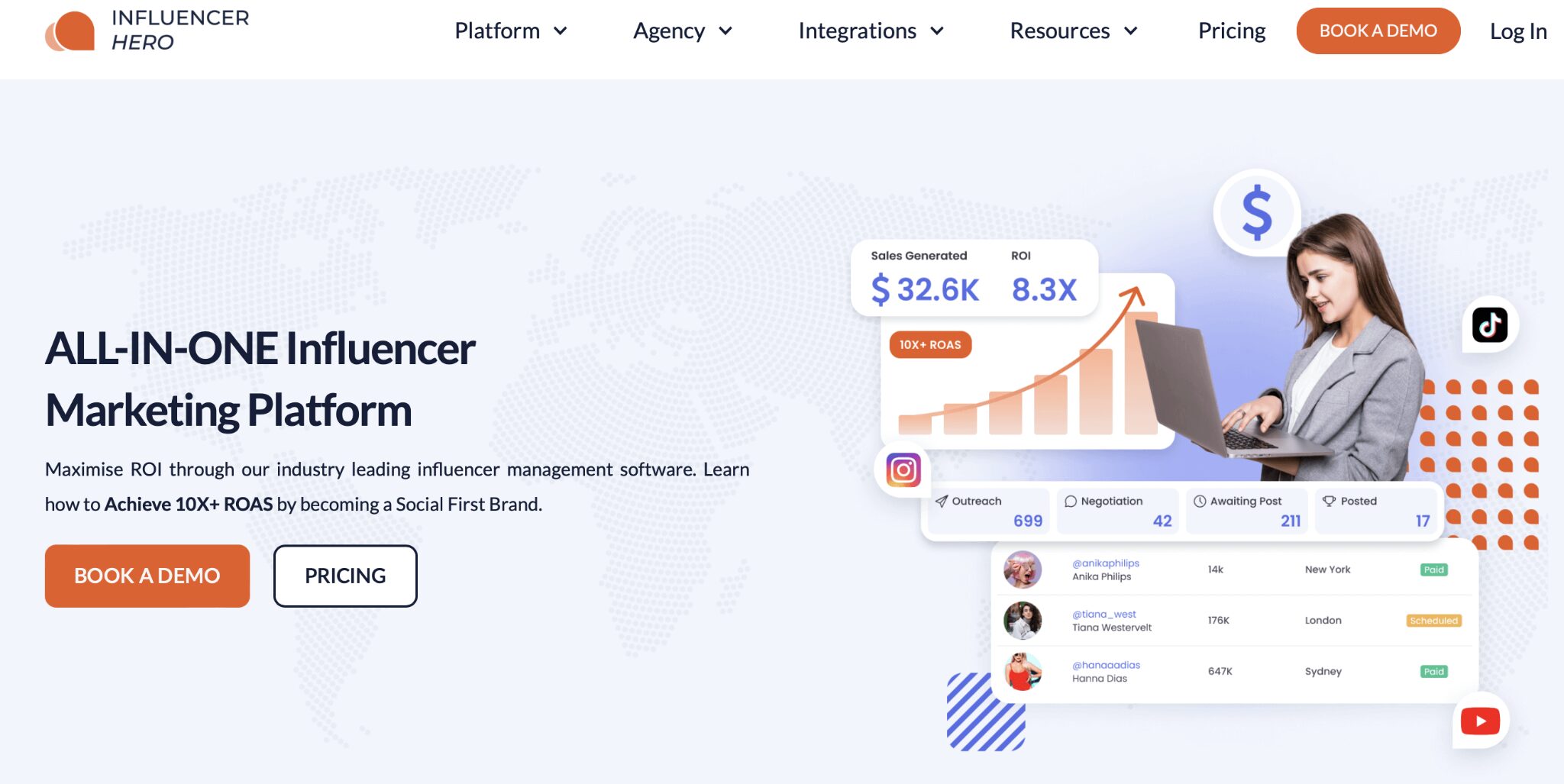
(Image Source: Influencer Hero)
Influencer Hero is the best influencer marketing software, built for brands and agencies that want to scale influencer marketing without adding more headcount. It focuses on automation, deep visibility, and ROI tracking, making it a strong alternative for teams that feel constrained by Upfluence’s cost structure or manual workflows.
Price
- Standard: $649/month (up to 1,000 creators)
- Pro: $1,049/month (up to 5,000 creators)
- Business: $2,490/month (up to 10,000 creators)
- Custom & Agency plans available for enterprise needs.
Standout Points
The platform provides access to over 450 million influencers across eight platforms, including TikTok, Instagram, Twitch, and Snapchat, making it easy to find creators who truly align with your brand. Use audience quality detection, lookalike recommendations, and AI-assisted personalized outreach to scale communication efficiently, while automated follow-ups ensure you never miss an opportunity.
Your team manages campaigns through a visual CRM that tracks every creator from first contact to the final post using custom tags and filters. The automation engine streamlines logistics such as generating Shopify discount codes after contract signing. At the same time, built-in Shopify and GoAffPro integrations let you track gifting, affiliate links, and real-time sales in a single centralized dashboard.
Influencer Hero Drawbacks
Because Influencer Hero targets teams focused on scaling, its extensive feature set may overwhelm very small brands that run only a handful of campaigns each year. Additionally, teams that prefer a minimal setup without automation logic may experience a slight learning curve as they adjust to the platform’s workflow-driven philosophy.
2. Aspire
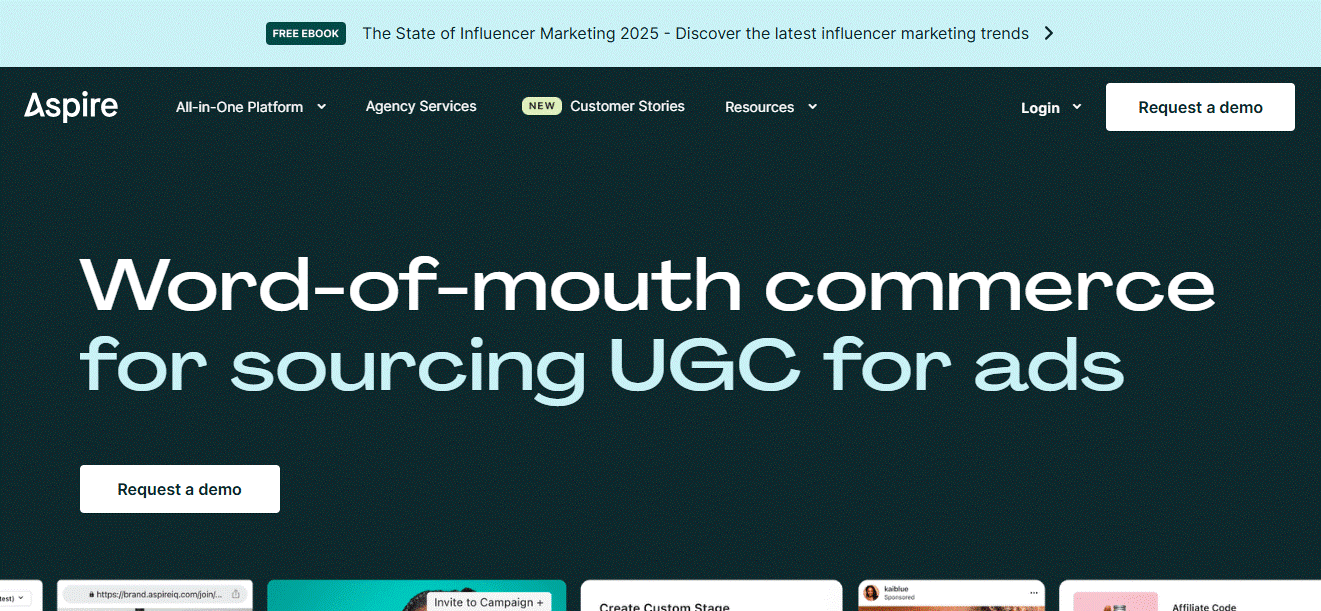
(Image Source: Aspire)
Aspire has long been a staple for brands that want the perfect middle ground: a structured campaign engine powered by a community of creators who actually want to work with them.
While most platforms focus on your team doing all the hunting, Aspire shifts the dynamic with an inbound marketplace that lets creators come to you. It is a favorite for mid-market and enterprise teams that need reliable data and a system that feels like a natural extension of their internal workflow.
Price
Starts at approximately $2,500/month (typically covering 20–40 creators and unlimited team seats).
Standout Points
Aspire stands out by pulling verified first-party social data through direct integrations with major platforms, providing more accurate audience demographics and engagement insights than scraped third-party data. Its inbound creator marketplace lets you post campaigns and have interested creators apply, significantly speeding up vetting and recruitment since they have already expressed intent to collaborate.
The platform supports full-lifecycle campaign management, centralizing everything from invitations and contracts to brief approvals and performance tracking, so you can manage hundreds of partnerships without operational chaos. With deep Shopify integration for simplified gifting and automated fulfillment, plus an asset library that archives all UGC and ties it to ROI reporting dashboards, you can easily repurpose content and clearly measure the impact on sales and engagement.
Aspire Drawbacks
Aspire charges mid- to high prices, which can create a hurdle for smaller brands just getting started. While the platform is incredibly powerful, it carries an enterprise feel that might be more “software” than a lean team needs. Additionally, while its workflows are excellent, those looking for hyper-granular, “if-this-then-that” automation for complex affiliate logic might find it less flexible than tools built purely as automation engines.
3. Influencity
(Image Source: Influencity)
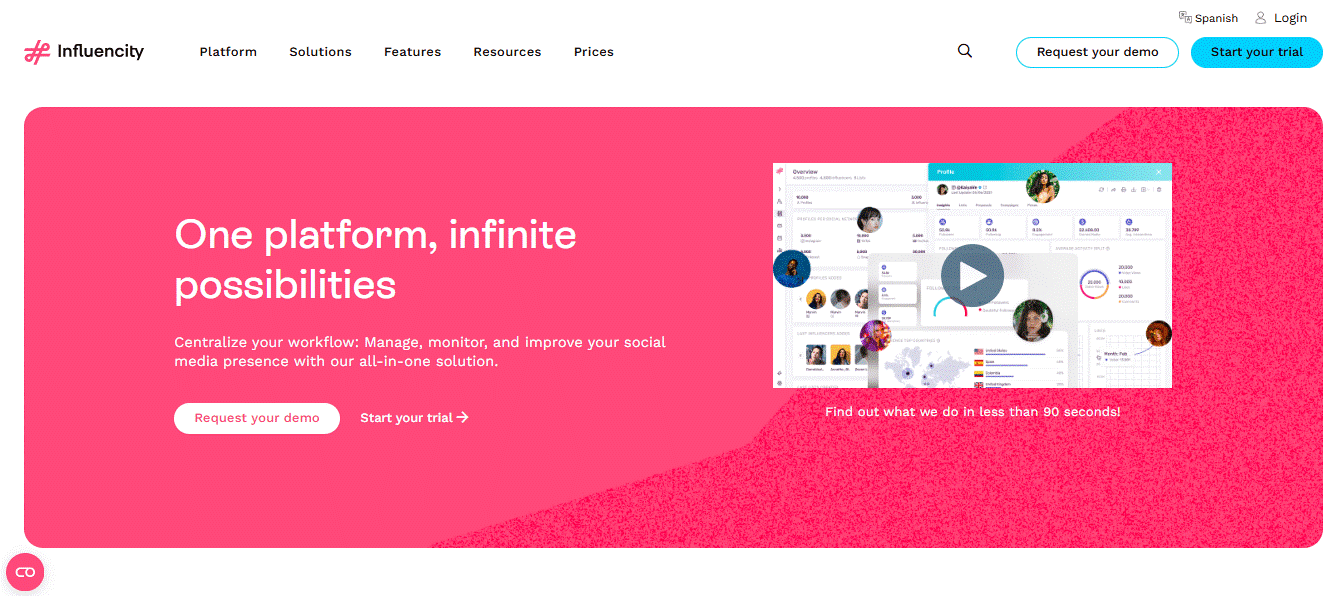
Influencity is a versatile influencer marketing platform that provides many enterprise-level tools at a more accessible price point, making it one of the most practical GRIN Alternatives for growing brands.
Price
Starts around $318/year.
Standout Points
The platform provides access to a massive discovery database with millions of influencer profiles across niches and locations without requiring creators to opt into a closed network. With AI-powered search and lookalike functionality, you can go beyond basic filters to identify creators who share the same audience DNA as your top-performing partners.
Your team can streamline campaign management through a visual Kanban-style CRM, dragging and dropping creators from “contacted” to “live” while keeping the pipeline organized at every stage. Direct Shopify integration enables accurate sales attribution via discount codes, while flexible post-tracking, either automated or manual, gives you full control over how detailed your reporting needs to be.
Influencity Drawbacks
While its Shopify integration is solid, brands using other eCommerce platforms might find the lack of native connections frustrating. Additionally, the “buffet-style” pricing for add-ons can make your monthly cost creep up as you add more tracking or advanced features.
4. SocialLadder
(Image Source: SocialLadder)
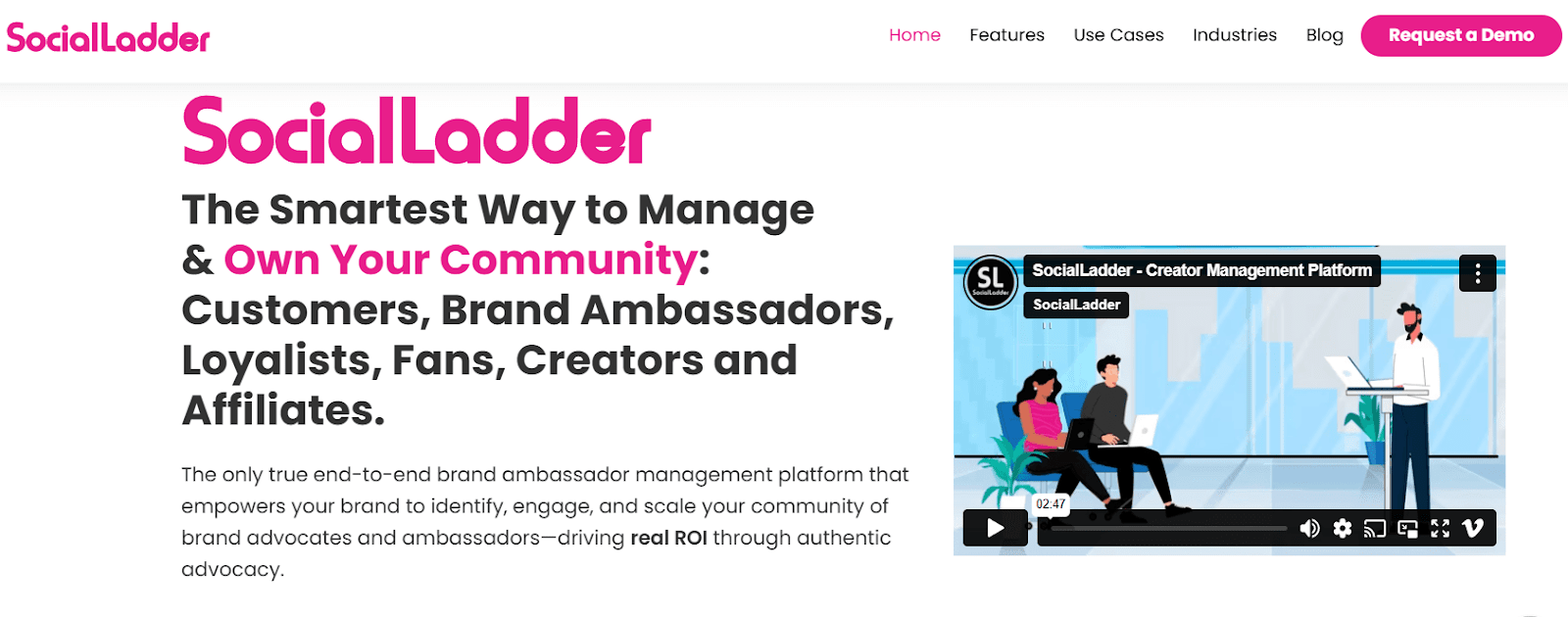
SocialLadder flips the traditional influencer model on its head by focusing on your existing community. Instead of hunting for “stars,” it helps you turn your actual customers and fans into a fleet of brand ambassadors. It’s perfect for brands that value authentic word-of-mouth and long-term loyalty over transactional, one-time paid posts. This makes it one of the most unique GRIN Alternatives available.
Price
Starts at $2,000/month.
Standout Points
The platform transforms your existing customers into a powerful ambassador pipeline by scanning your database to identify the most influential buyers and automatically inviting them to join your program. Through gamified challenges, ambassadors can earn points for completing actions like posting photos or writing reviews, and redeem them for rewards or exclusive perks that keep them engaged and motivated.
Content usage rights are agreed to upfront when ambassadors join, making it seamless to repurpose their UGC into high-performing ads without legal friction. With built-in leaderboards that spark friendly competition and direct e-commerce integration that automatically invites new customers after purchase, the system continuously fuels and grows your ambassador community.
SocialLadder Drawbacks
This is not a quick-start solution for generating sales; building a community requires time and nurturing.
Since most ambassadors receive points or exclusive/perk-based rewards instead of receiving monetary compensation, you will notice a more volatile fluctuation in the number of ambassadors actively participating than if you were working under a conventional paid influencer agreement.
5. Modash
(Image Source: Modash)
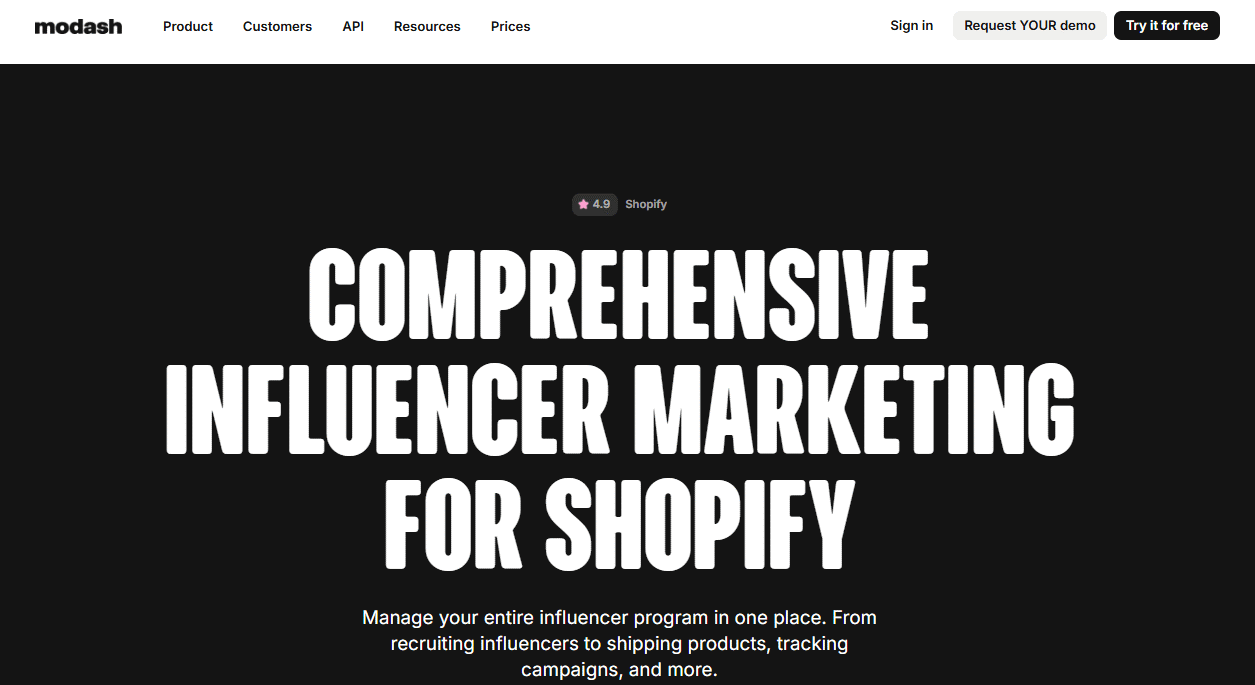
Modash is a versatile influencer tool favored for its massive public database and excellent search functionality. It is a strong choice for brands that need deep discovery tools and affiliate workflows without the enterprise-level price tag.
Price
- Essential: $199/month
- Performance: $499/month
- Enterprise: $14,700/year
Standout Points
Modash gives you access to a massive public creator database with over 350 million profiles, allowing you to discover almost any public account rather than being limited to opt-in networks. Its advanced AI search goes beyond standard filters, enabling you to find creators by specific “vibes” or even upload an image to identify accounts with a similar aesthetic.
With Shopify-native gifting and affiliate workflows, the platform automates discount code generation, UTM tracking, and product selection so creators receive items they genuinely like. Built-in outreach and CRM tools centralize email communication and relationship history, while automated payouts and performance tracking, paired with dedicated creator dashboards, ensure full transparency into impressions, sales, and earnings.
Modash Drawbacks
The biggest limitation is that its deep integration is available only with Shopify, which is a dealbreaker for brands on other platforms. It also lacks native tools for managing content licensing or running whitelisted ads.
Final Thoughts
GRIN remains a powerful influencer marketing platform, particularly for large DTC brands running complex ambassador programs within Shopify ecosystems.
However, many brands in 2026 are discovering that newer GRIN Alternatives provide greater flexibility, better automation, and more transparent pricing models.
Choosing the right alternative will ultimately depend on your team’s approach. Your team will benefit most from a performance marketing platform specifically designed for automation and affiliate tracking if those are your primary focus areas. If you are responsible for global campaigns and work with many stakeholders, enterprise-level reporting can be more valuable. Many brands also partner with an experienced influencer marketing agency, such as NC-Media, to streamline creator discovery, campaign strategy, and performance optimization, ensuring campaigns scale efficiently with clear ROI.
Ultimately, influencer marketing is no longer a one-size-fits-all solution. Whether your goals are to reduce manual work, increase ROI visibility, develop a stronger, community-driven UGC, or gain deeper analytics, you will find a platform here that will work with how your team works, not how enterprise software assumes it should.
Frequently Asked Questions (FAQs)
Q1. Is GRIN still valuable for influencer marketing?
Answer: For larger DTC brands, GRIN is a seasoned option for effectively managing ambassador, gifting, and affiliate programs at scale. However, for smaller teams that require additional flexibility in operational workflows or need lighter operational processes, they sometimes feel there are too many annual obligations/reasons associated with the monthly business model for Grin or the enterprise pricing model.
Q2. Why do brands look for GRIN alternatives?
Answer: Typically, companies begin searching for GRIN alternatives due to both the annual lease agreement and the broader enterprise pricing model. Other brands require greater automation and a far wider breadth of discovery, as well as an overall, operationally simpler system that better meets their needs as their programs evolve.
Q3. What is the best alternative to scale your business?
Answer: If you need rapid scaling but do not want to significantly increase your employee count, Platforms like Influencer Hero are a great solution. Platforms like Influencer Hero help you manage thousands of creators without needing a large operational support team by integrating CRM management, affiliate tracking, workflow automation, and real-time campaign analytics.
Q4. Are there affordable GRIN alternatives?
Answer: Yes! Companies such as Influencity and SocialLadder offer pricing far below that of Grin while allowing the brand to build out discovery, outreach, and campaign management capabilities. Brands typically choose these platforms to achieve strong performance without signing long-term enterprise solution contracts.
Q5. What platform would work best for UGC?
Answer: If your goal is to create authentic, meaningful, and high-quality content from customers or ambassadors, and you do not have to manage paid influencer campaigns, Influencer Hero and SocialLadder excel at delivering those results.
Recommended Articles
We hope this guide on GRIN Alternatives helps you find influencer marketing platforms that better match your brand’s budget and growth goals. Explore the recommended articles below for more insights on creator partnerships, campaign strategies, and influencer marketing tools.


